
A Man Who Energized the Industry With Invisible Energy
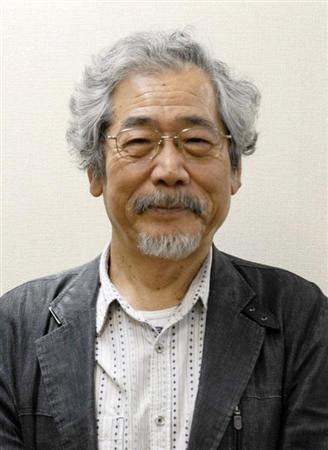
August 30, 2012
For the “Farewell Gathering for Director Noboru Ishiguro” hosted by Anidou, September 7 of the same year.
The sudden passing of Noboru Ishiguro (March 20, 2012 / aged 73) was truly shocking. Just three days before his death, I had visited him with Soichi Tsuji from Kadokawa Shoten to pay our respects. Even on the day itself, I had read via Twitter about others visiting him and how he seemed to be in good spirits. I was filled with disbelief.
The last time I saw him, he was worried about not being able to participate in the commentary for the Blu-ray release of the original Space Battleship Yamato or handle the accompanying commentary book. Since I was the one who had originally strongly recommended him, I promised, “Then Tsuji and I will come together to hear your thoughts. It’ll help with your voice rehabilitation, too. Please tell us not just about Yamato, but all sorts of things.”
I was deeply moved that he came out to the waiting room to greet us, despite the cold. Helping him return to his hospital room in his wheelchair, right at the very end, was at least some small comfort.
Since then, besides that Blu-ray commentary booklet, I’ve voluntarily written pieces expressing my condolences for Mr. Ishiguro in magazines like Gianism and Newtype Ace. But the feeling that it was “too late” never fades. I deeply regret not carving out time for interviews sooner, not giving him sufficient recognition and repaying his kindness while he was still alive. Regarding his recognition, especially since I was taking on more roles as a public judge, I had just been thinking that I wanted to properly acknowledge his contributions and see him receive the recognition he deserved, so I am deeply saddened.

Cameo in Super-Dimension Century Orguss, 1983
(The following year, I was able to present him with the Japan Animation Association’s Merit Award, for which I was serving as a judge).
My friendship with Noboru Ishiguro was undoubtedly the catalyst that deepened my interest beyond being just a fan of the single work Space Battleship Yamato to encompass animation as a whole. Back in high school, I visited the Yamato studio in Sakuradai. Every time we met, he would kindly greet me, and we’d talk about all sorts of things beyond Yamato. Even after the series ended, I visited his home many times.
Beyond interviews for fanzines, we’d chat about the state of the anime industry at the time, and he even gave me materials from projects he’d worked on as a storyboard artist. I truly owe him so much. Looking back, I blush at how bold I was as a teenager, intruding on his precious time, and I feel deeply sorry toward his wife and family. I hope to repay that kindness by working hard to give back to the industry as a whole.
Particularly important among Mr. Ishiguro’s stories were the film that inspired him to pursue animation, Sleeping Beauty, and his focus on “effects animation.” He mentioned how Disney and similar works always credit an “Effects Department,” how fascinating animation can be when centered on natural phenomena like fire and waves, and how at the Yamato site, he was constantly testing various effects techniques he’d nurtured as a long-time SF fan.
That moment truly made me go “Ah!” in surprise and awe. It gave me a clear reason why my high school self, who was obsessed with SF, fell in love with Yamato. It was because the visuals themselves were crafted with an SF mindset.
Ishiguro’s direction masterfully employed extraordinary techniques: the light conveying the expanding energy of explosions and Wave-Motion Guns in space, the use of wave glass and optical compositing to enable complex camera work for warp sequences and telescopic monitors. It was equally moving to realize this also resonated with the spirit of the tokusatsu I adored.
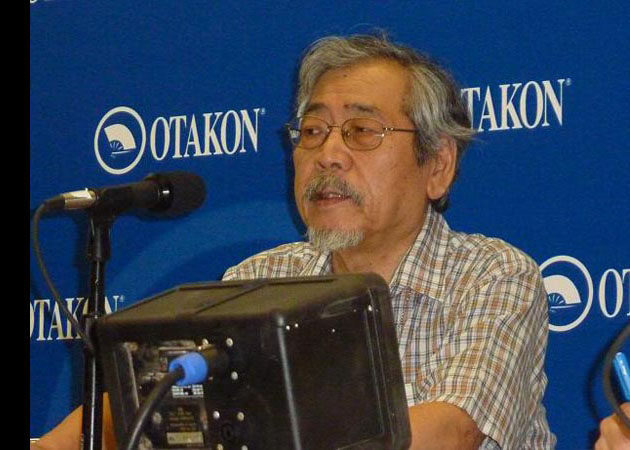
The analysis and research I conducted, cross-referencing materials obtained from the studio with our conversations, became the foundation for my current self, however imperfectly I may call myself an “anime critic.” I can’t express enough gratitude for Mr. Ishiguro’s guidance at the very beginning of my career.
It was a relief to be able to express my gratitude directly to Mr. Ishiguro himself at a private gathering a few years ago, shortly after he was discharged from the hospital. I confessed, “Everything I talk about, I’ve learned from you.” His response, with that familiar, warm smile and those approachable eyes, was unforgettable: “That’s not true.” It’s a blessing that our connection has lasted over 35 years since we first met.
Mr. Ishiguro possessed a magnanimous and inclusive nature, along with a unique “power to motivate,” a kind of “inspiration” that could only be described as the ability to draw out people’s talents. Looking back, this seems truly rare. While his achievements as an animator, director, and manager are significant in themselves, I believe his greatest achievement was his ability to inspire and cultivate talent; a quality that isn’t always immediately visible.
I remember myself being completely flattered when he praised a doujinshi I brought as a small gift during a visit, saying things like, “You’ve made something so splendid.” Hearing that many others had similar experiences only deepened my admiration for what a truly remarkable person he was. Without the new talents he inspired, the anime industry today would undoubtedly look very different.
On site as a director, Noboru Ishiguro never lost his smile. He let people work freely, accepted the results, and energized the atmosphere. There were likely moments where he could have been seen as casual or lax. However, having experienced managerial roles myself, I truly understand: “That extraordinary magnanimity was incredible.” And I know this: Mr. Ishiguro possessed an extremely critical eye when it came to animation itself. This comes through vividly in the following direction memo for Yamato:
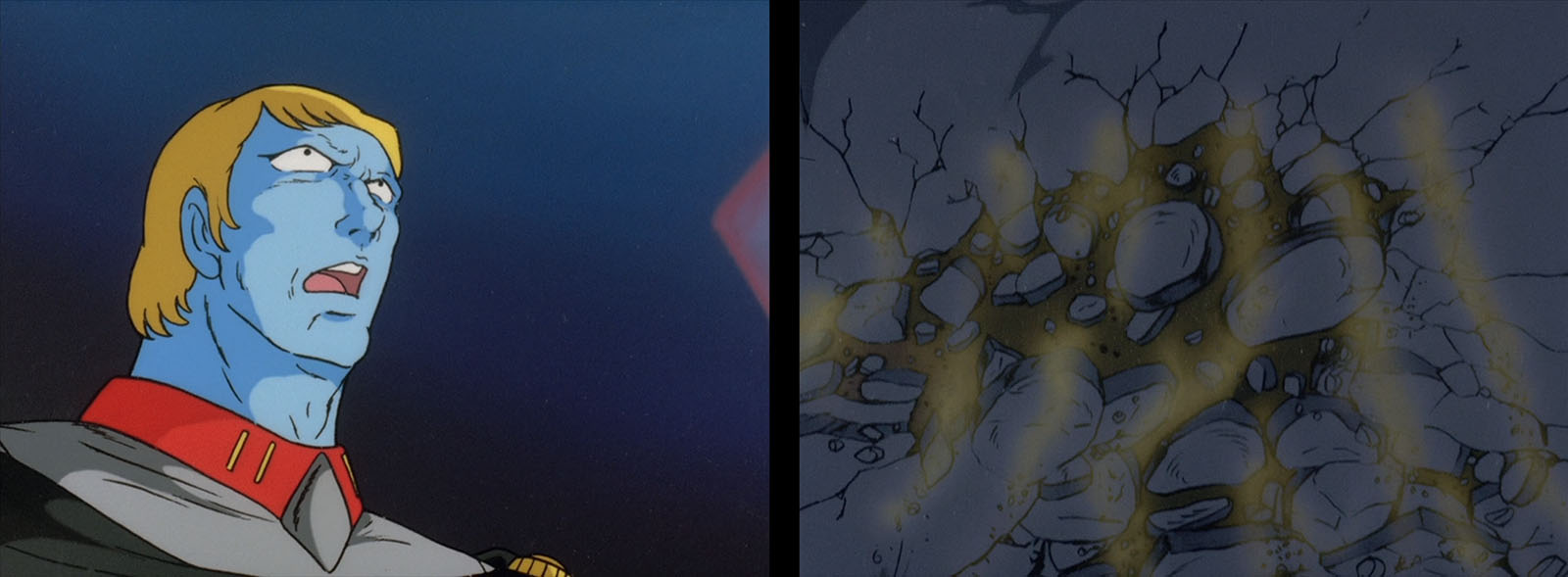
“Why is the ceiling falling from an angle when Dessler is looking straight up? The movement feels the same whether the ceiling is collapsing or a mountain is collapsing. This is because there’s no imagery in the movement. It’s slightly different from the storyboard, but I thought this would be a less labor-intensive method, so I included a rough sketch. Please use it as a reference.”
(From the production notes for Episode 24)
When I first discovered this note among the mountain of original drawings, I was shocked by its harshness. Yet, beneath Mr. Ishiguro’s gentle demeanor and soft manner, there undoubtedly lay this intense passion to master animation. That’s precisely why Yamato‘s “visual composition” was so tightly focused — a realization that moved me deeply. He transformed effects — those fleeting, ever-shifting, formless elements with no fixed presentation — into top-tier showstoppers.
Mr. Ishiguro’s skill was underpinned by this fundamental passion and energy for animation. Precisely because this energy is hard to see, it’s all the more precious. This energy sparked the talents of younger artists and spread, ultimately leading to where we are today. If that’s the case, I hope it continues to be passed from person to person.
I believe Mr. Ishiguro didn’t just leave behind individual works; he accomplished his greatest work and then departed. Though I am but a small vessel, I wish to continue the work of carrying that energy forward, passing Mr. Ishiguro’s spirit on to future generations.
Mr. Noboru Ishiguro, thank you so much. And please, rest in peace…
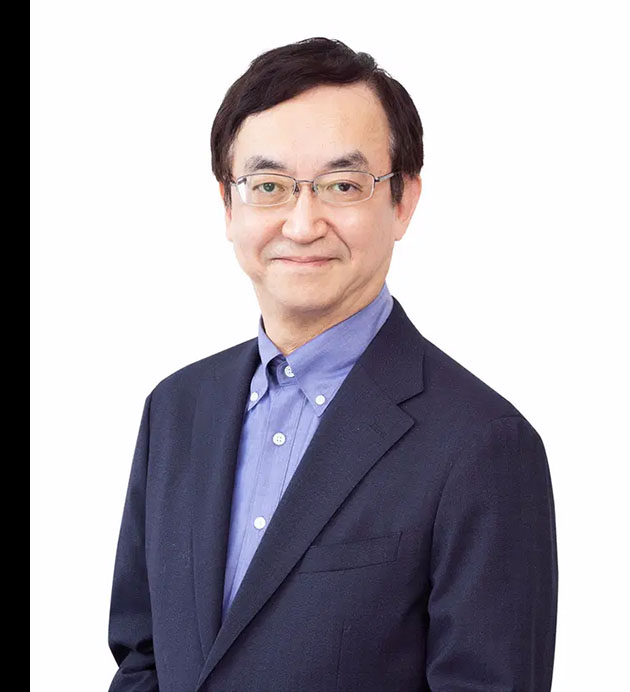
Afterword
Thank you, as always, for your continued patronage.
This book is a reprint of a personal publication originally released in 2019, timed to coincide with the Space Battleship Yamato 50th Anniversary.
It is based on the notes from my Yamato-related lecture, delivered as the finale of the Ikebukuro Community College series, which concluded after a total of 120 sessions. There are no additions or revisions to the main text.
As a university professor and NPO director, I have numerous obligations and aspirations. Though not publicly visible, I have several manuscripts in draft form that must be properly published. There are also mountains of work I wish to undertake as “compilations.” On the other hand, I clearly have too many events. Ultimately, I end up sacrificing my own work to accommodate them. To escape this situation, I intend to make a significant shift in direction.
Going forward, I intend to focus my “public-facing work” primarily on the university and the NPO. Thinking about it, this year I was fortunate to be able to work on projects like “Anime Techniques (Cinephile WOWOW),” the Tokyo International Film Festival, Ikebukuro Community College, and Gundam 40th Anniversary” – work that feels like a fitting finale to my public engagements.
It serves as a milestone record and a “return to basics” for restarting. The increased focus on Director Noboru Ishiguro is likely a natural consequence of this. I sincerely hope we can meet again in good health.
Space Battleship Yamato
1974 Complete Episode Commentary
Roto-san’s Book VOL.42
First Printing: December 31, 2019
Fifth Printing: May 12, 2025
Author/editor/publisher: Ryusuke Hikawa as Roto-san
Published by: IRD Kobo