
Joining Bandai Models, returning to character models
Here we follow Muramatsu’s work from his time as a mold maker in Tokyo after Imai Kagaku went bankrupt, to his joining Bandai Model – now Bandai Spirits, hobby division – and the gradual shift of Bandai toward character models.
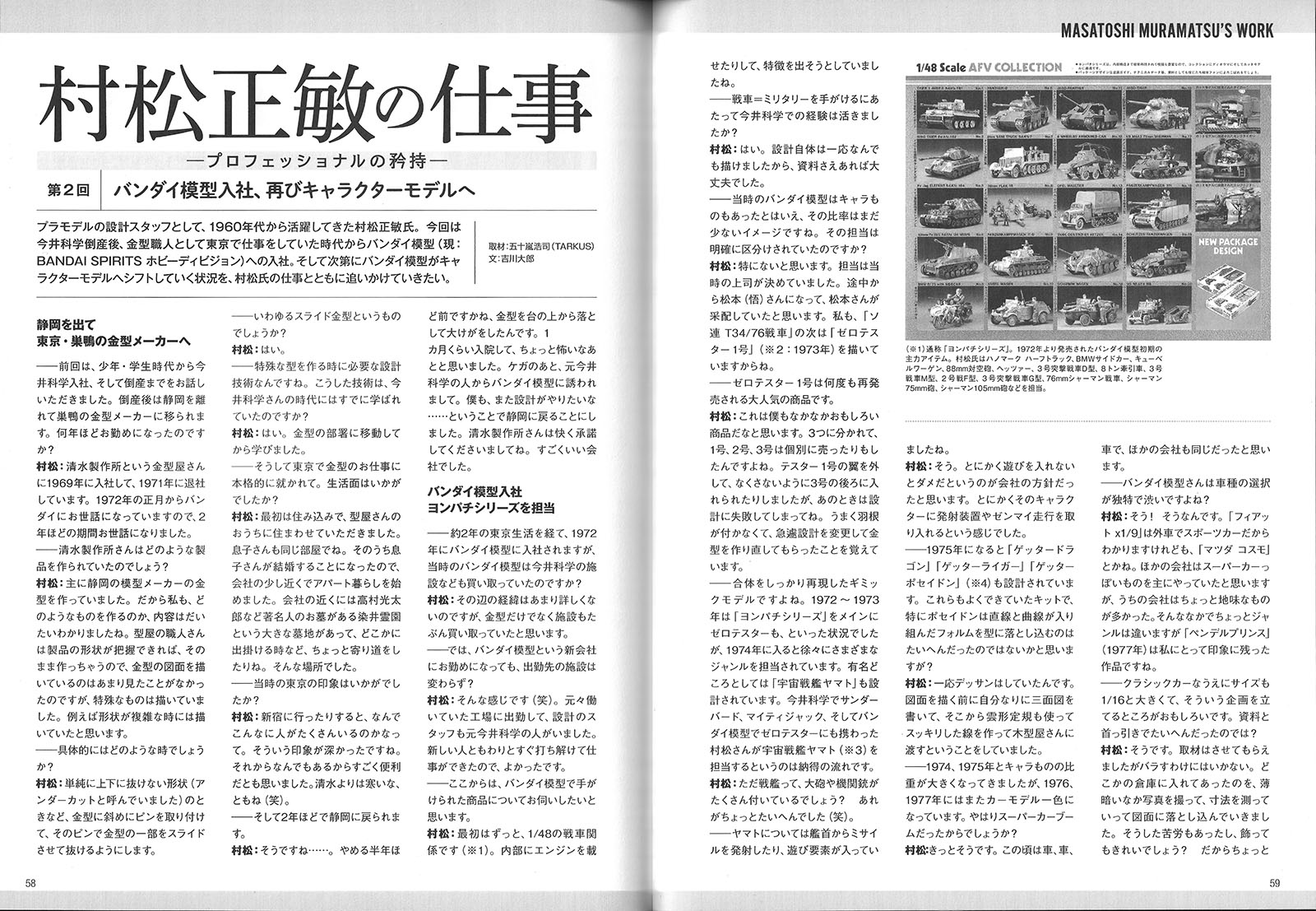
Leaving Shizuoka for a mold manufacturer in Sugamo, Tokyo
After the bankruptcy, you left Shizuoka and moved to a mold manufacturer in Sugamo. How many years did you work there?
I joined a mold making company called Shimizu Seisakusho in 1969 and left in 1971. I started working with Bandai from New Year’s Day 1972, so I was with them for about two years.
What kind of products did Shimizu manufacturing make?
They mainly made molds for model manufacturers in Shizuoka. So I had a general understanding of what they were making. The craftsman at the mold makers could just make the mold as long as they understood the shape of the product, so I didn’t see them drawing mold blueprints very often. But they did draw them for special cases. For example, I think they would draw them when the shape was complex.
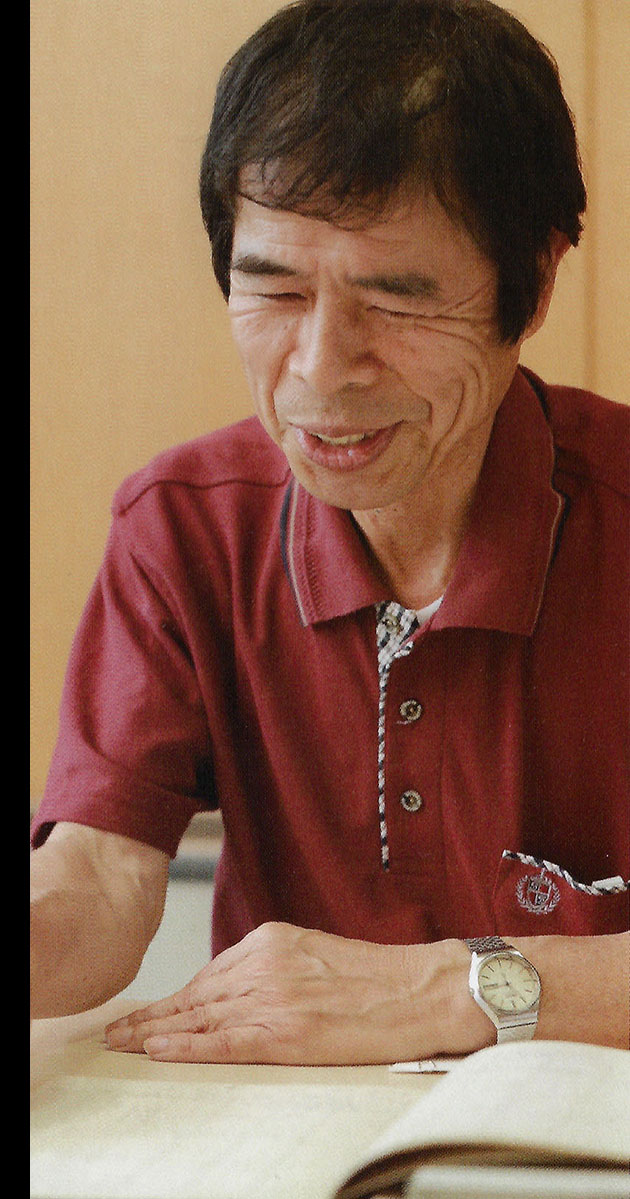
Photo taken in 2013
When would that specifically be the case?
When the shape was such that it could not be simply removed from the top or bottom – we called it an undercut – we attach a pin to the mold at an angle and use that pin to slide a part of the mold so that it can be removed.
Is that what’s known as a slide mold?
Yes.
So, it’s a design technique necessary when creating special molds. Were these techniques already learned during your time at Imai Kagaku?
Yes. I learned about it after I moved to the mold department.
Then you started working full-time in mold making in Tokyo. How was your life there?
At first, I lived on site at the mold maker’s house. His son shared the same room. Eventually, his son got married, so I started living in an apartment a little closer to the company. Near the company was a large cemetery called Somei cemetery, where the graves of famous people like Takamura Kotaro are located, and I would sometimes make a detour there when I was going out somewhere. That’s the kind of place it was.
What were your impressions of Tokyo at that time?
When I went to Shinjuku, I was always surprised by how many people there were. That made a very strong impression on me. I also thought it was very convenient because they had everything. And it’s colder than Shimizu, too. (Laughs)
And then, after about two years, you returned to Shizuoka.
That’s right. About six months before I quit, I dropped a mold from the table and got seriously injured. I was hospitalized for about a month, and I thought it was a bit scary. After my injury, someone who used to work at Imai Kagaku invited me to join Bandai Models. I also wanted to do design work again, so I decided to return to Shizuoka. Shimizu Seisakusho kindly accepted my offer. It was a really great company.
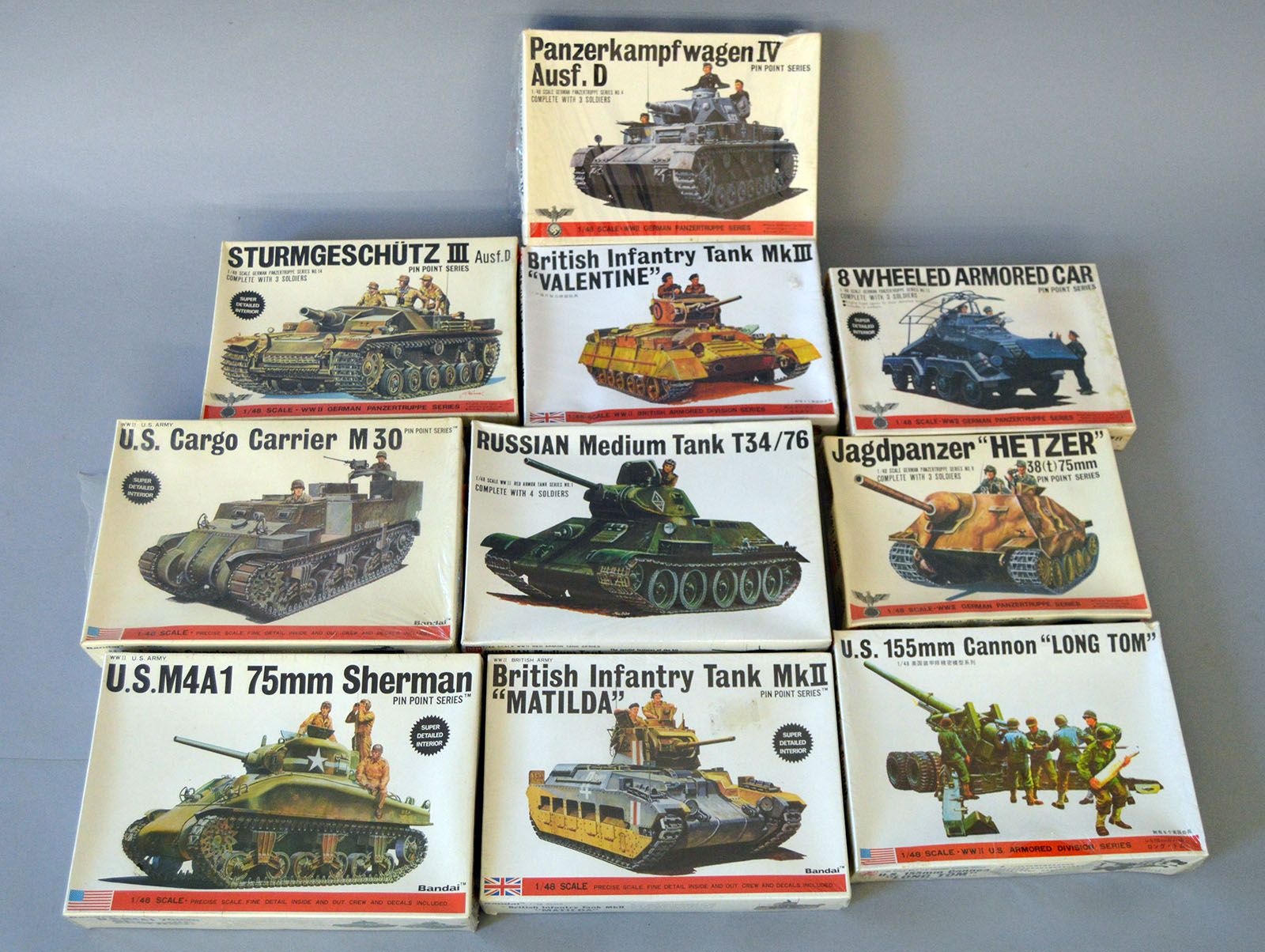
Commonly known as the “Yonpachi series,” this was a flagship item in Bandai’s early days, released in 1972. Mr. Muramatsu
was in charge of the Hanomag half-track, BMW sidecar, Kubelvagen, 88 mm anti-aircraft gun, Hetzer, StuG III Ausf. D, 8-ton tractor,
StuG III Ausf. M, StuG III Ausf. G, StuG III Ausf. M, 76mm Sherman tank, Sherman 75mm gun, Sherman 105mm gun, and others.
Joining Bandai Models, taking charge of the 1/48 scale series
After living in Tokyo for about two years, you joined Bandai Models in 1972. At that time, had Bandai Models also acquired facilities from Imai Kagaku?
I’m not very familiar with the details of that process, but I think they probably bought not only the molds but also the facilities.
So even though you were working for the new company, Bandai Models, did the facility you worked at remain the same?
That’s right. (Laughs) I went to the factory where I used to work, and some of the design staff were also former Imai Kagaku employees. I was able to get along with the new people pretty quickly and we worked together smoothly, so that was good.
Now, I’d like to ask you about the products that Bandai Models worked on.
Initially, I was always working on 1/48 scale tanks. I was trying to give them distinctive features by adding things like engines inside.

Did your experience at Imai Kagaku come in handy when you started working on tanks and military products?
Yes. I could draw pretty much anything in terms of design, so as long as I had the reference materials, it was fine.
At that time, Bandai Models had character-based products, but they still seemed to make up a small proportion. Were there clearly defined roles for each?
I don’t think there was anything in particular. The person in charge was decided by my superior at the time. Satoru Matsumoto took over partway through, and I think he was in charge. After the Soviet T34/76 tank, I drew the Zero Tester No. 1 (1973).
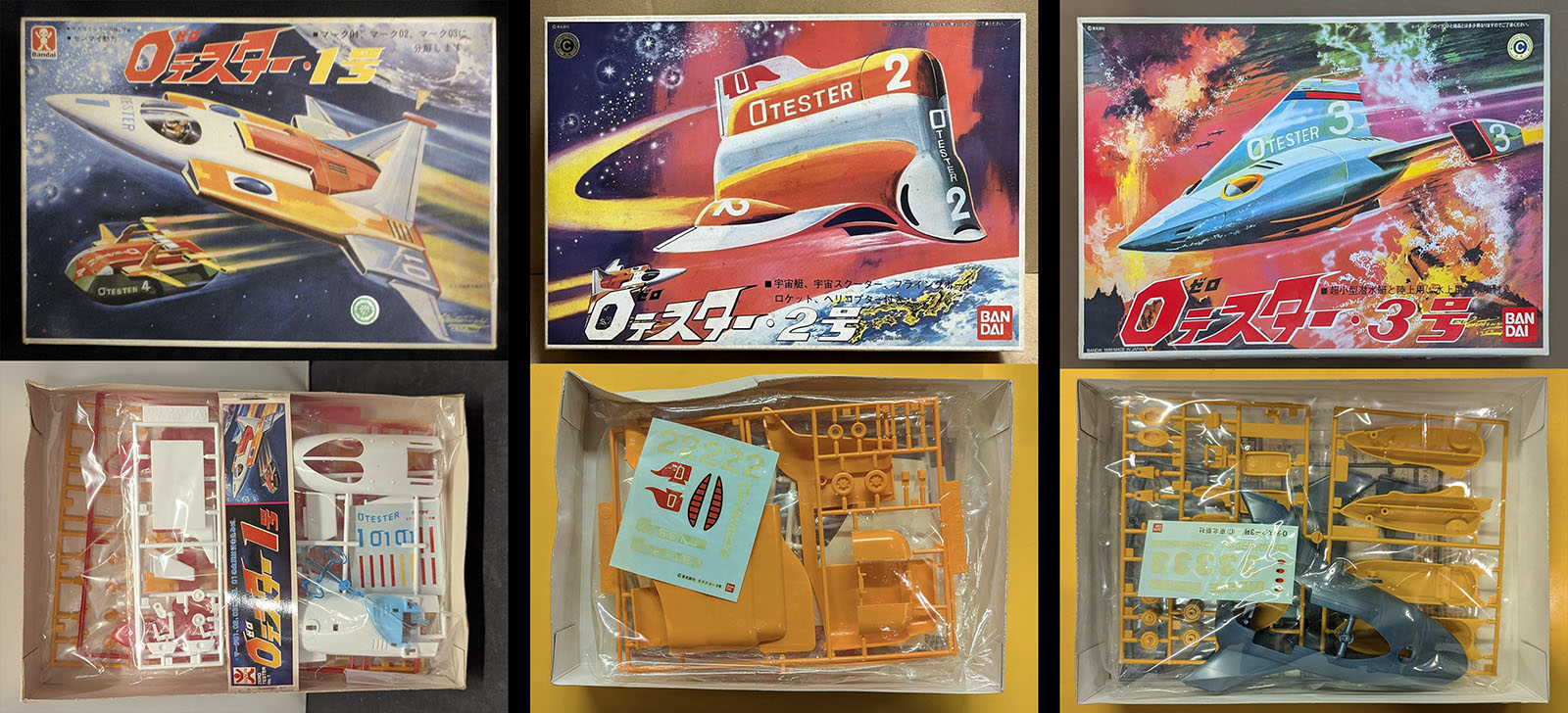
Zero Tester was a science-fiction anime that aired from 1973, and its highlight was mecha action
that was reminiscent of Thunderbirds. Muramatsu was in charge of Zero Tester No. 1
Zero Tester No. 1 was a very popular product that was released many times.
It was a pretty interesting product. It was divided into three parts, and we sold No. 1, No. 2, and No. 3 individually. We were able to remove the wings from No. 1 and put them in the back of No. 3 so you wouldn’t lose them, but we made a design mistake back then. The wings wouldn’t attach properly, and I remember having to quickly change them and have the mold remade.
It was a gimmick model that faithfully reproduced the combination wasn’t it? From 1972 to 1973, you mainly worked on the “Yonpachi Series” and also on Zero Tester, but from 1974 onward, you gradually took on various genres. Among the famous ones, you designed Space Battleship Yamato. It makes sense that you, who worked on Thunderbirds and Mighty Jack at Imai Kagaku and Zero Tester at Bandai Models, would be in charge of Yamato.
But battleships have a lot of cannons and machine guns, right? That was a bit of a challenge. (Laughs)
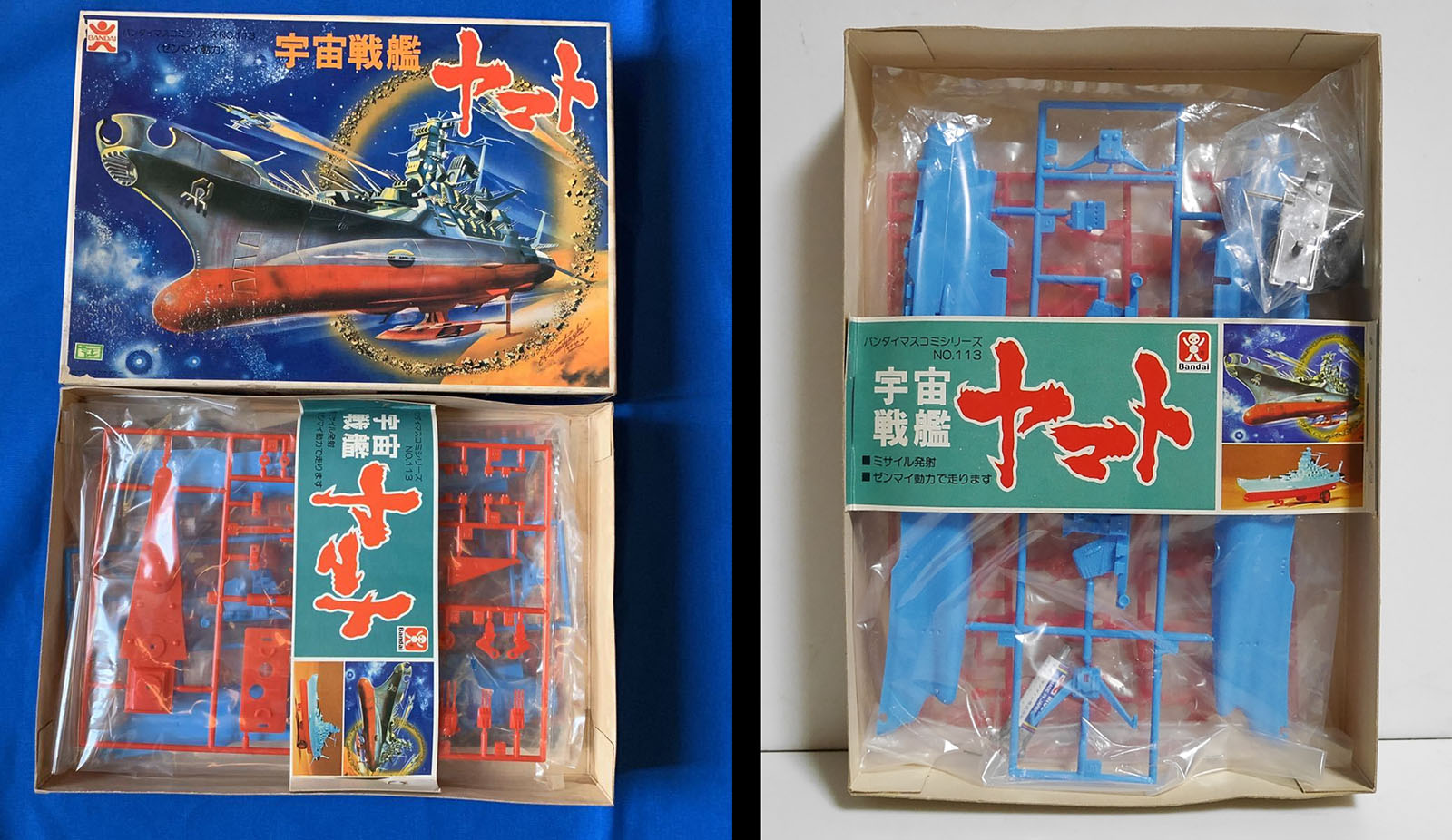
Mr. Muramatsu was in charge of the wind-up Space Battleship Yamato.
He was not involved in a later conversion into the copper-colored “Galaxy Model.”
Yamato had playful elements like being able to fire missiles from its bow.
That’s right. I think the company’s policy was that we absolutely had to incorporate some fun into it. So we basically incorporated things like launching devices and wind-up mechanisms.
In 1975, Getter Dragon, Getter Liger, and Getter Poseidon were also designed. These were well-made kits, but I imagine it must’ve been particularly difficult to translate the intricate straight and curved form of Poseidon into a mold, wasn’t it?
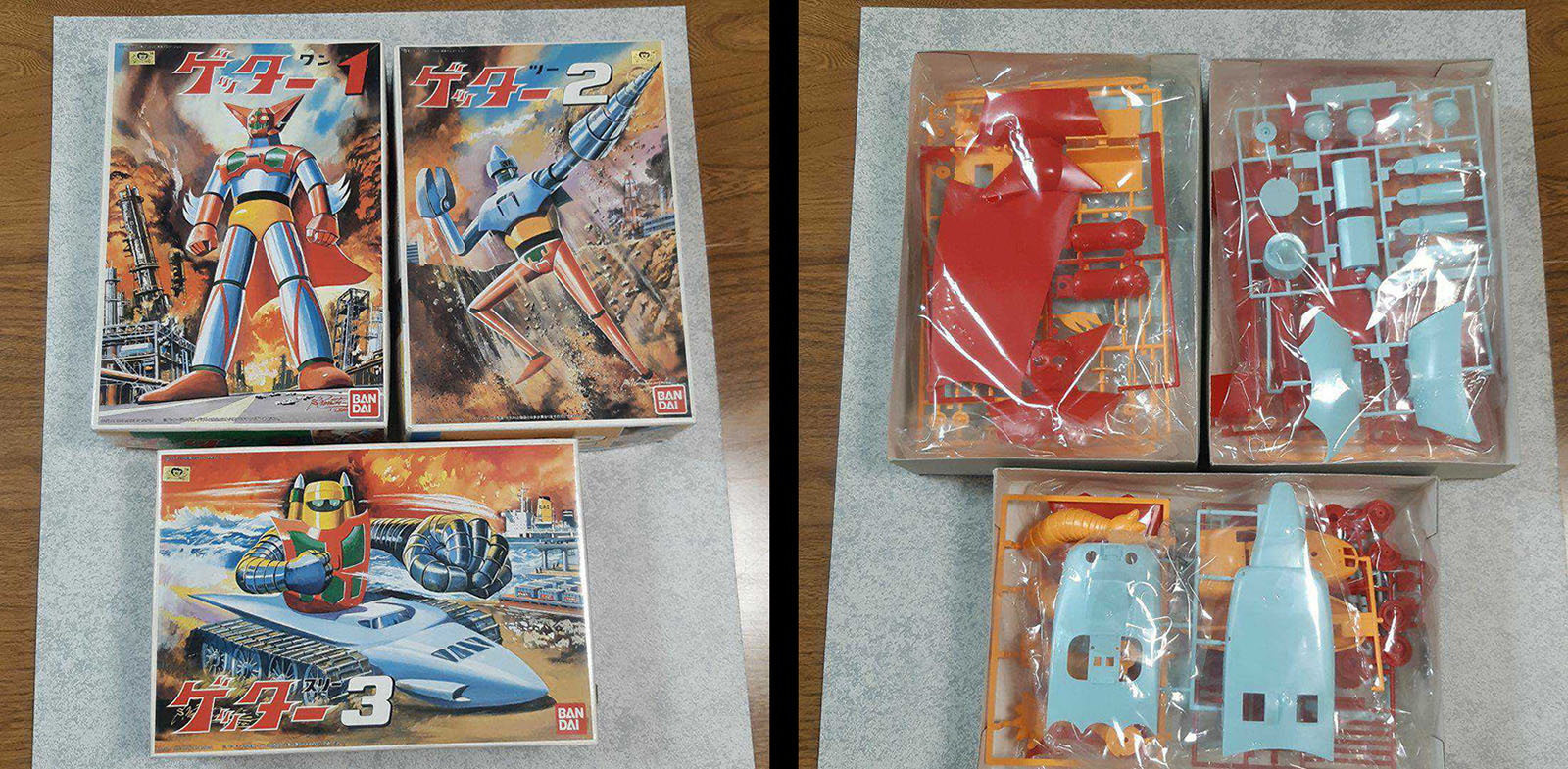
I had done some sketching, at least. Before drawing the blueprints, I would create my own three-view drawings, then use a French curve to create clean lines before handing them over to the pattern maker.
While character-based merchandise became more prominent in 1974 and 1975, it shifted back to car models in 1976 and 1977. Was this perhaps due to the supercar boom?
I’m sure that’s true. Back then, it was all about cars, cars, cars, and I think it was the same for other companies as well.
Bandai Models had a unique and sophisticated selection of car models, didn’t they?
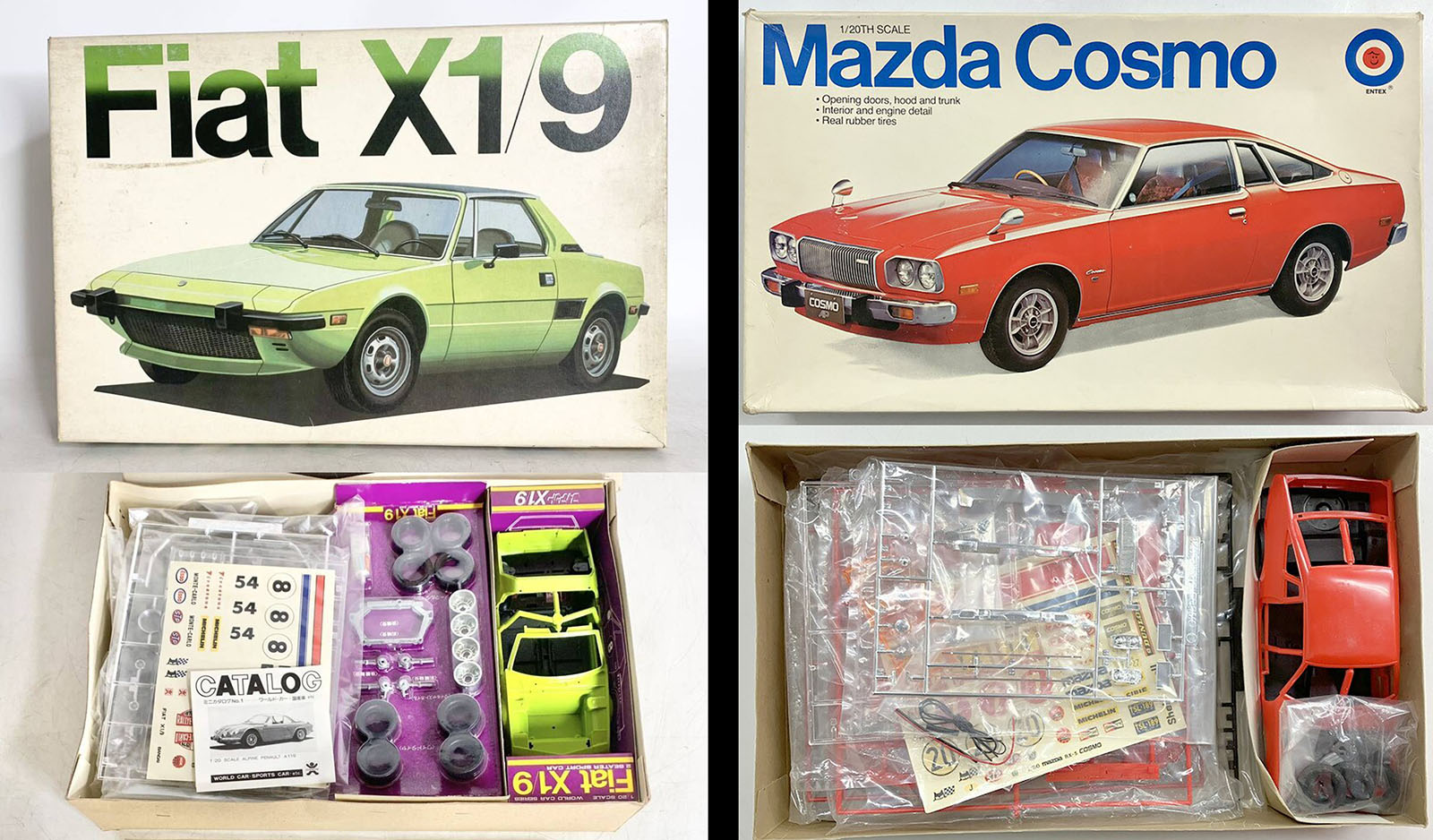
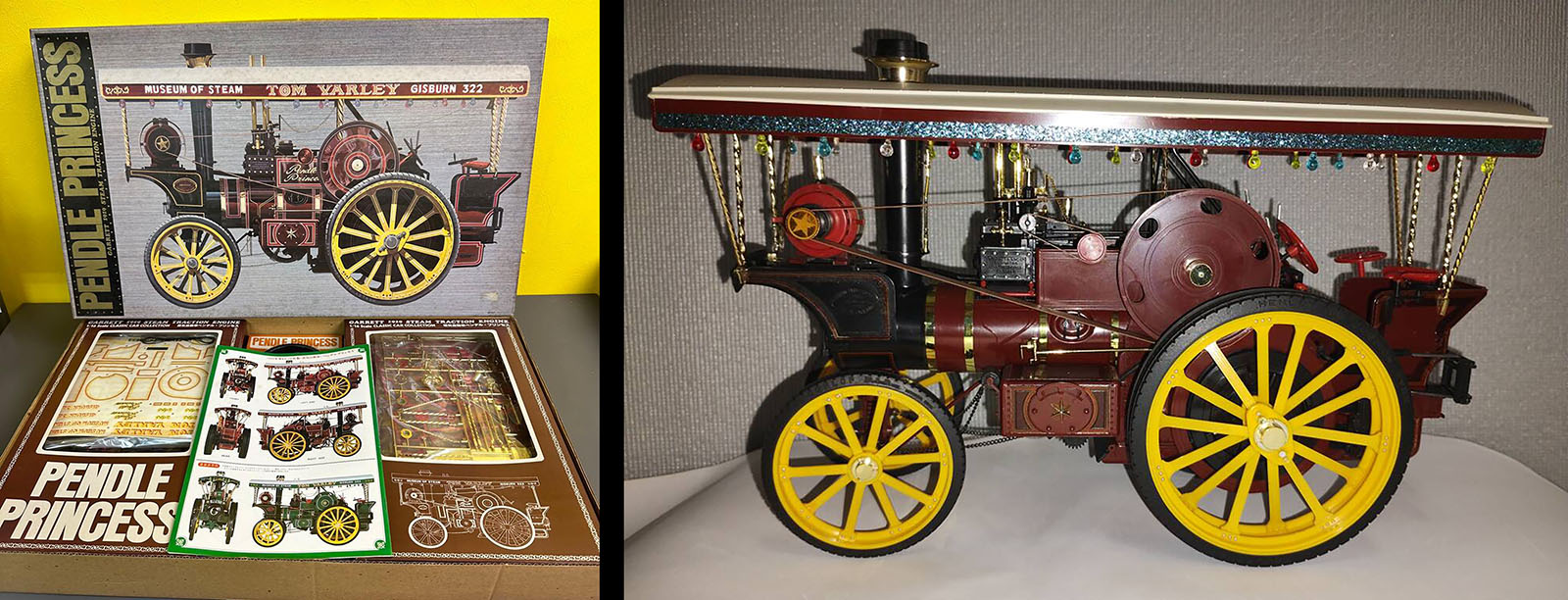
That’s right! That’s exactly it. I understood the Fiat X 1/9 because it was a foreign sports car, but then there was the Mazda Cosmo, for example. I think other companies mainly made supercar like models, but our company tended to make more understated ones. Among them, although it’s a slightly different genre, Pendle Princess (1977) was a work that left a lasting impression on me.
It’s a classic car, and it was also quite large at 1/16 scale. The fact that you came up with such a project is interesting. I imagine it must’ve been quite a challenge, pouring over referenced materials.
That’s right. I was allowed to do a review, but I couldn’t just take it apart. It was stored in a warehouse, and I took pictures of it in the dim light, measured the dimensions, and then drew up the plans. I went through all that trouble, and it looks beautiful when displayed, doesn’t it? That’s why it’s one of my favorite pieces.
From implementing “play” to making display models
Around 1978, Space Battleship Yamato was finally starting to become a hit, wasn’t it? Looking back now, the fact that the part of Yamato below the waterline was painted was quite an incredible thing to do, wasn’t it?
Well, that’s something they took home to do as peace work. All the employees did it.
Did you also participate?

Of course. The painting was done in the factory, but the masking for it was done at home. You would take it home, surround the waterline with newspaper, and put on masking tape. We even had family members help, so it was a full-fledged effort by all the employees. (Laughs) Anyway, Yamato sold really well.
That’s truly legendary. And in 1978, character-based kits increased dramatically. There were masterpieces like Liabe Special (from Message from Space) and Bacchus III (from Star Wolf).

Those kits were incredibly difficult to work with. The design drawings included “parts drawings,” and after drawing all of those, I would draw the assembly drawings, and finally, I would draw a picture of the completely assembled model. But there were so many intricate details, drawing them was a real pain. (Laughs)
That must’ve been quite a lot of work. Back then, for example, Bacchus III even had a wind up mechanism so you could play with it by making it run.
I guess the company’s concept was to create toys that children could play with. But from around this time, the Yamato series started to expand into display models like Missile Ship Goland (below left).

Looking at the list, I notice that the Machine Hayabusa Kai A-H were also products that followed the trend of moving from playable items to display pieces, correct? The Machine Hayabusa itself (above right) was commercialized in 1976.
Note: The release of the Machine Hayabusa series (modified for display) has not been confirmed. Although the molds were modified, it appears that they were ultimately never released. Also, while “A to H” indicates that there were eight types, the lineup should have consisted of five types, so this is a matter for further investigation.
I think the first Machine Hayabusa was powered by a spring or something, and since there was a “D” in the list, I think they made it a solid display model.
Furthermore, I’d like to ask about Yamato’s Cosmo Tiger II from 1978. I believe the rear end of the aircraft was also painted, wasn’t it?

That’s right. I think it was orange. We might have outsourced the painting. I don’t remember changing the molded color.
You released a lot of great products related to Yamato, including fighter jets, but did you have a lot of research materials?
Yes. I think the design materials for Yamato were quite solid.
In addition to models that were faithful to the original design, there was also a Galaxy Express 999 image model. The passenger cars got narrower toward the rear.
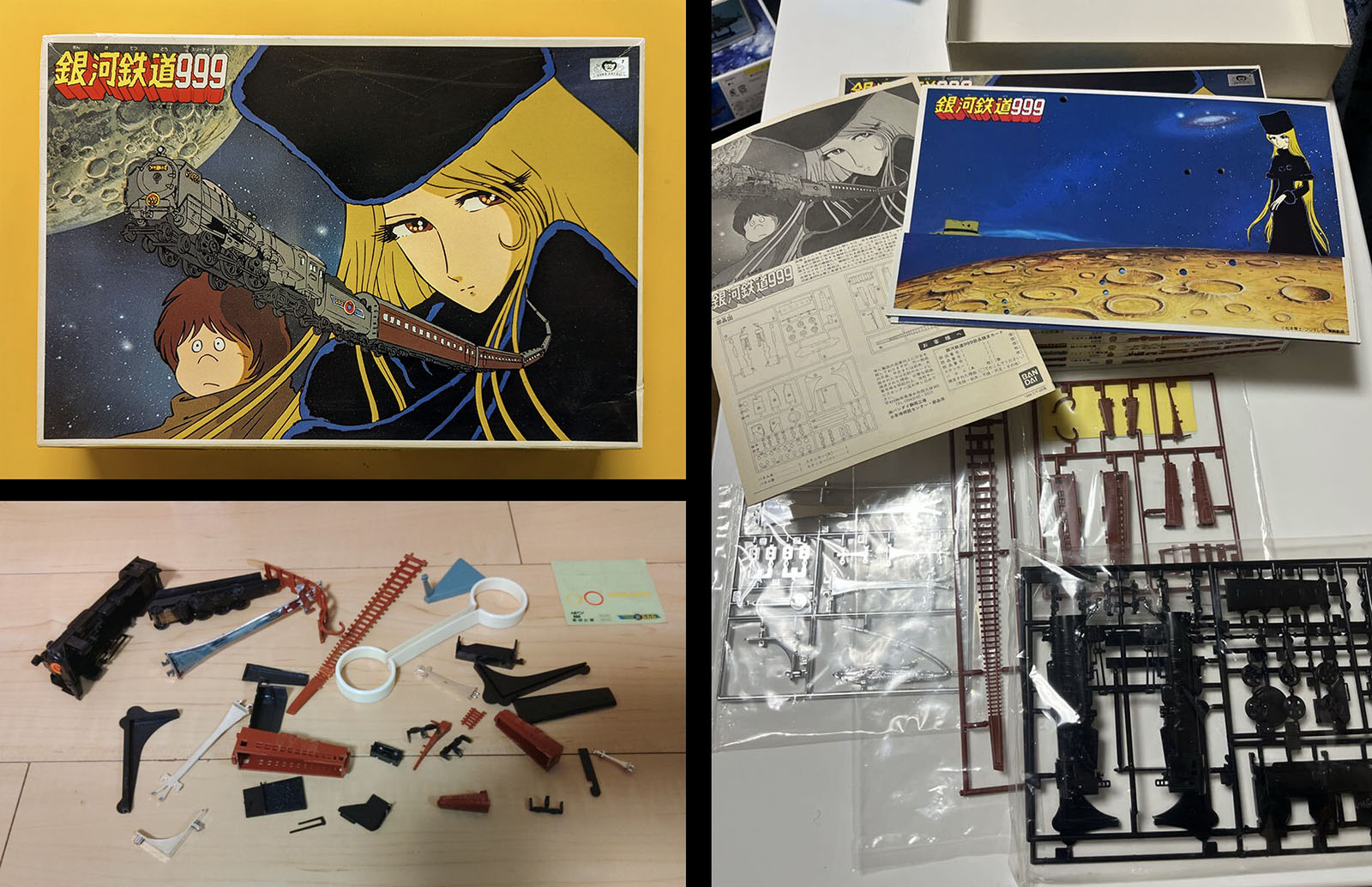
That’s right. They were meant to be displayed in front of the panels. I remember having trouble figuring out the dimensions because the passenger cars were getting progressively smaller. I could draw the pictures, but it was really difficult to actually put into dimensions. So as a designer, I didn’t like those distorted forms. (Laughs) It’s easier to draw things that are precise. For example, speaking of 999, there was the 222, right? (Mecha Collection Galaxy Express 222, Bionas No. 2) Things like that were relatively easy to draw.

Space Battleship Yamato Mecha Collection launched!
Around the same time, you also worked on Yamato and Andromeda for the Mecha Collection. The Mecha Collection Yamato is a representative example of Yamato models, and it is the most-produced Yamato kit. The price of ¥100 was shocking, and the parts were small and numerous. There was no compromise.
If it was just ¥100, a child could probably build it however they wanted. But as for the parts, I was uncompromising. I might have gone a little too far. (Laughs)
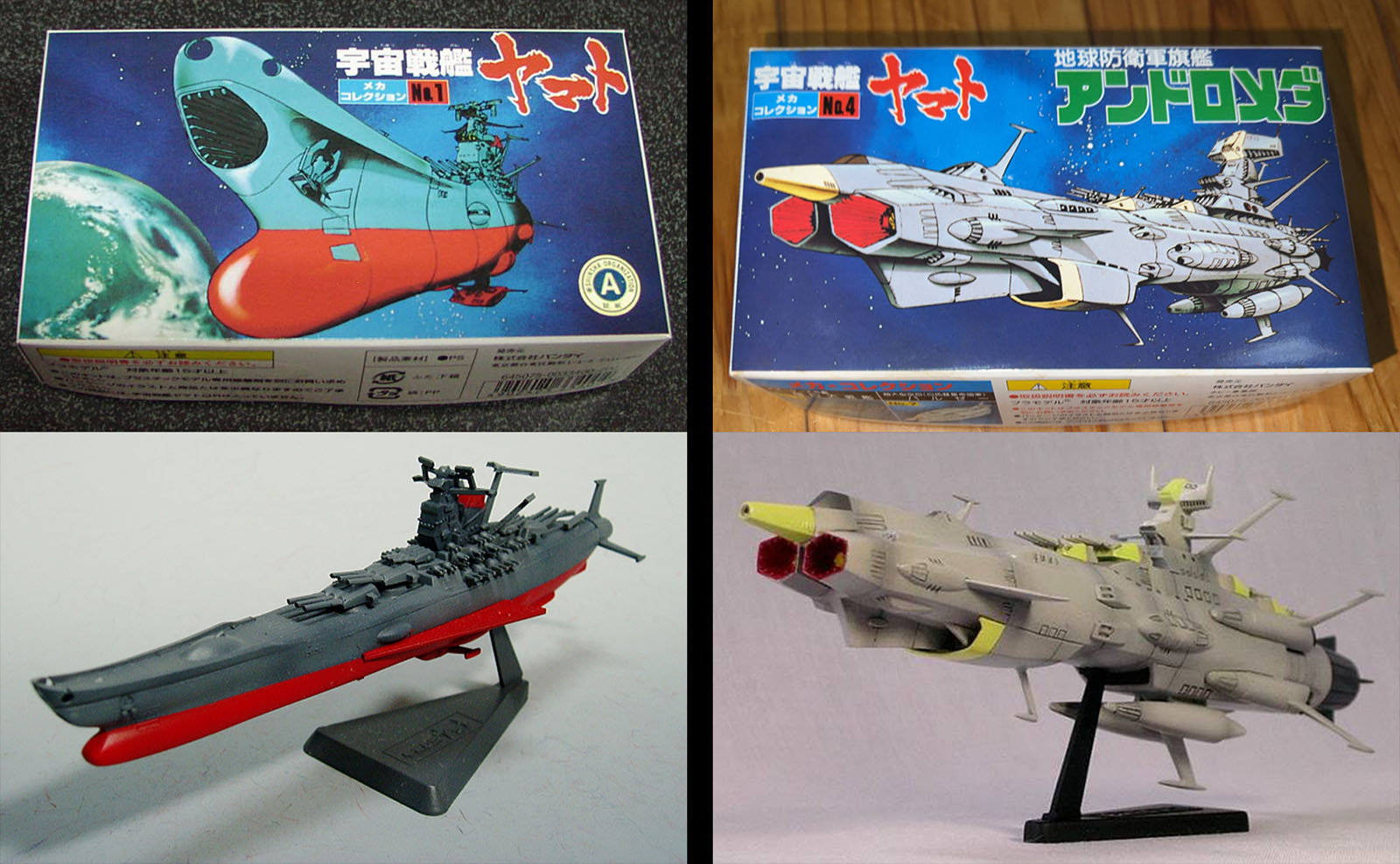
You were in charge of both Yamato and Andromeda, which were the starting points of the Mecha Collection series, right?
That’s why I consider myself a lucky person. When it came to things I want to do, they listened to my wishes, but sometimes they didn’t go through. Whether it was Yamato or Gundam, I felt lucky because the first products came to me.
There may have been some luck involved, but wouldn’t you say that the work was being passed on to the most qualified people? The starting hitters, so to speak?
We just had to put in some effort.
In 1979, there was the Galaxy Express 999 item 222, which you mentioned earlier, and The Ultraman four piece set. This was a four piece pack of mecha from The Ultraman, and it was a snap-fit kit with four different molded colors, so when completed it was very colorful.
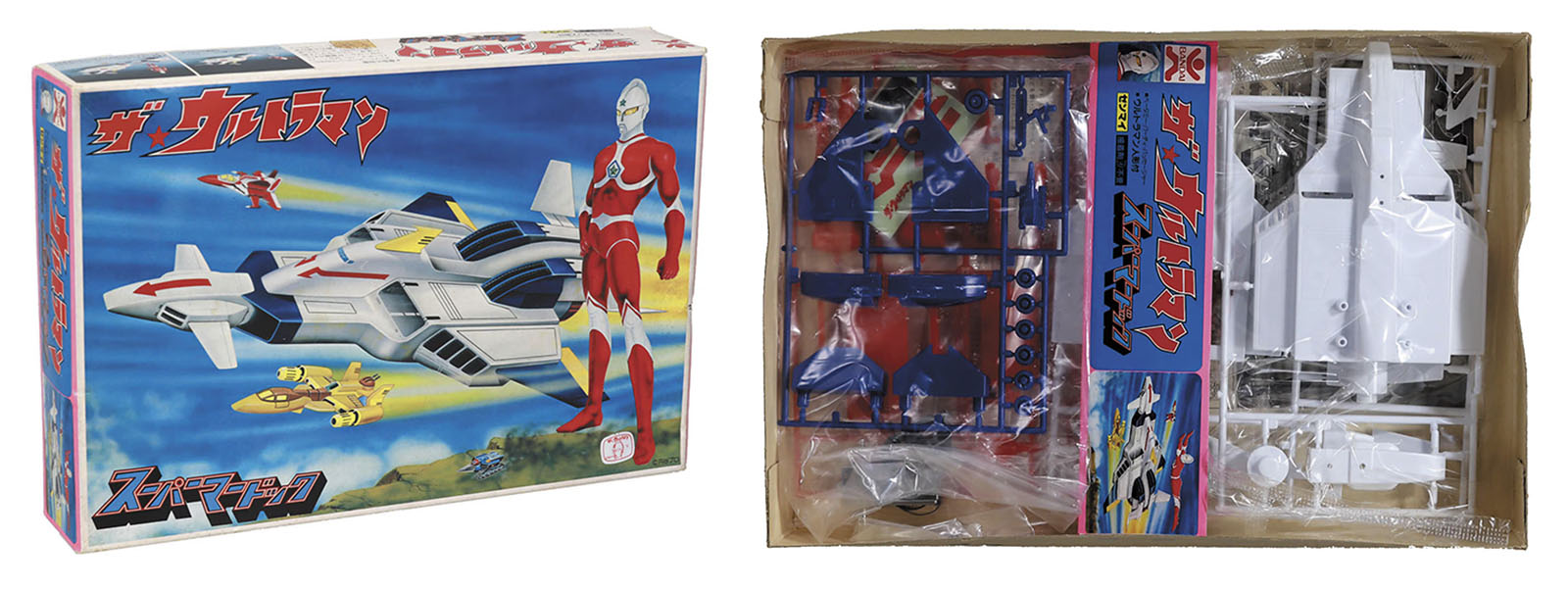
I don’t remember exactly, but maybe we put four sets of parts of the same color into one mold. It would be difficult to do that much color separation in a regular kit. If it was a cheap ¥100 kit, we would use one molded color, but if there were four different types of kits, we could use four different molds and four different colors. I think they were divided up into four parts.
After that, you also worked on the Space Battleship Yamato Gamilas fleet flagship Dessler battle carrier, which was described as the ¥1000 New Dessler ship. At the time, there were no enemy mecha at the ¥1000 size, so it was quite a shock.

They were a bit big, weren’t they? There was a Dessler battle carrier available in a ¥600 size, but Yamato also had a lot of enemy mecha.
On the other hand, there were also cute mascot-like items. The Nokonoko Doraemon walked when you pulled its tail, and the Nokonoko series also included Tora-san (from It’s Tough Being a Man), which was sold in 1980.

I remember thinking at the time, “why Tora-san?” (Laughs) I remember drawing the geta (wooden clogs). Oh yeah, I also gave Tora-san a bag. The geta fit inside of it. Square things are easy to draw, aren’t they? (Laughs)
It said no glue was needed. So even back then they were snap-fit. There were parts on the runners, but were the runners also drawn?
Yes, I drew it all, including the waterslide decals. And if there was a string attached to a part, I also drew its length.
A full-fledged character kit, Gatcha Spartan, was also released. Did this one combine?
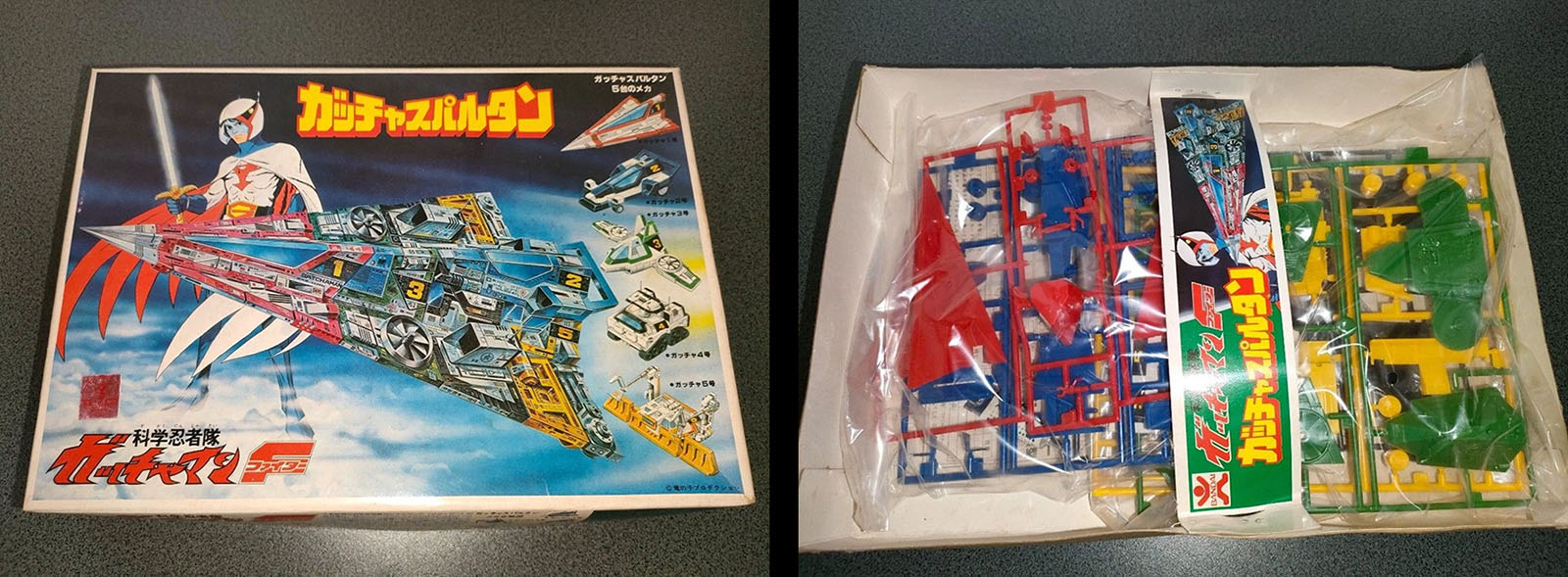
That’s right. I’m good at that kind of thing. I like fitting things together and doing things like that. I used a compass to add some movement and check it out. I had a lot of fun drawing it.
1979 saw the release of many character-based products, including the “navy collection.” This was also priced at ¥100, which reminds me of the Mecha Collection from Yamato.
This was inspired by the waterline series, right?
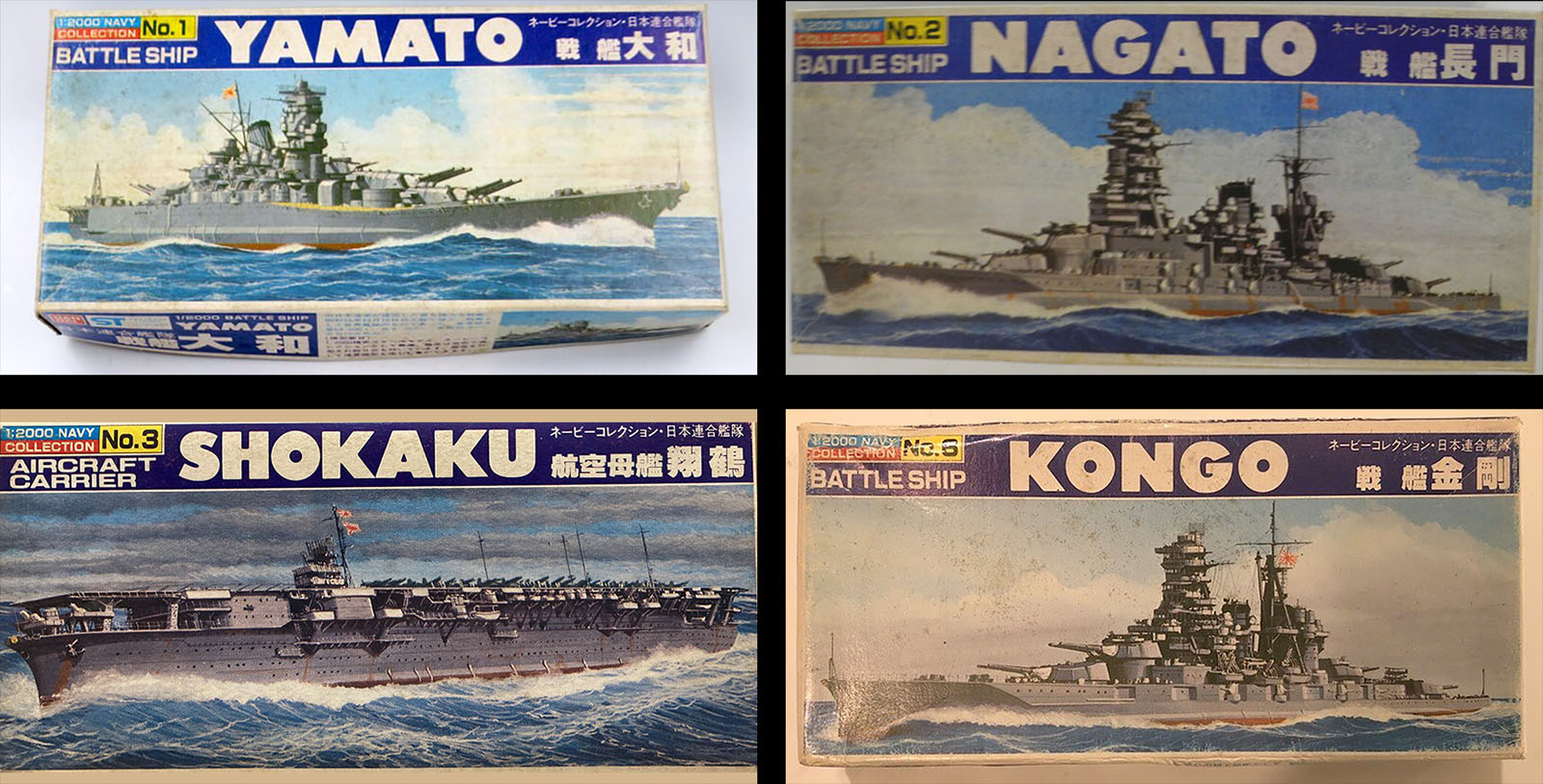
The hull was color-coded, and the parts were as detailed as those in the Mecha Collection series.
Well, I mainly focused on creating the silhouette. It’s difficult to capture the intricate details of a battleship.
You were at the heart of a period when the 1/48 series was evolving into character-based toys, and when those characters were changing from play figures to display models. Next time, I’d like to ask you about the era of character based toys that followed Gundam.
