
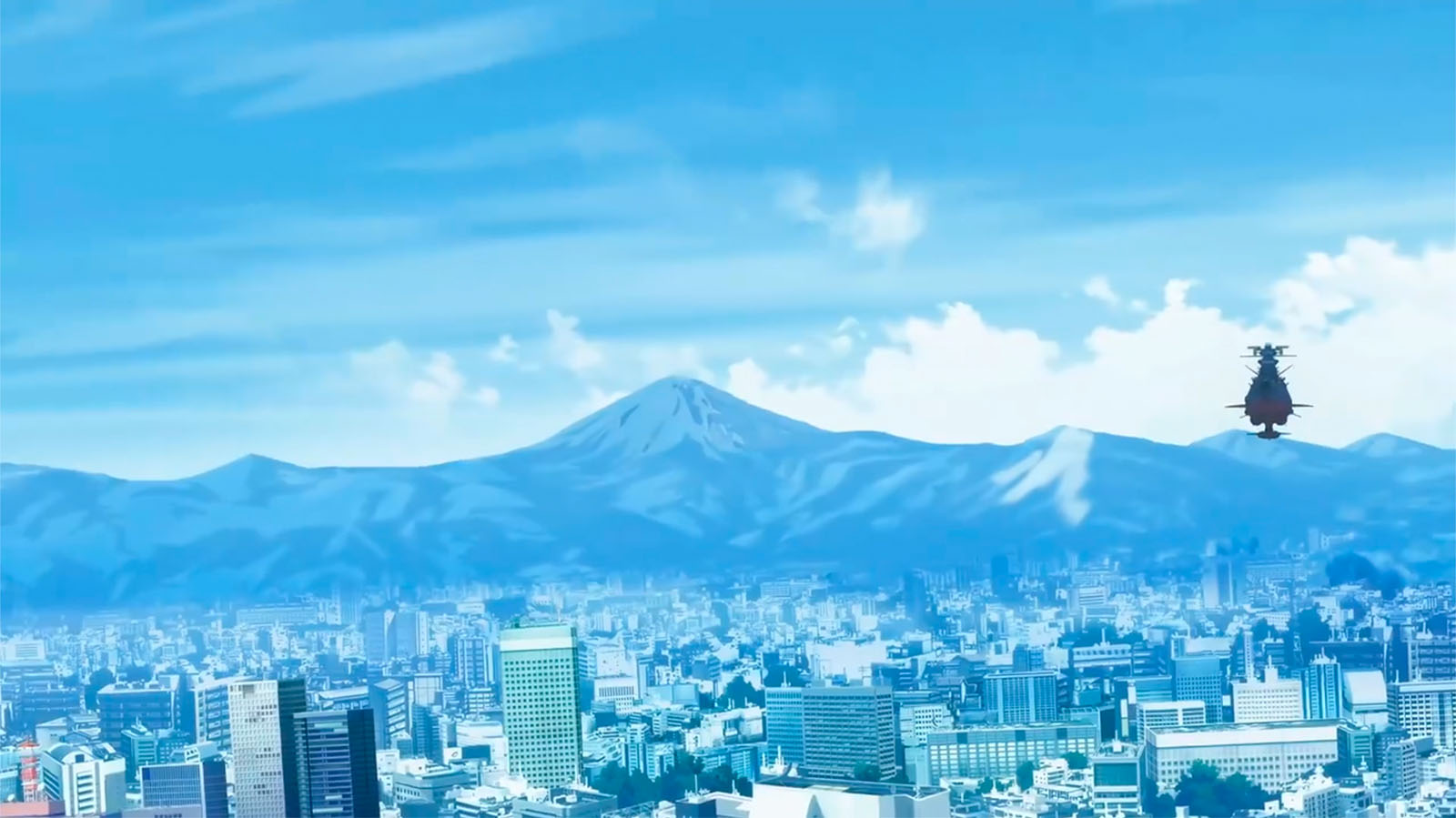
From the moment it was announced that REBEL 3199 was going to be a 21st century interpretation of Be Forever Yamato, it ignited a series of questions that weren’t going to be answered until finished animation was on a screen. Among those was, “How will they recreate the Warp Dimension moment?”
The history of this is well-known in Yamato fandom; the 1980 promo for Be Forever claimed that “something will happen before your very eyes” in the theater. That something was called Warp Dimension, and it was pretty innovative for the time: at a key moment in the story, the picture switched from 4X3 to widescreen and the sound went from mono to stereo. It delivered the stunning moment when Yamato breaks through the Dark Nebula into the Galaxy of Light.
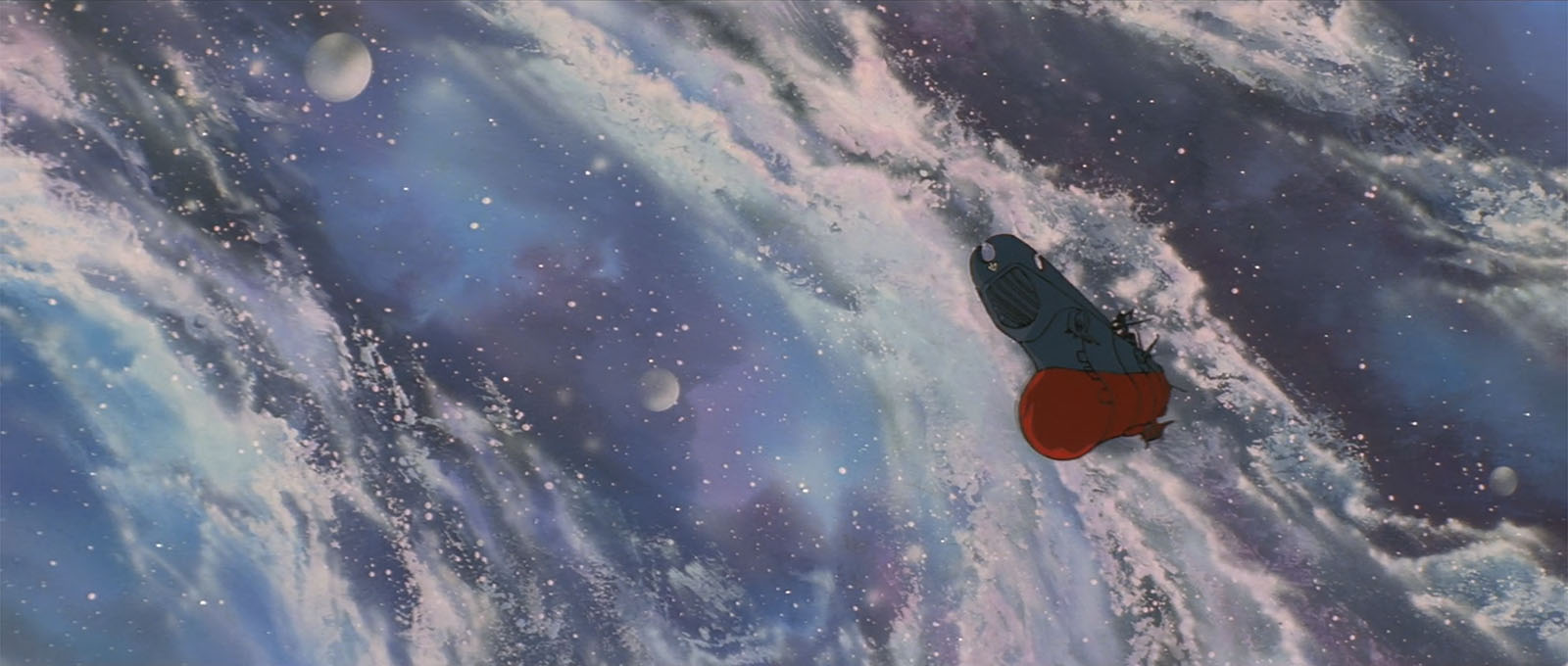
The thing about a gimmick like that, though, is it only works once. Today you might be able to try it with a shift to 3D or 4DX, but it wouldn’t have the impact it did then. So when Harutoshi Fukui grappled with it, he asked himself, “What would have the same kind of impact today?”
At the end of REBEL 3199 Chapter 5, we got the answer: Yamato would time-warp to the year 2026. And if you were lucky enough to be watching it in the Shinjuku Piccadilly Theater (in Tokyo), Yamato would appear directly over you.
At the start of Chapter 6, this mind-blowing moment expanded exponentially when Yamato accelerated over Tokyo and was shown passing very specific and very real landmarks. Every Tokyo native recognized them instantly. What’s more, Yamato stayed in 2026 through the entirety of Chapter 6, giving the crew more opportunities to interact with our world.
On July 10, the Yamato Production Committee released a “Yamawalk” video of the location scouting that took place during pre-production where each of the sites was chosen and Harutoshi Fukui revealed that this would be REBEL 3199‘s Warp Dimension moment. He also observed that it would create a host of new “sacred sites” with a Yamato connection for fans to visit.
Fans started doing exactly that after the premiere of Chapter 6, and on the actual calendar day of Yamato‘s arrival (July 21) they conducted pilgrimages to those locations and lived out the experience in real life.
What did Fukui mean by “sacred sites”? This is a reference to the real places that are sometimes depicted in anime. It’s not uncommon for stories set in Japan to use them, and it gives fans another way to connect with a story they love. Up until now, Yamato has only had a couple (see them here) but thanks to 3199 the number has multiplied significantly.
What are those sites, and where are they located? Those questions can be answered here and now.
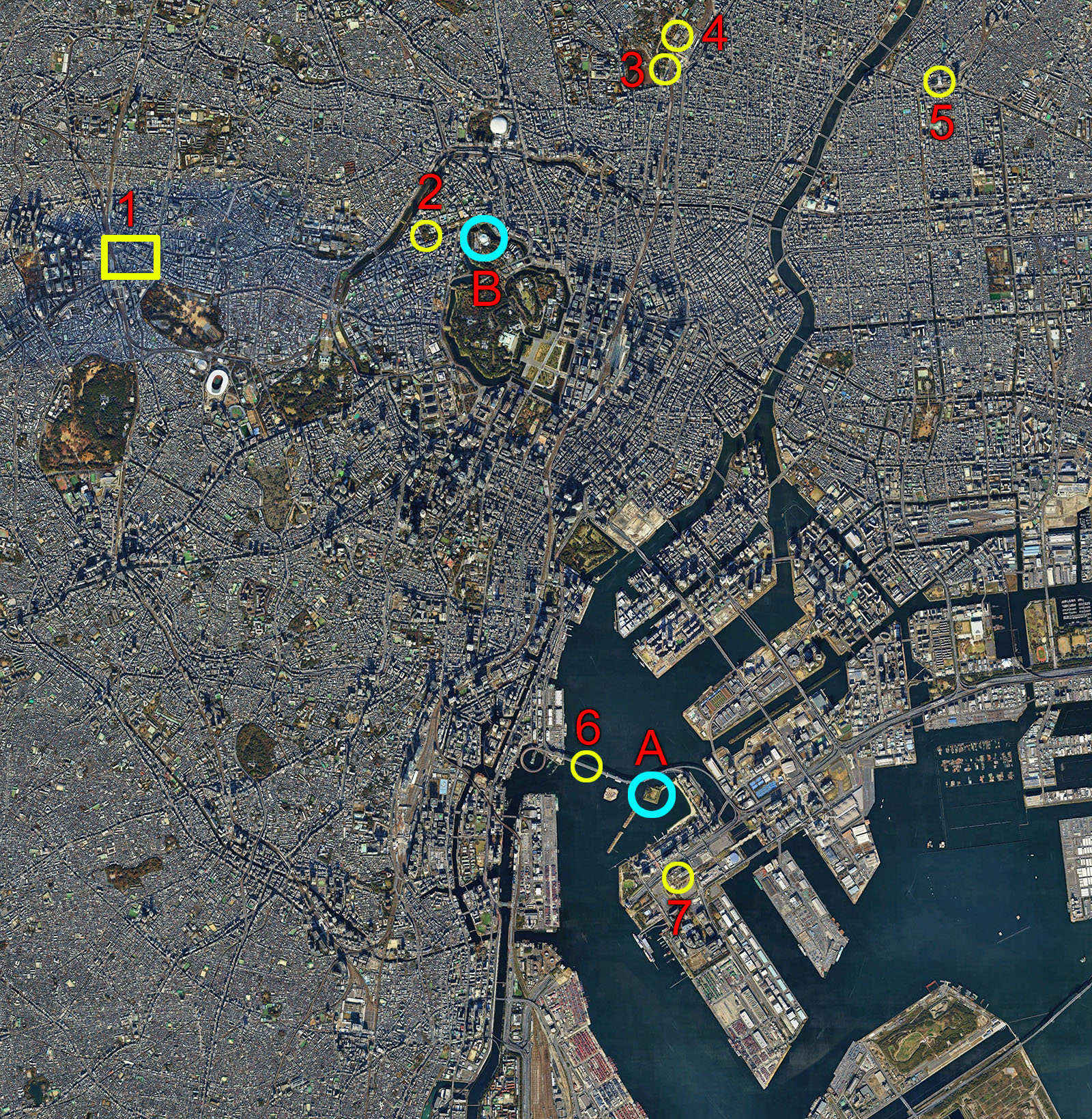
When you map them out like so, something becomes immediately apparent: Yamato‘s flight path over Tokyo was not random. The ship’s trajectory was specifically designed to include each site. From here, we can examine them and discover their importance one by one.
PART 1: TOKYO FLYOVER
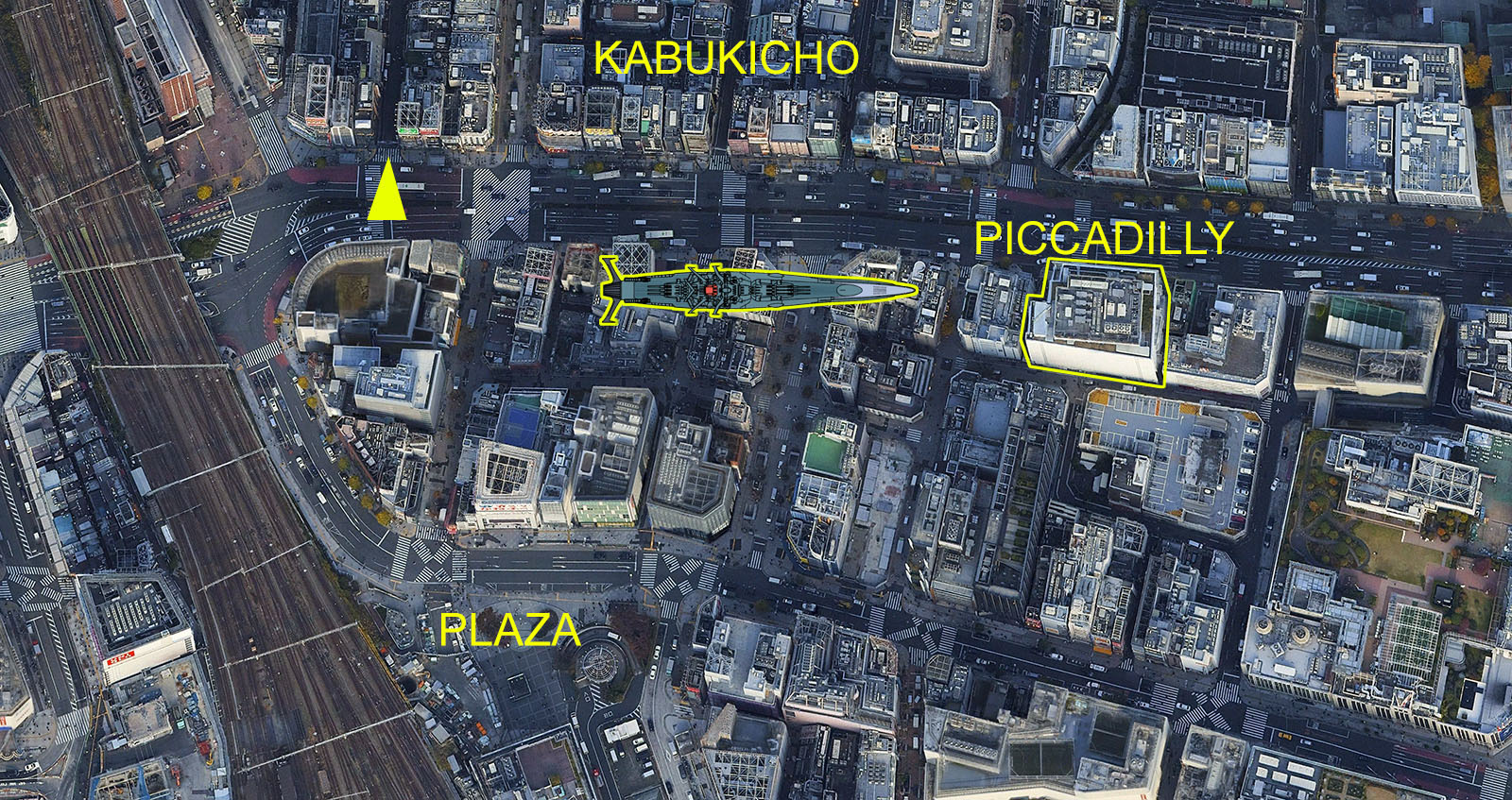
Point 1: Shinjuku
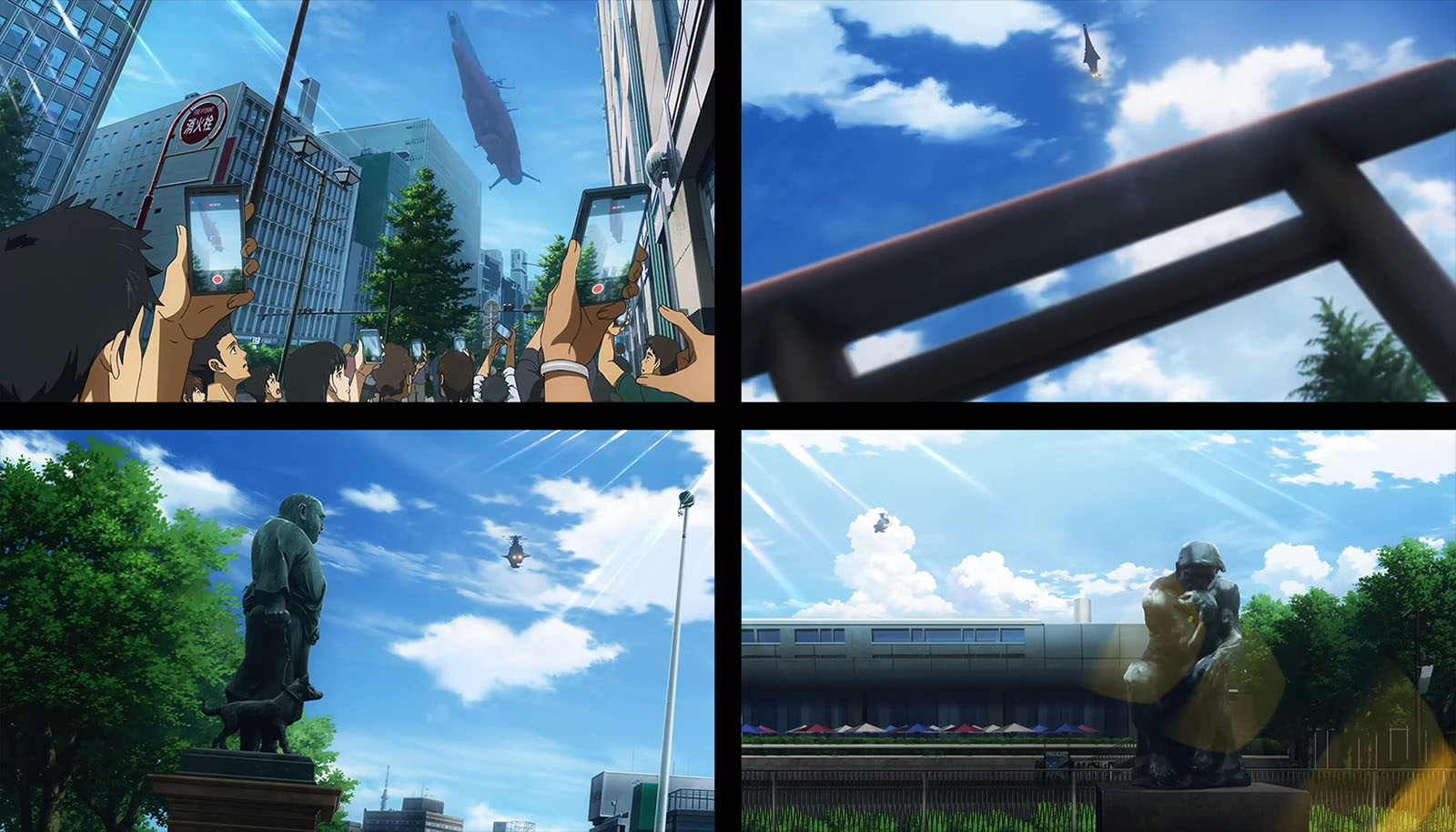
This is the first place Yamato appears, drifting parallel with the main street, called Yasukuni-dori, which defines the border between Shinjuku (south) and Kabukicho (north). It’s a dense, high-capacity area with a lot to attract tourists. The first landmark was VERY recognizable to locals: the gateway sign to Kabukicho, indicated by the arrow.
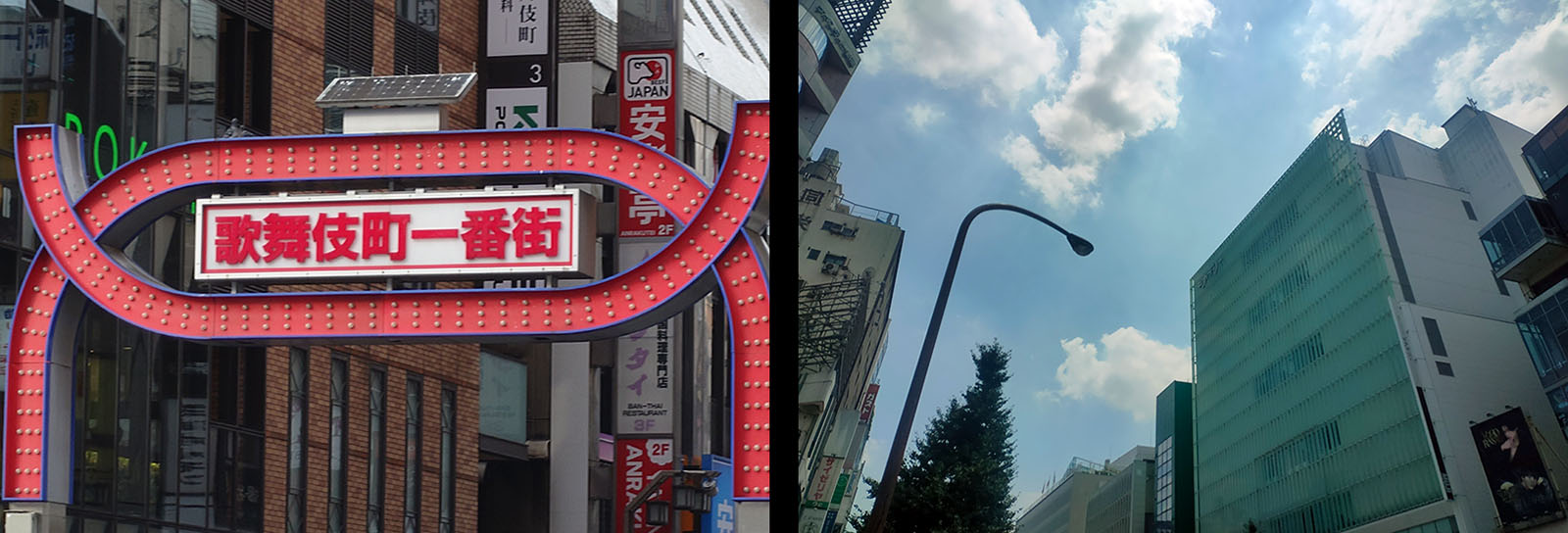
Photos posted on Twitter by popoki_cat and kashou_VRC
Just east on the other side of the street is the Shinjuku Piccadilly Theater, which has become the headquarters for live stage greetings and Yamatalk events. When the 1/100 model goes on display, it’s almost always here. Just to the south is a plaza outside Shinjuku Station, which happens to be one of the older “sacred sites.” In the summer of 1980, the prize drawing was held here for the “Voyage of Adventure Roman” cruise to promote Be Forever.
This is where Chapter 5 finishes; Yamato drifts directly over the Piccadilly before the fade to black. At the beginning of Chapter 6, it takes off across the city.
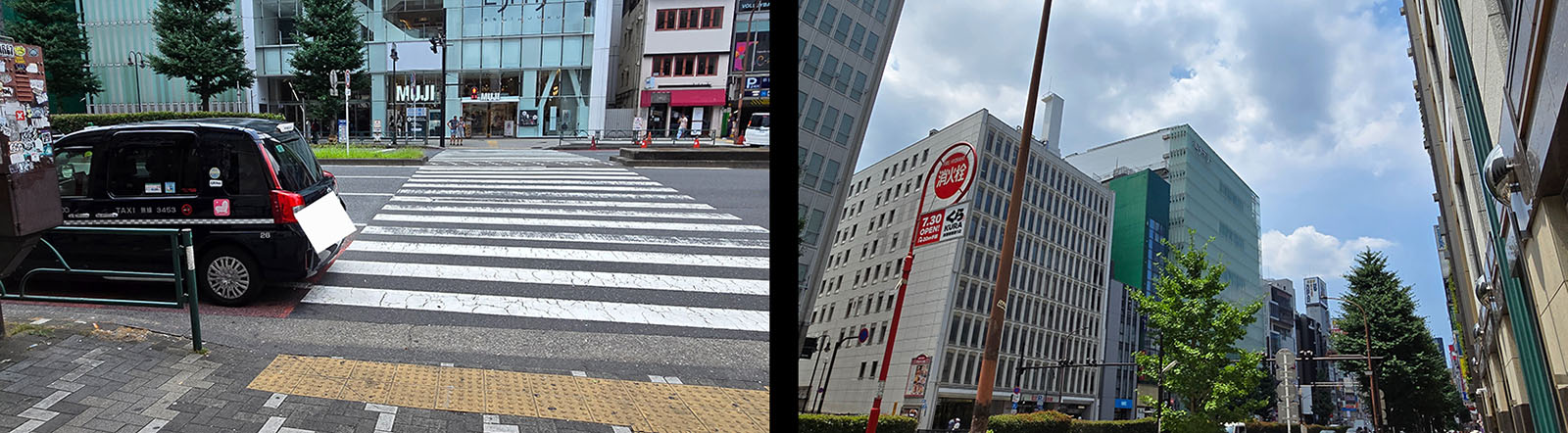
“This is the location where the female student was caught up in the strong wind caused by the ignition of Yamato‘s auxiliary engine (probably).” – M.T
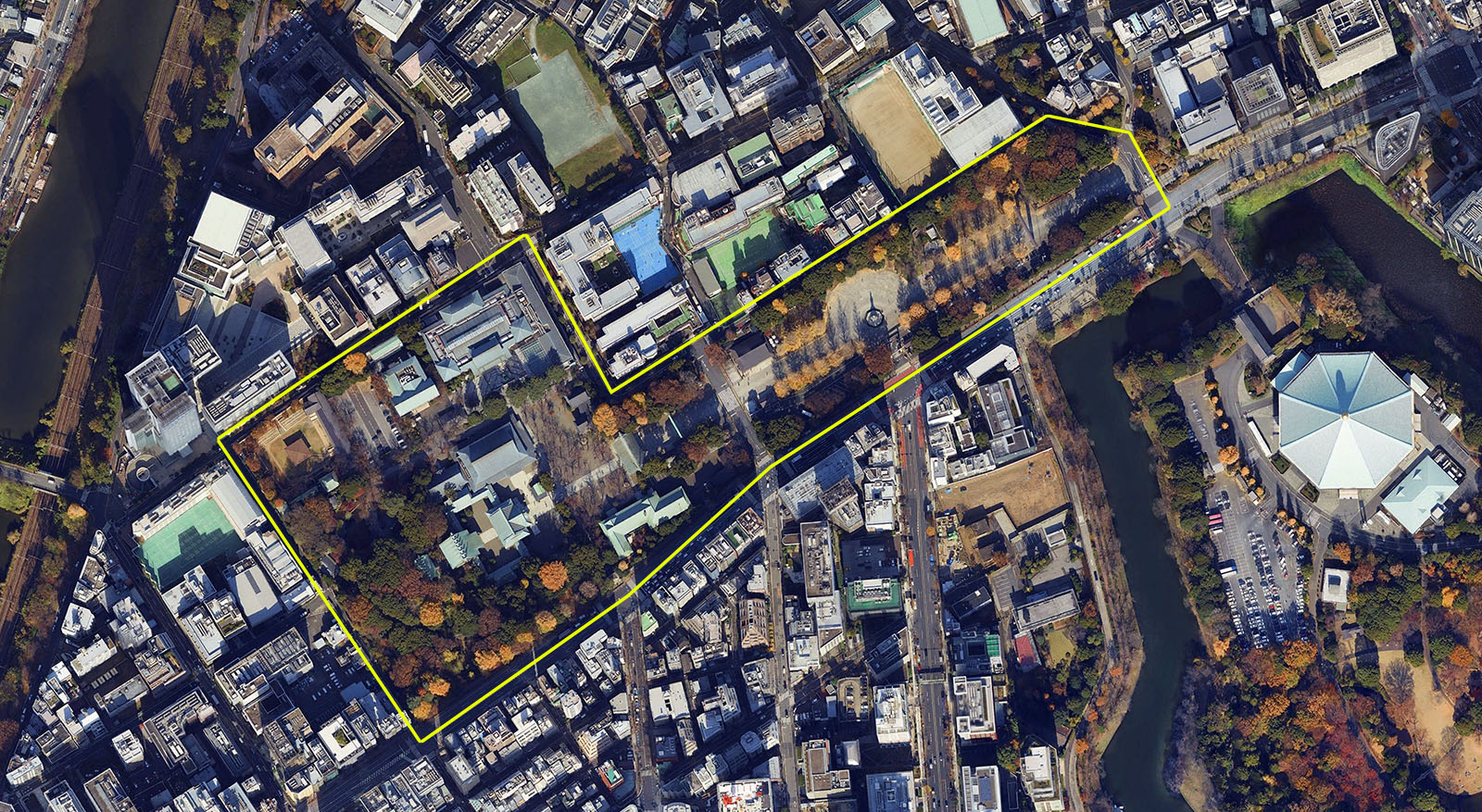
Point 2: Yasukuni Shrine
We don’t see much of this location, just the top of one of the stone gates, but the shrine has occupied this spot since 1869 and commemorates those who died in service to Japan all the way through World War II. Widely known as a place to go for a morale boost in dark times, it was mentioned by name in a few war songs.
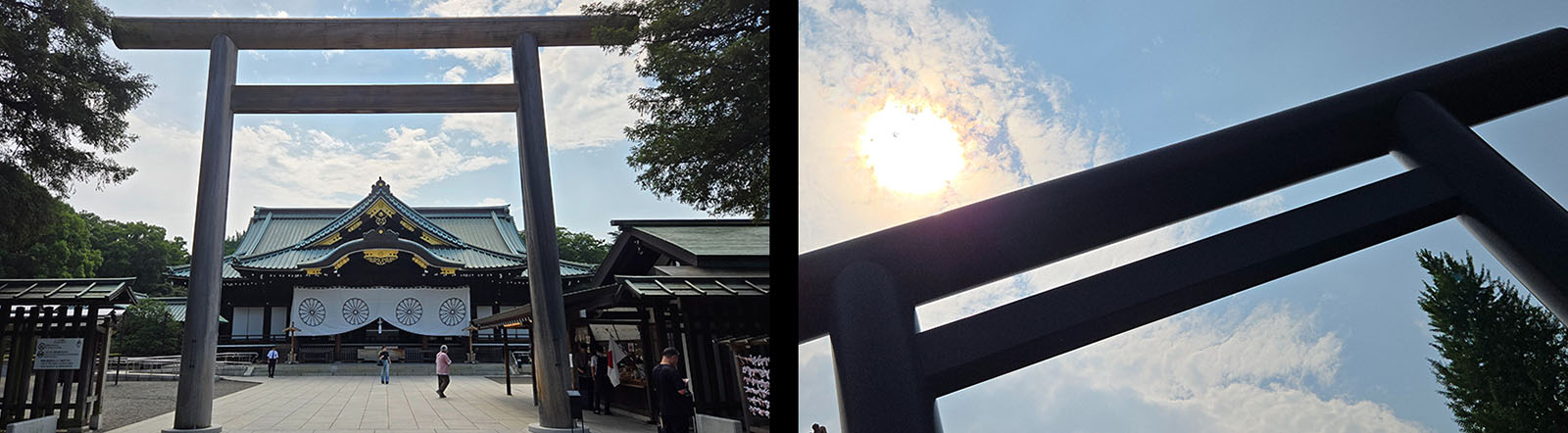
Photos posted by M.T
Learn much more about Yasukuni Shrine here
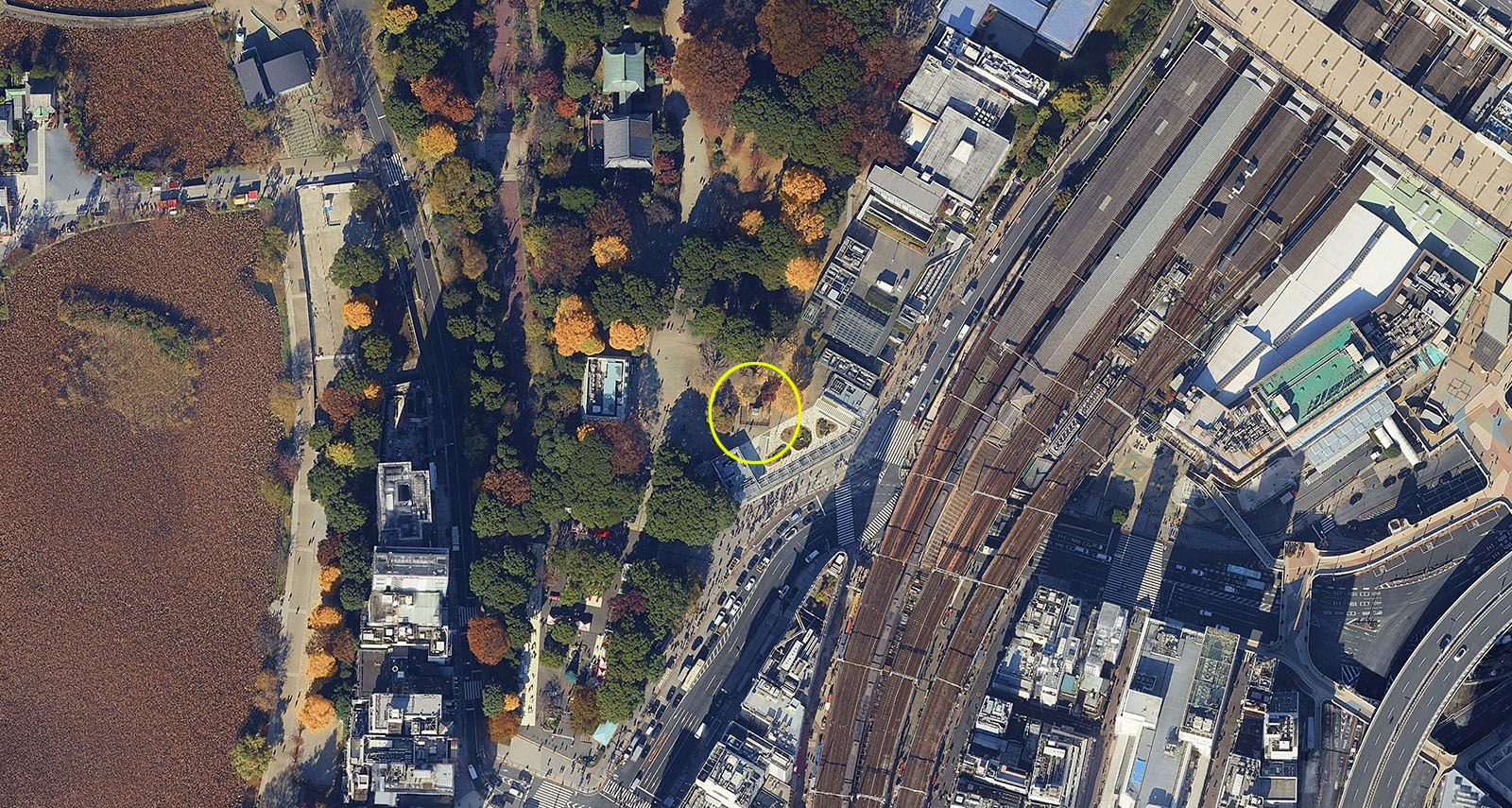
Point 3: Saigo Takamori Statue
Located near the southern tip of Ueno Park, this statue depicts Saigo Takamori, known colloquially as “the last samurai.” He was a giant of a man (literally, a foot taller than the national average) and a major figure in Japanese history, making the transition from samurai to politican in the 1800s and playing a pivotal role in several reforms. The statue has been standing since 1898, and Takamori’s story continues to be told today.
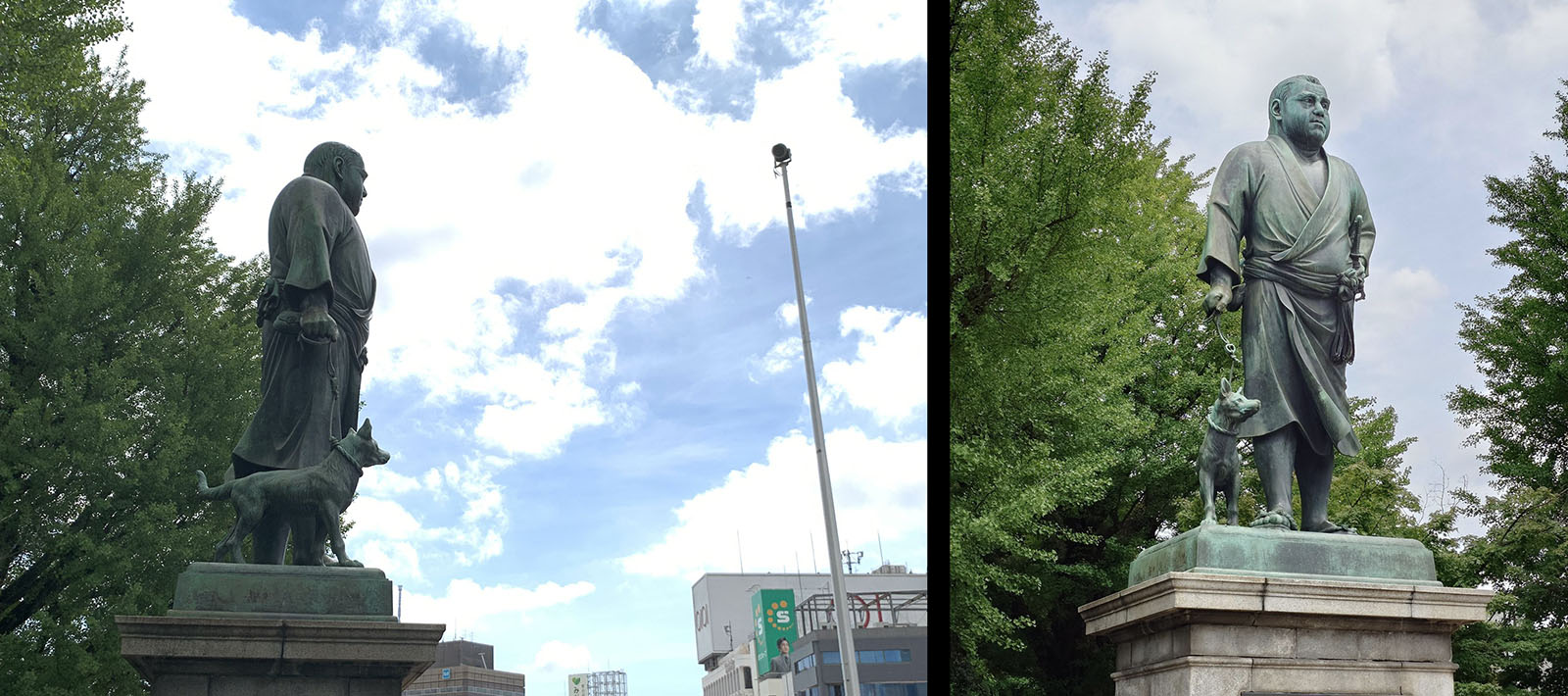
Photos posted by ayaka19790825 and popoki_cat
Learn more about Saigo Takamori here
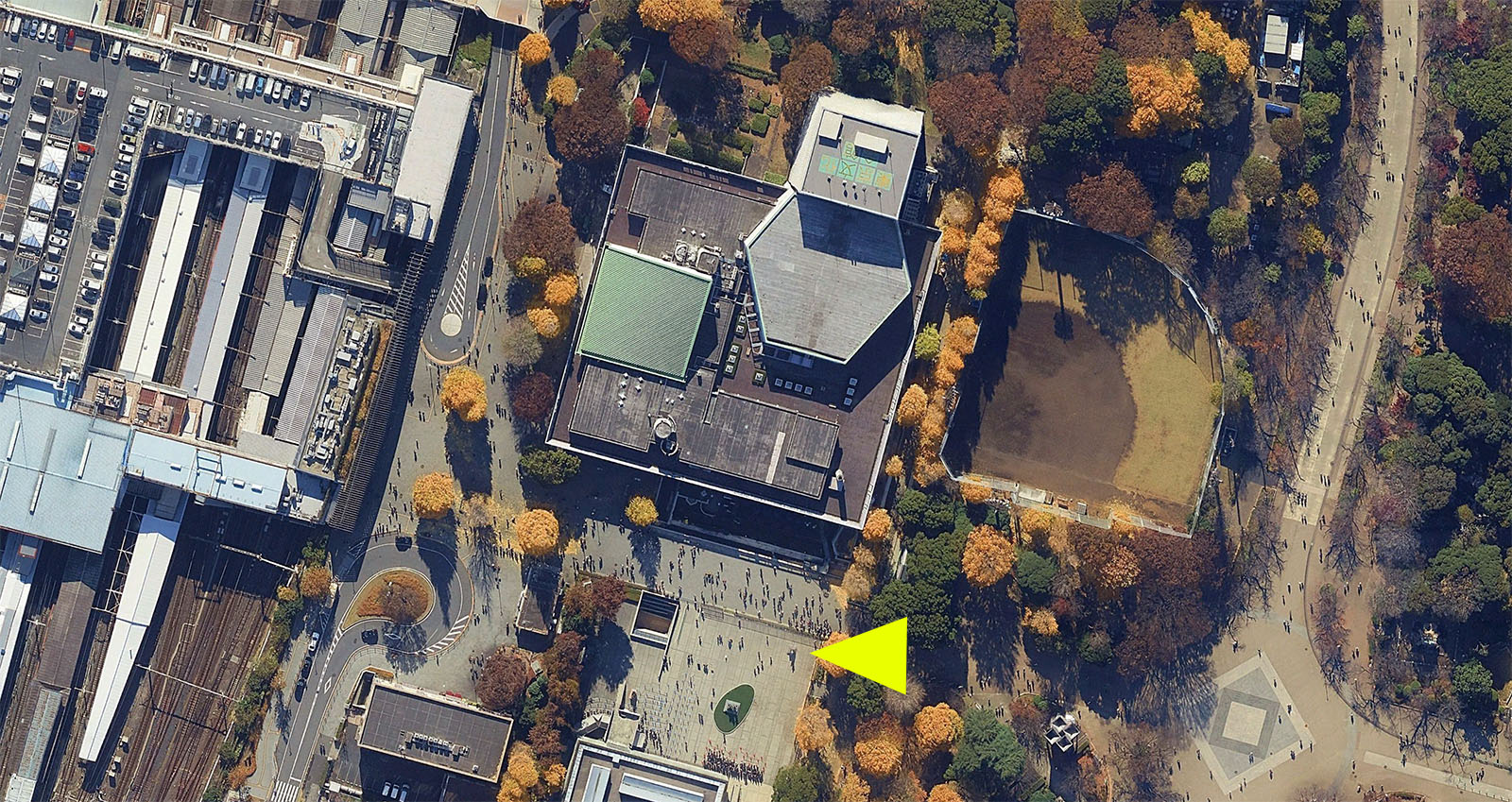
Point 4: The National Museum of Western Art
Located a short walk from the Takamori statue in Ueno Park, this museum was established in 1959 and specializes in works from the Renaissance to the early 20th century. It is the only national institution in Japan dedicated to western art.
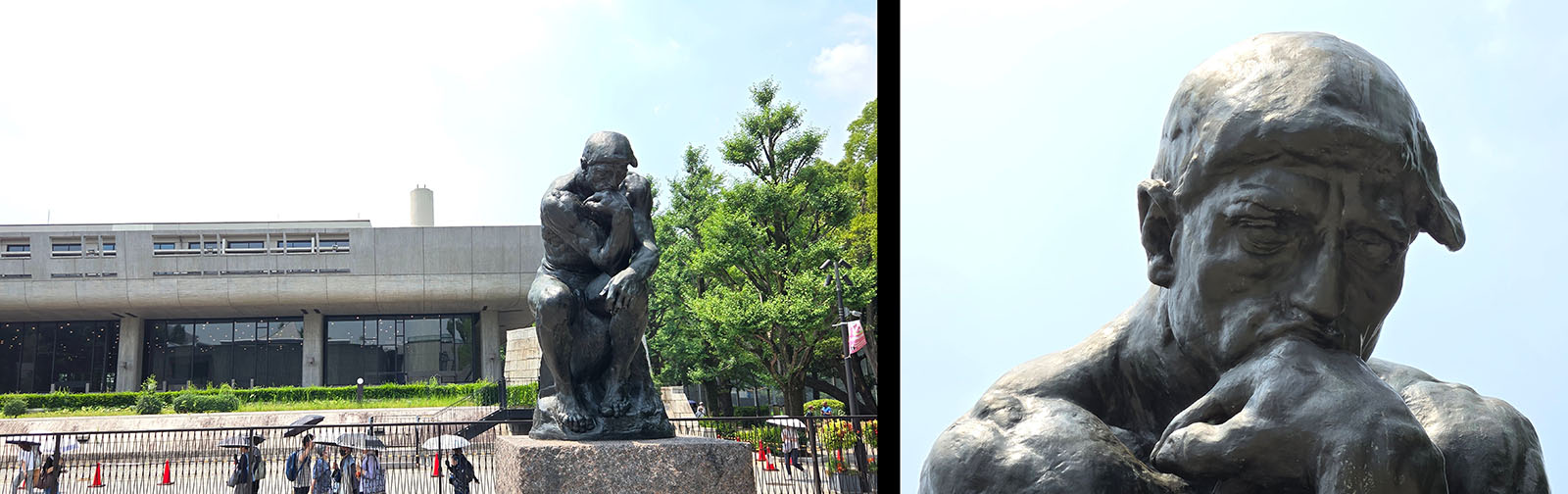
Photos posted by M.T
The reason it was placed on Yamato‘s flight path is a fun one. Outside in the plaza is a cast of Auguste Rodin’s famous sculture titled The Thinker, begun in 1880. Rodin employed a boxer as his model, and it was part of a larger set of characters depicting The Divine Comedy.
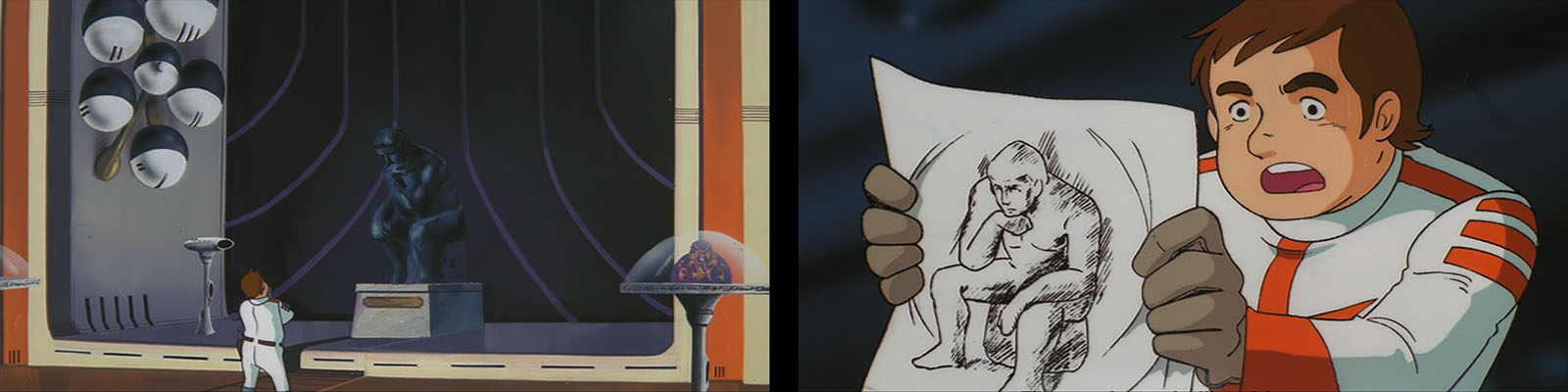
The Yamato connection is a strong one; The Thinker was part of Dezarium’s statue collection in Be Forever Yamato and became a pivotal plot point. It was sculpted incorrectly (on purpose) and drawn incorrectly in Tokugawa’s sketch (by accident), but he was under some pressure, so we’ll let that slide.
Read more about the museum here and The Thinker here
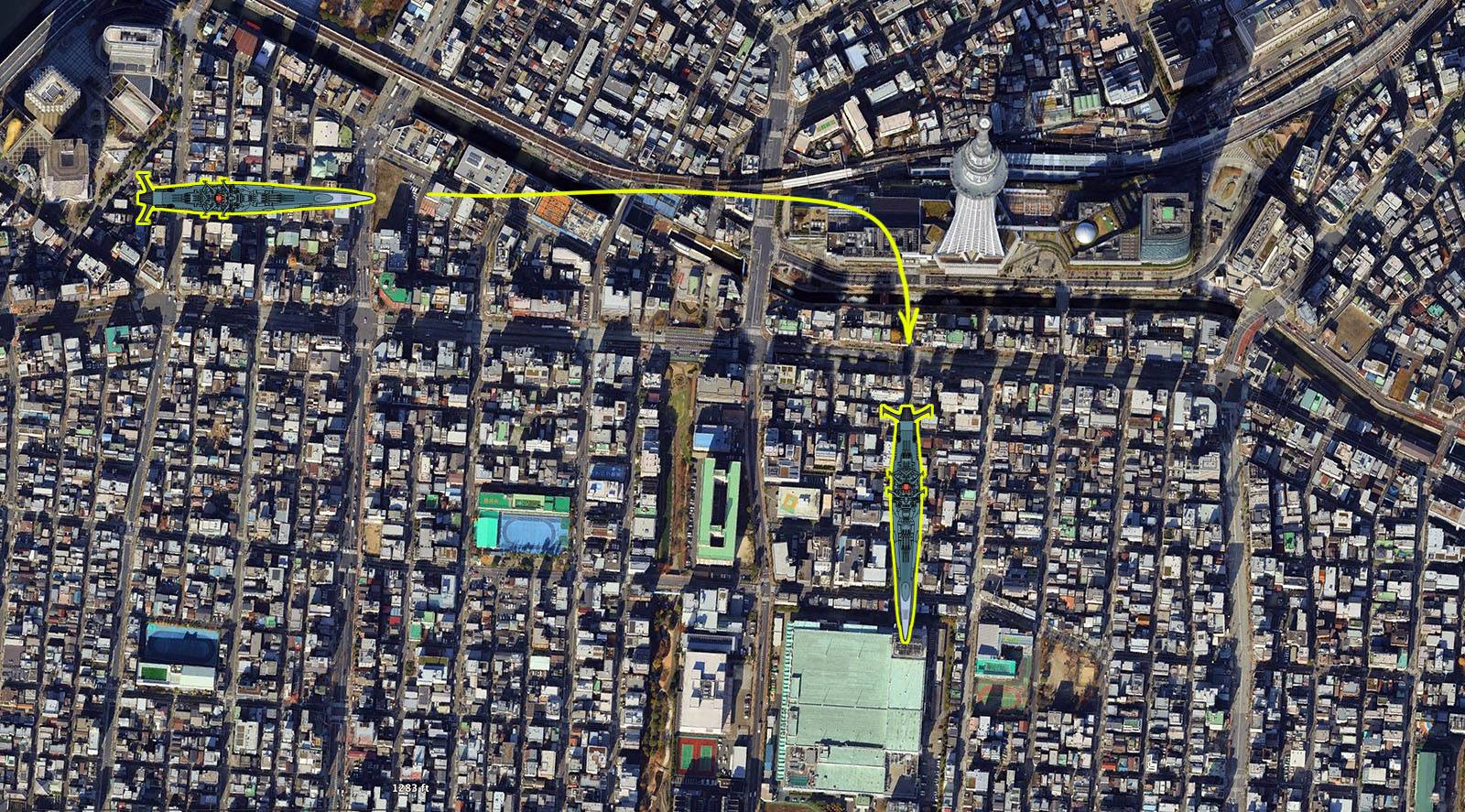
Point 5: Tokyo Skytree
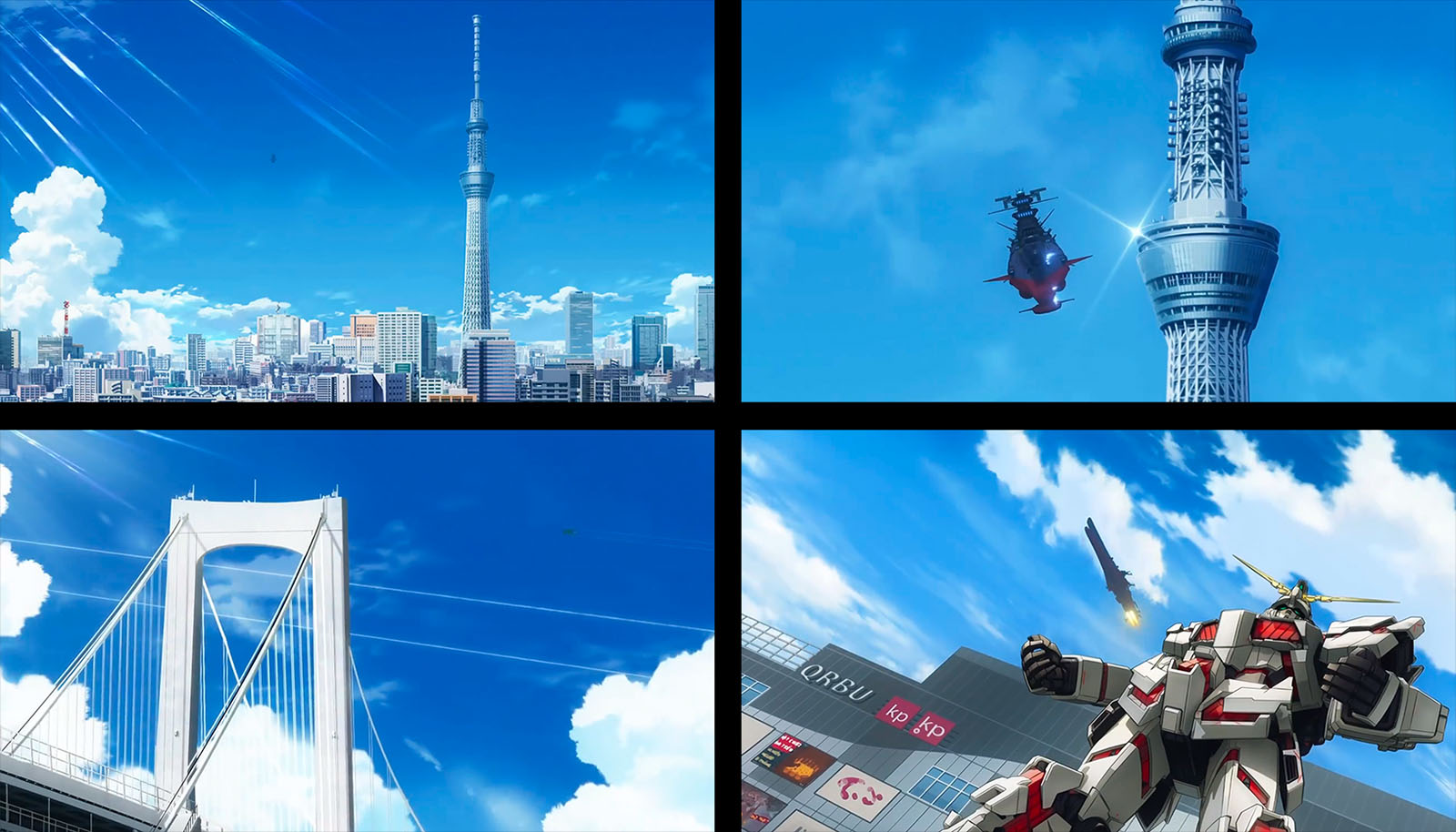
The Skytree is still the newest mega-structure of the Tokyo skyline, having opened in February 2012 (just under two months before the remake series began). At 2,080 feet, is the tallest tower in the world (about twice Yamato‘s length) and the third tallest structure on Earth.
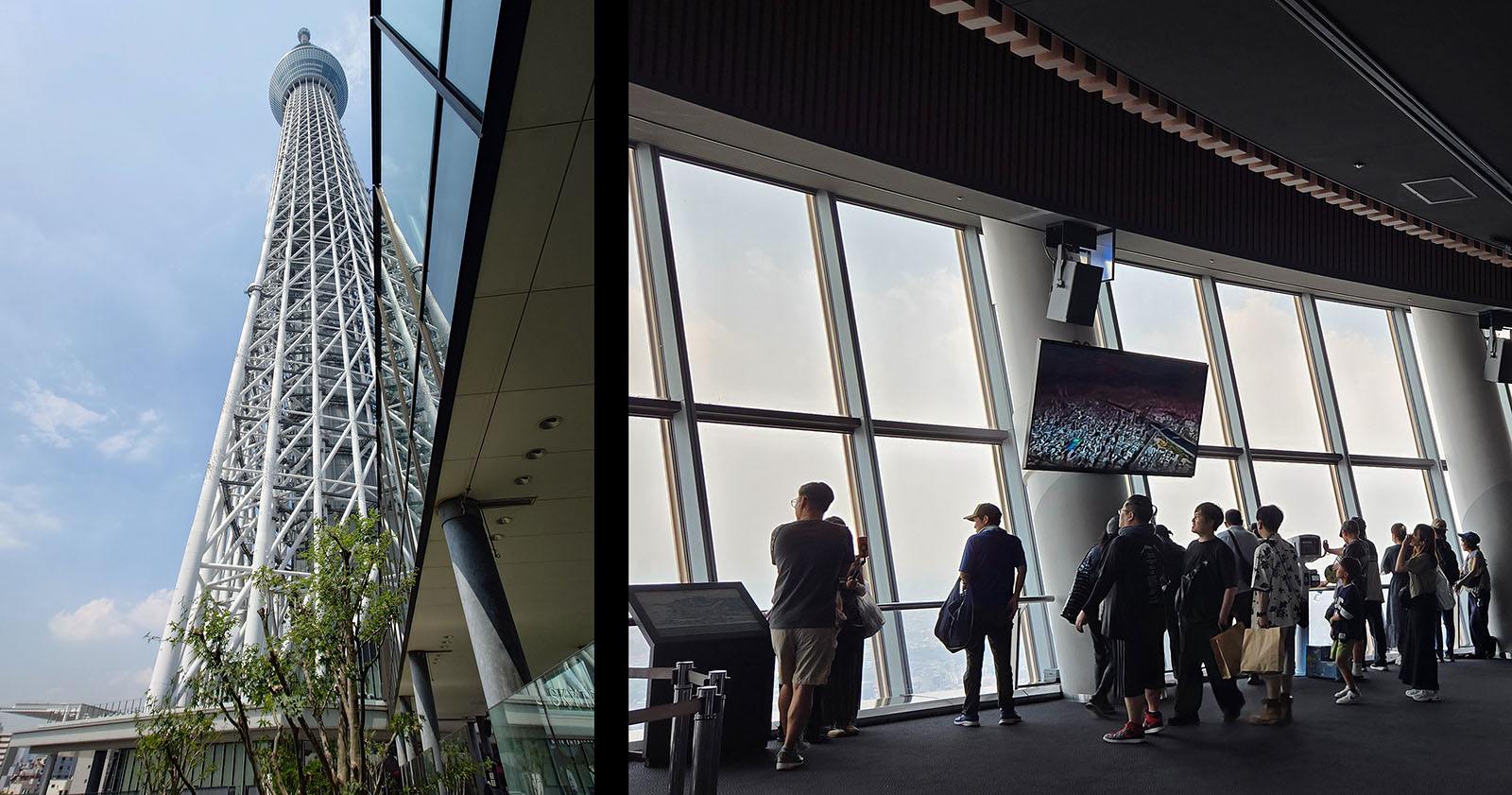
Photos posted by popoki_cat and M.T
Pursued by F2 fightercraft, Yamato approaches from the west and makes a sharp starboard turn (much sharper than it looks on screen) to head due south.
Learn more about the Skytree here
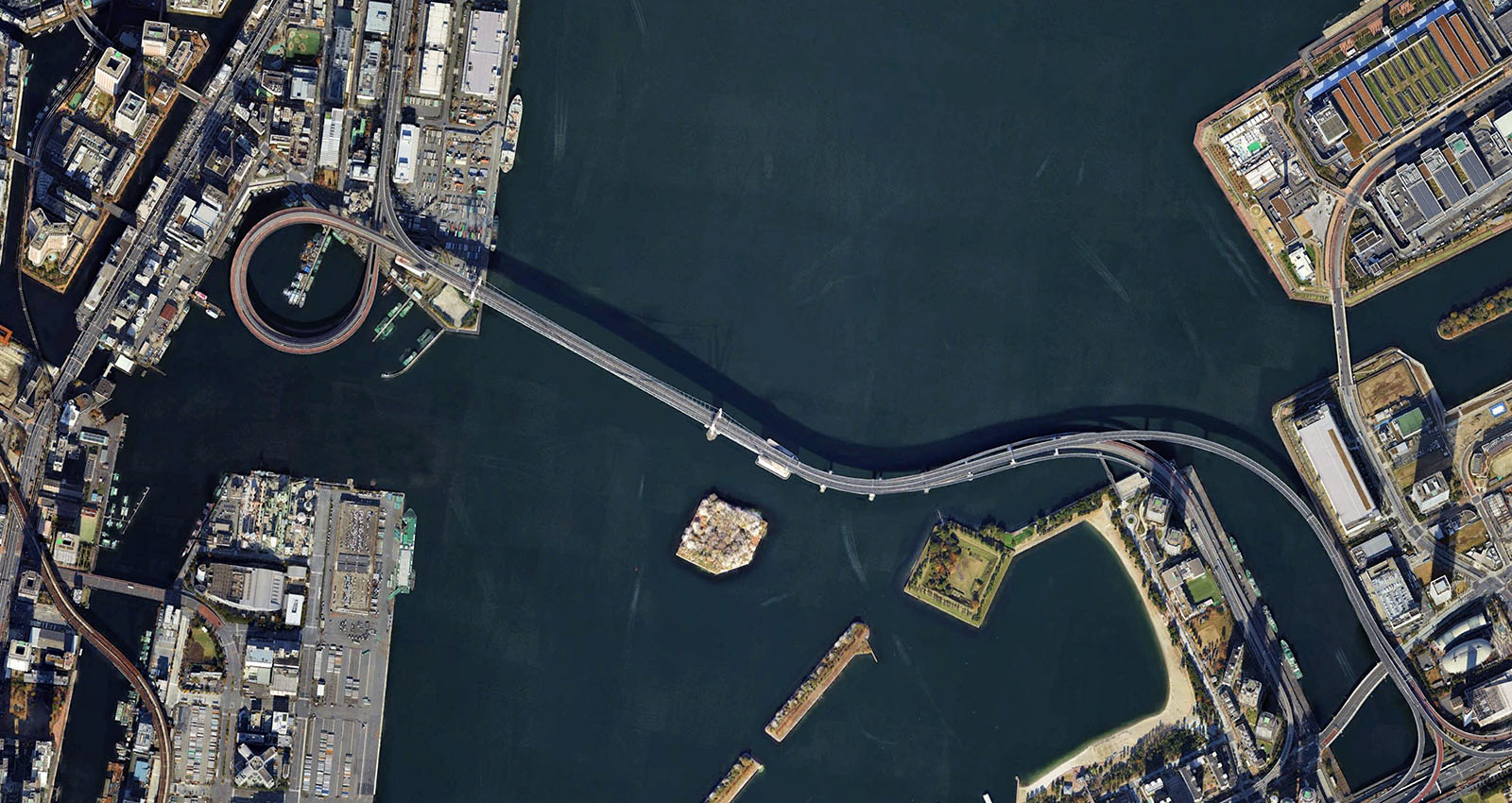
Point 6: Rainbow Bridge
We only see this landmark from afar, but it’s an important point of reference for Yamato‘s flight path, which now takes us toward Tokyo Bay and the Pacific Ocean beyond. Construction of this bridge was completed in 1993. It has two levels (for both cars and trains) and serves as a conduit between Tokyo and the manmade “entertainment island” of Odaiba.
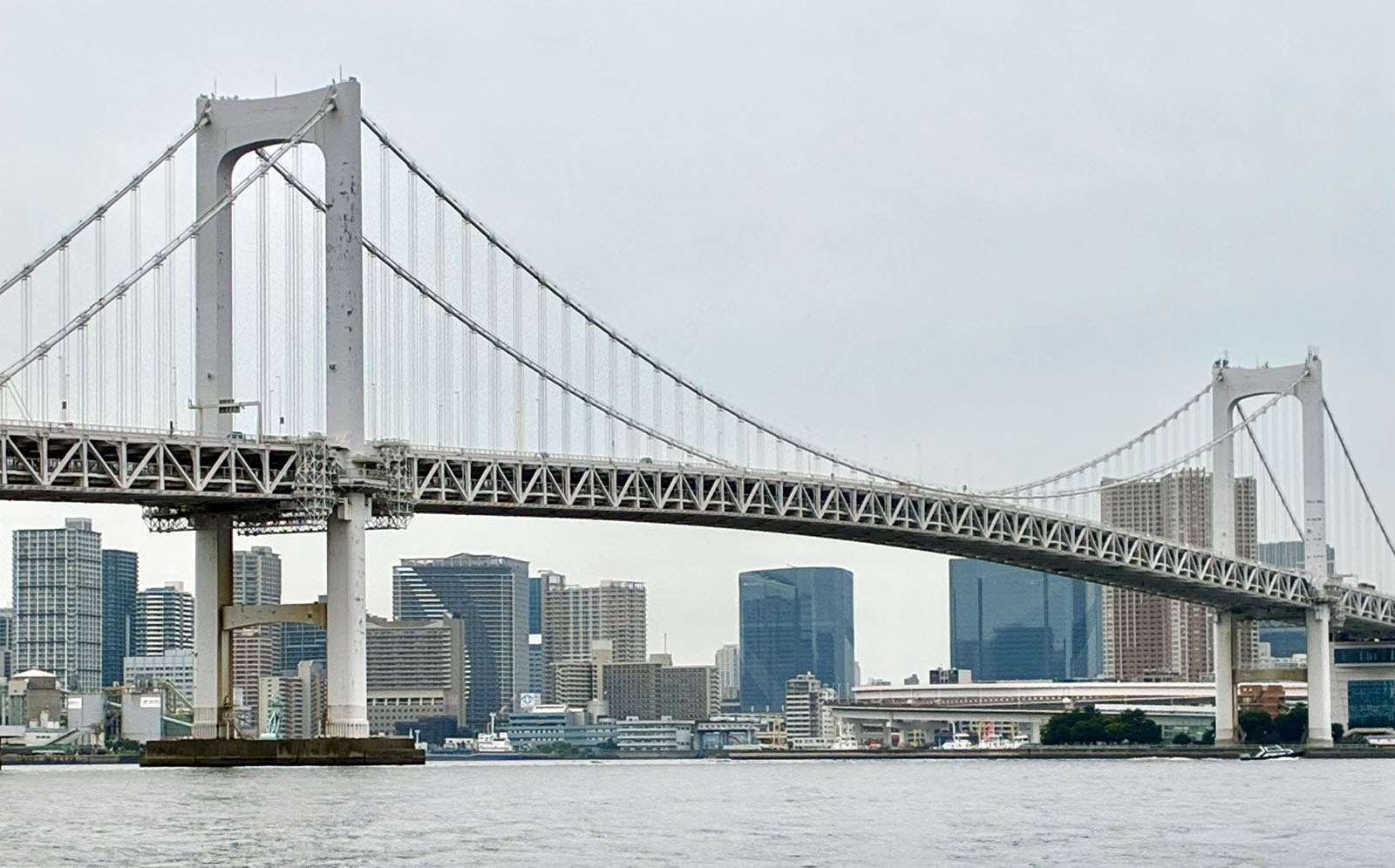
Photo posted by mat_hama
Odaiba is another tourist destination with a multitude of parks, museums, shopping malls, event spaces, and Tokyo Big Sight convention center, home of the biannual Comiket.
Learn more about Rainbow Bridge here
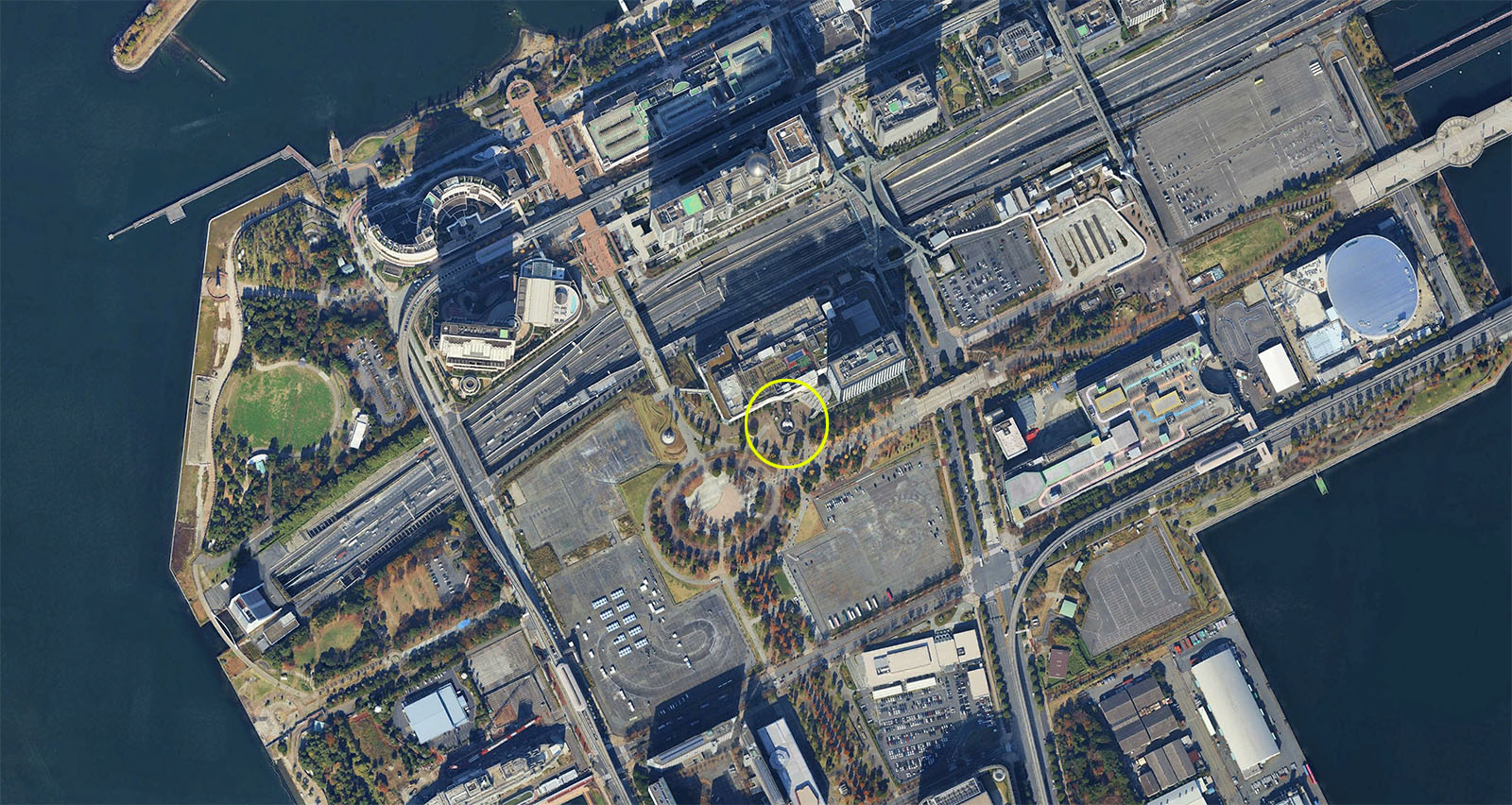
Point 7: Unicorn Gundam
The final point of interest before Yamato books it out of Tokyo was the most surprising: the 1/1 Unicorn Gundam statue erected outside DiverCity mall on Odaiba. It stands almost 65 feet tall, lights up and unfolds several times a day, and was installed in the fall of 2017 in place of a 1/1 scale RX-78-2 Gundam. It was removed at the end of August 2026, which may have been a factor in choosing a calendar date for Yamato‘s flyover.
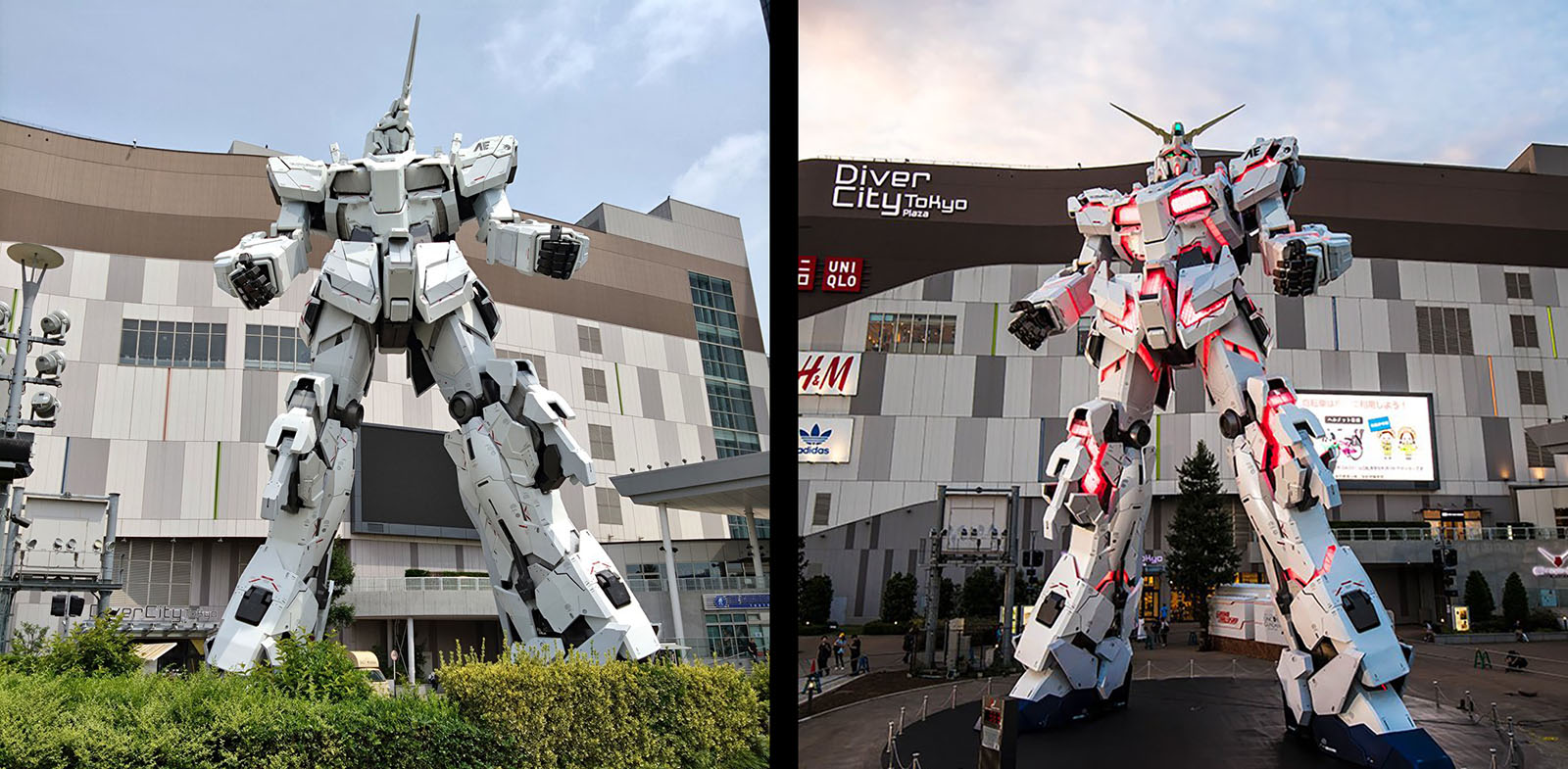
Photos posted by 25katana and jhonde1972
Putting Gundam on screen with Yamato, however briefly, was a symbolic moment in anime history. Born out of rivalry in the late 70s, the two franchises found common ground as Bandai model kits and are now strong components of the Bandai Namco group. Taking the symbolism to yet another level, the writer of both Gundam Unicorn and REBEL 3199 is a guy named Harutoshi Fukui. Oh, to have been in the room when THIS idea was first floated…
Read more about the statue here
PART 2: UNDERCOVER RENDEZVOUS
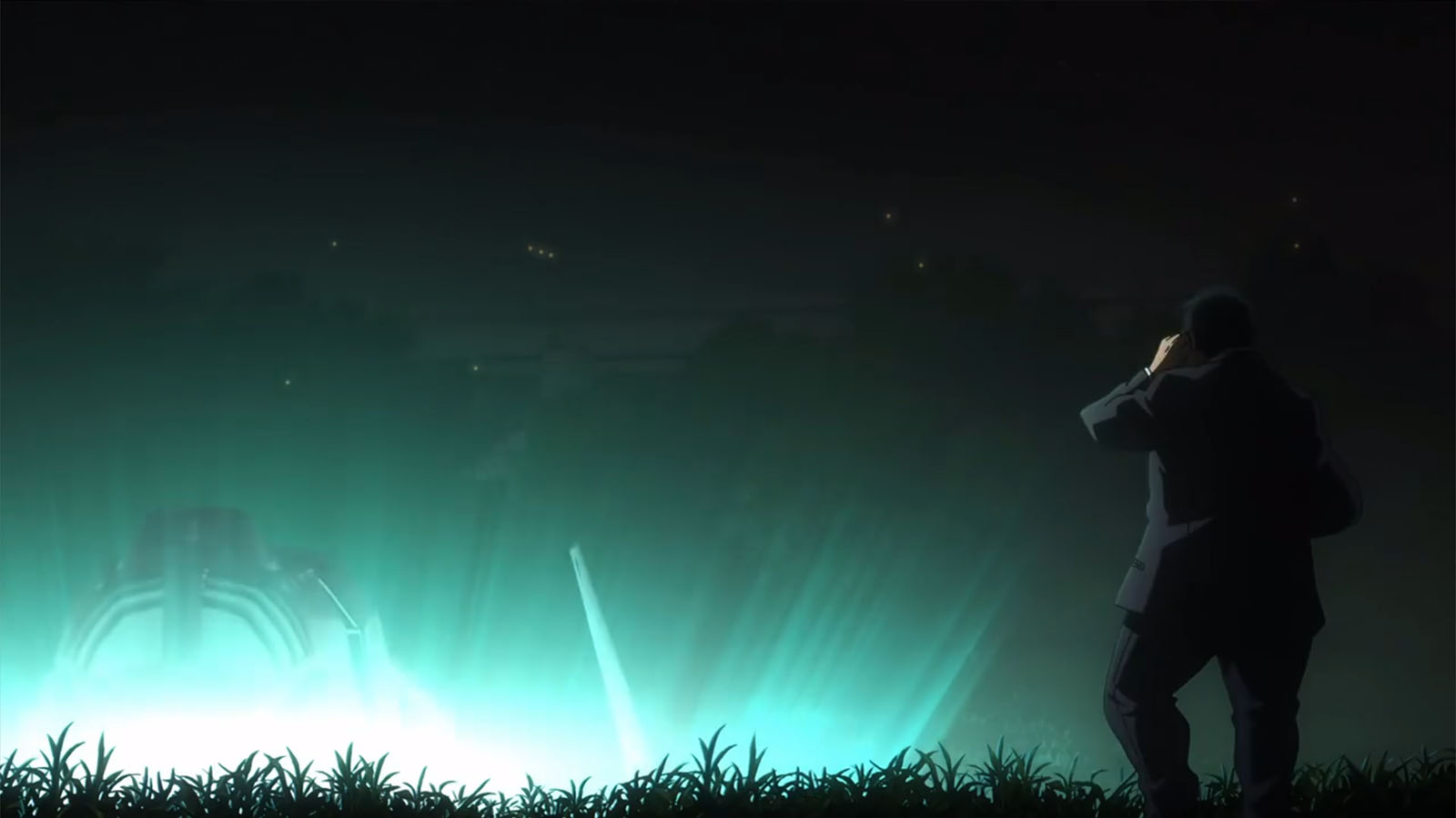
After Yamato leaves Tokyo to conceal itself on the far side of the moon, data is collected without further disrupting life on the ground. But they have the perfect stealth vehicle to make further incursions: the Cosmo Hound. Using its dimensional engine, the crew finds an ideal spot to “surface” and go covert. That’s where this tour goes next.
Point A: Daiba Park
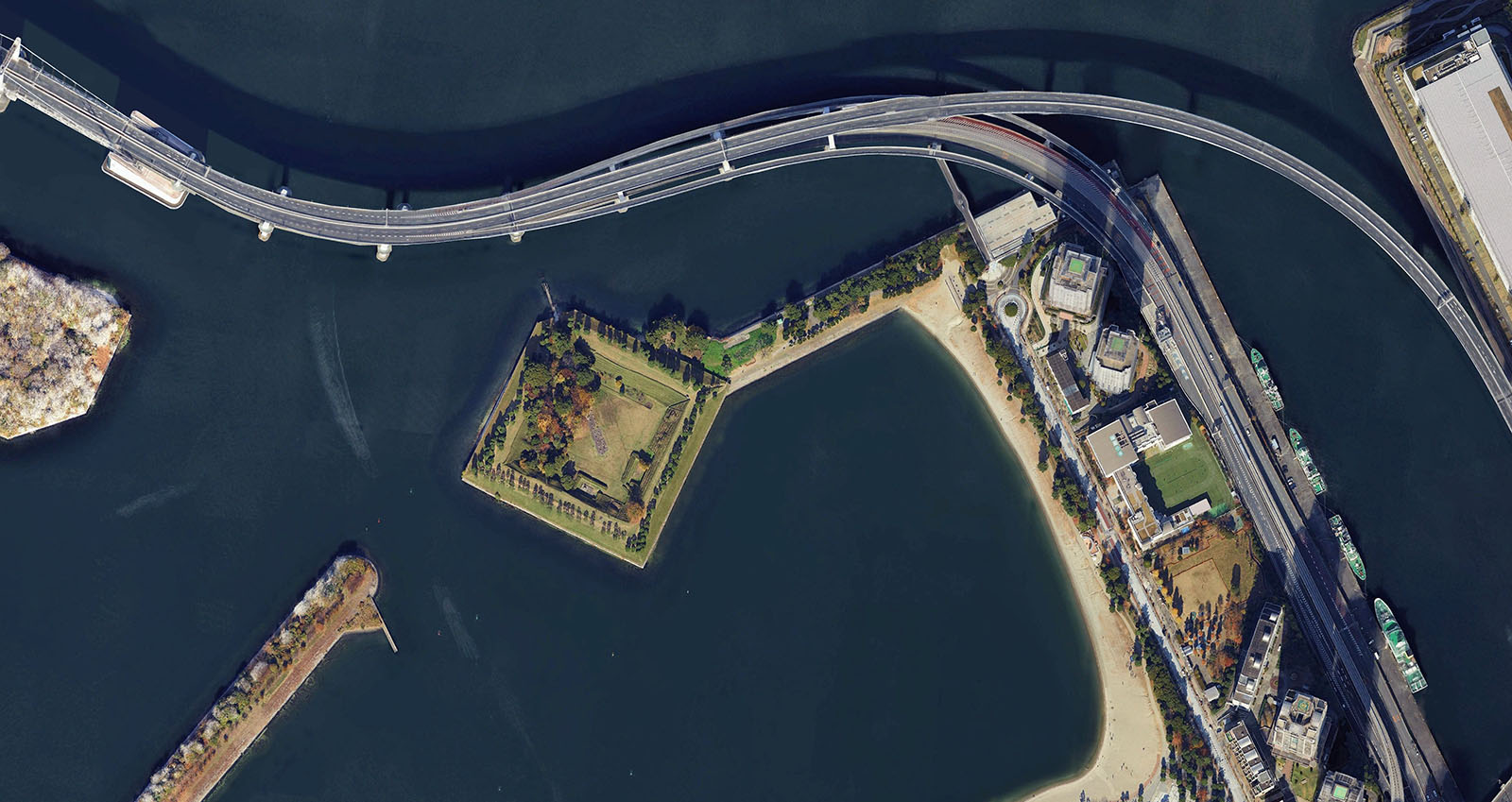
It’s tempting to believe there could not be a more perfect rendezvous point than this diamond-shaped outcropping just below Rainbow Bridge. It was originally a gun battery (one of six) built in 1853 in preparation for the arrival of Commodore Perry’s “black ships” that opened up Japan to the outside world.
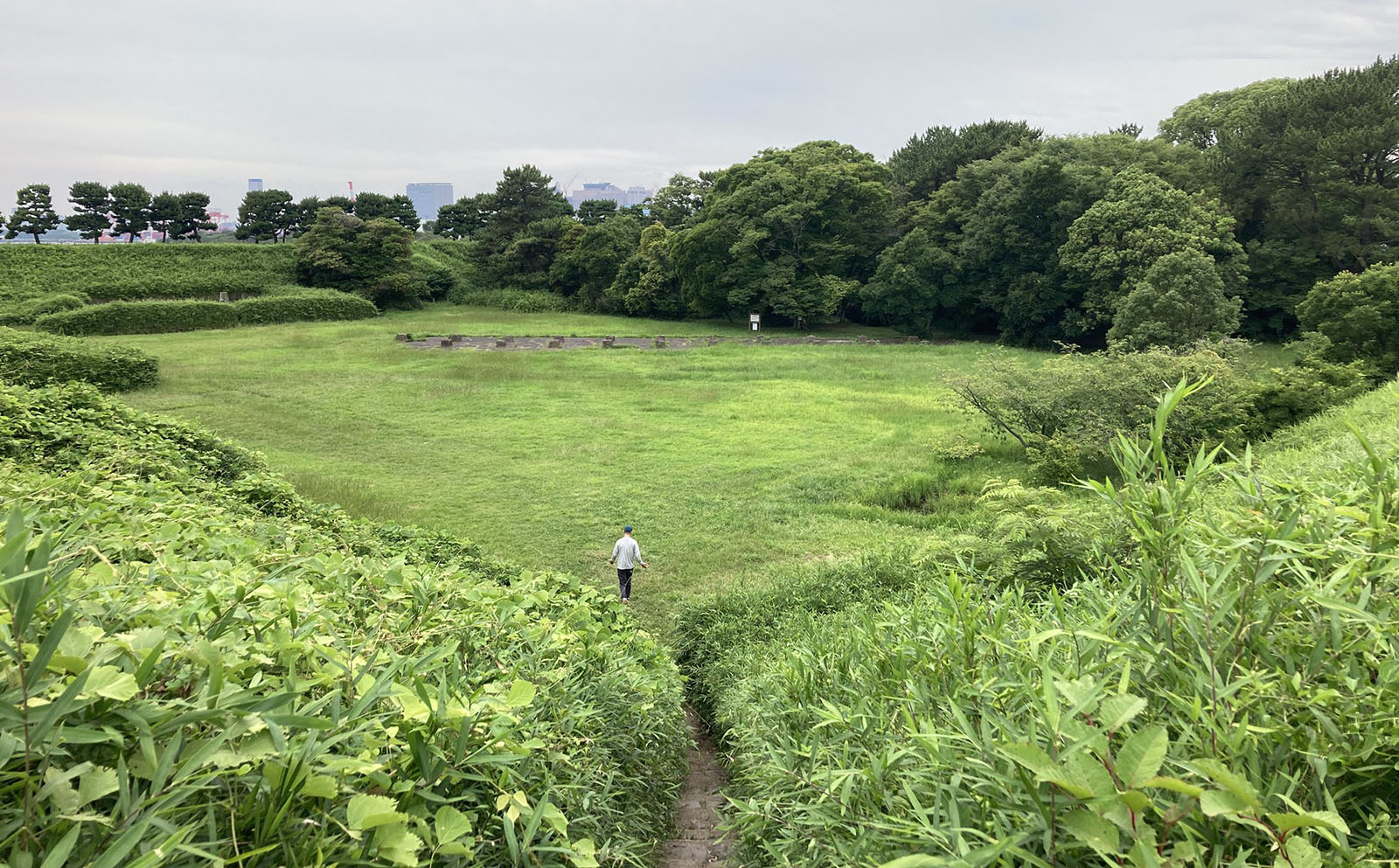
Photo posted by ElleYmt
Its recessed space, which gives visitors a chance to isolate themselves from urban landscapes, is where the Cosmo Hound emerges to make first contact with Ryoichi Saito.
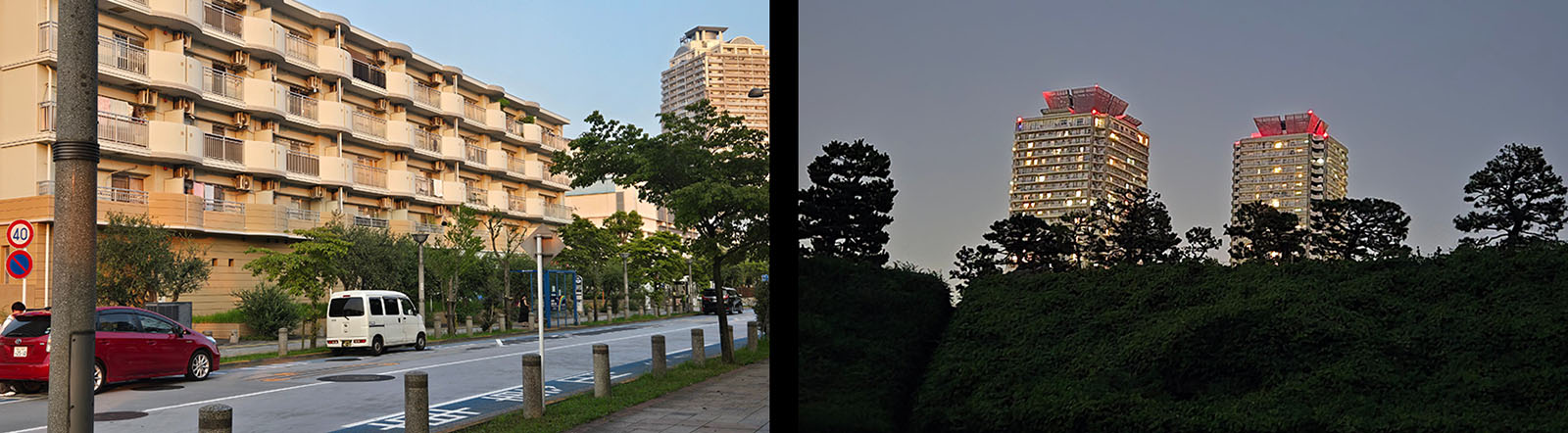
Photos posted by M.T
The point where Saito’s driver delivers him to the site is also real, a cul-de-sac roadway on the strip of land that terminates near the curve of the bridge. An apartment building sits at the root of the walkway out to the park.
Read more about Daiba Park here
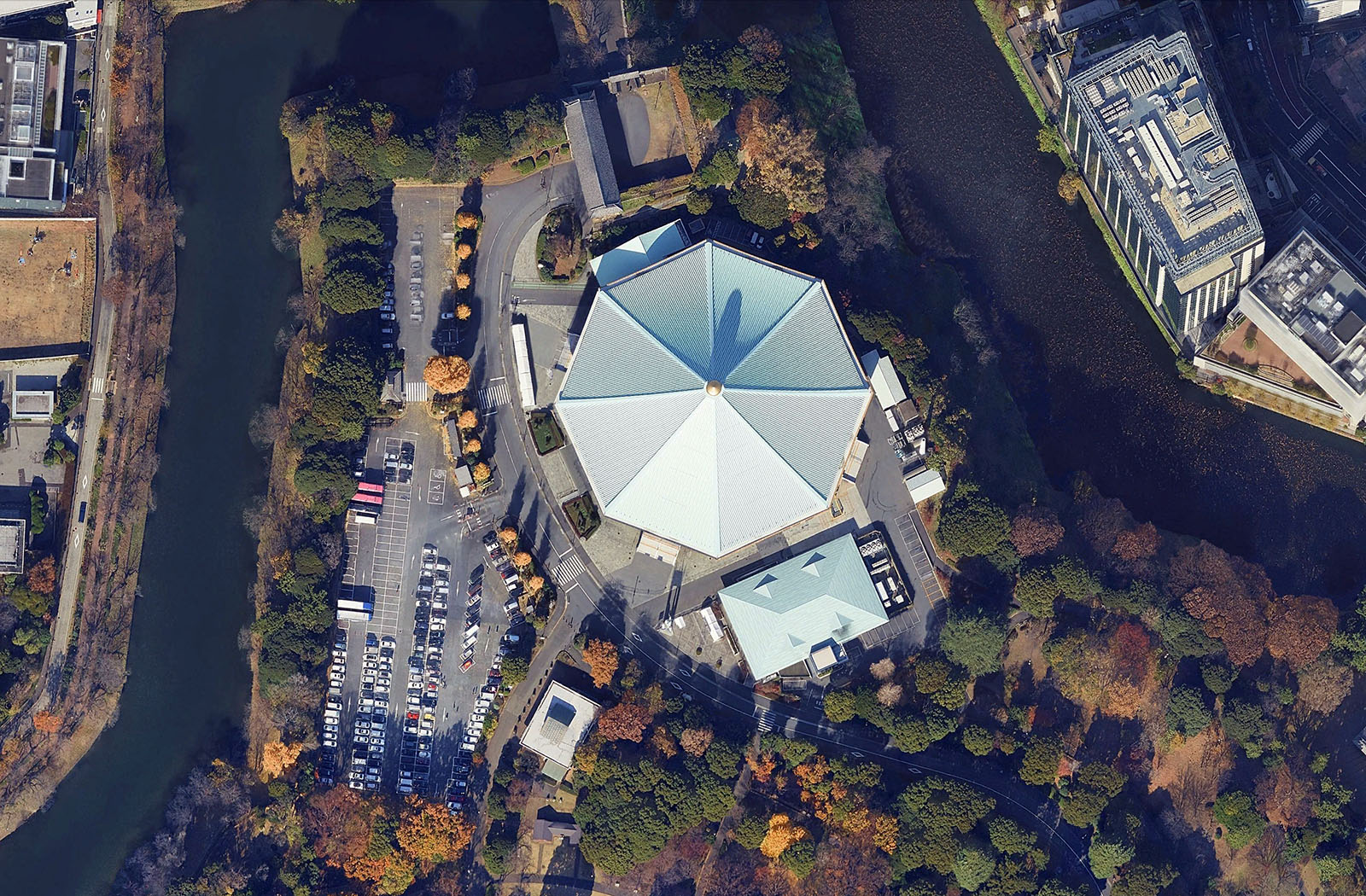
Point B: Nippon Budokan
The last stop, at least until we get to Chapter 7, goes by so quickly it almost doesn’t get noticed. In Episode 21, the Cosmo Hound parts ways with Ryoichi Saito, and the location turns out to be another nod to classic Yamato history.
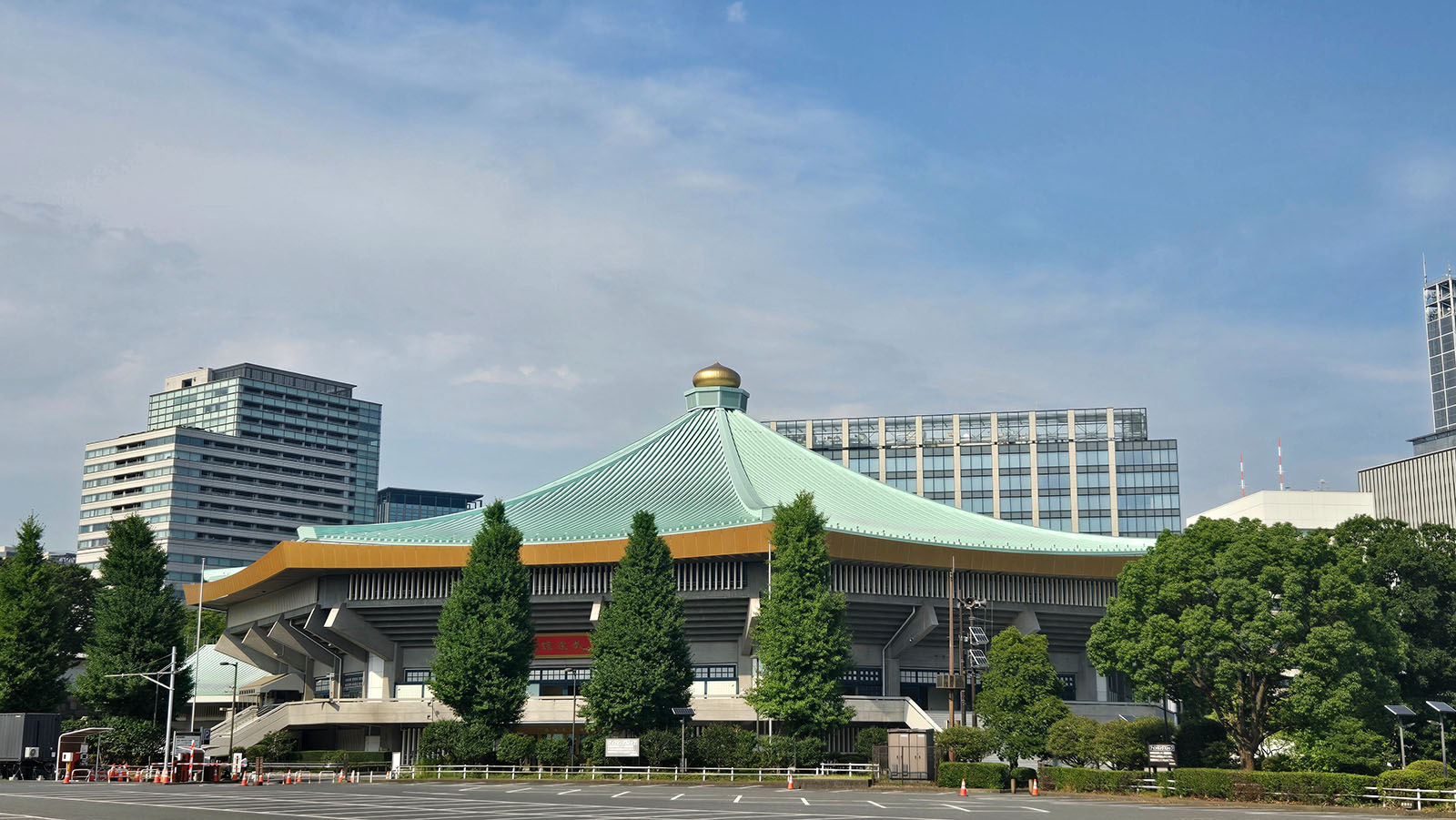
Photo posted by M.T
The Nippon Budokan (Japan Martial Arts Hall) was built for the 1964 Summer Olympics and has since served as both a sports arena and concert venue. Located in Kitanomaru Park in the middle of Tokyo, it was the site of perhaps the most famous Yamato concert of the vintage years, the July 1980 Festival in Budokan. It was a huge promotional event for Be Forever, and you can read all about it here.
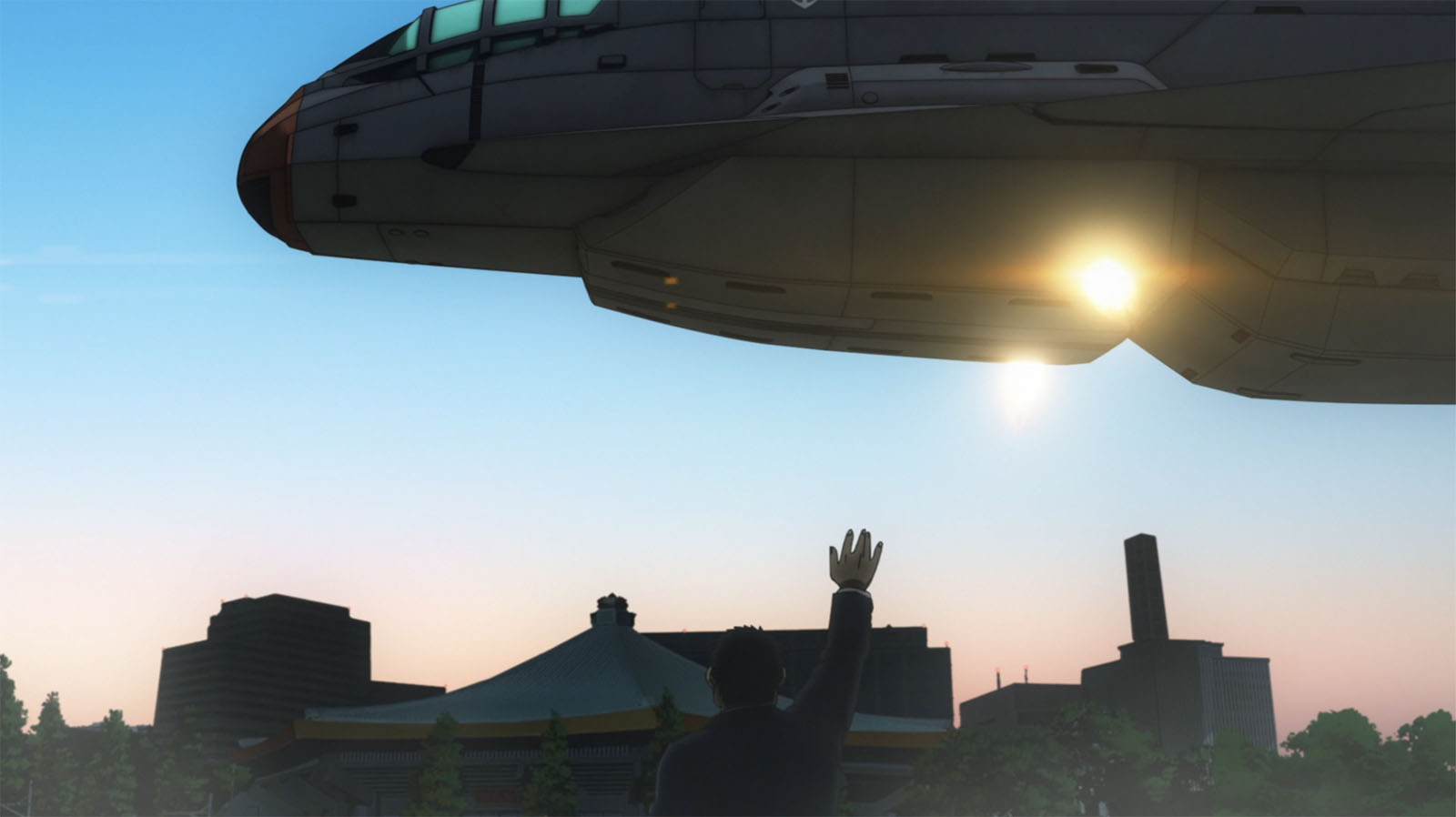
Scene from Episode 21
Based on the angle of this shot, the Cosmo Hound appears have landed in the Budokan’s parking lot before it takes off into the morning sky. This means the Budokan now qualifies for double sacred site status.
Read more about the Budokan here
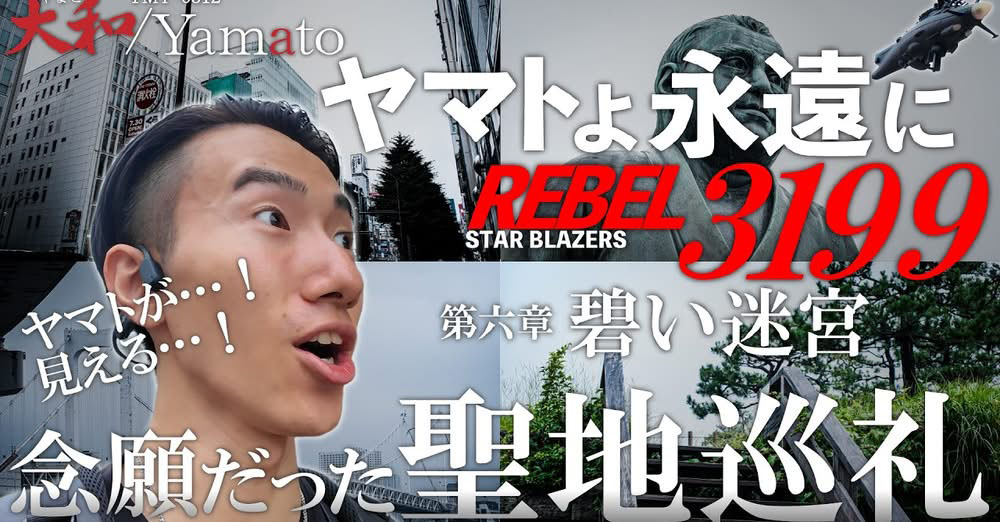
Now that you’re familiar with each of the “sacred sites,” you’ll have a much better time watching an extended walking tour video posted by superfan YMT-0312Yamato on his Youtube channel.
See it here (closed captions and autotranslate ON)
Bonus: What’s that? UFO?
Fans being fans, lots of them got into the full spirit of arrival day by “capturing” the moment itself and sharing their scrambled photos on Twitter. Here’s what they got up to…
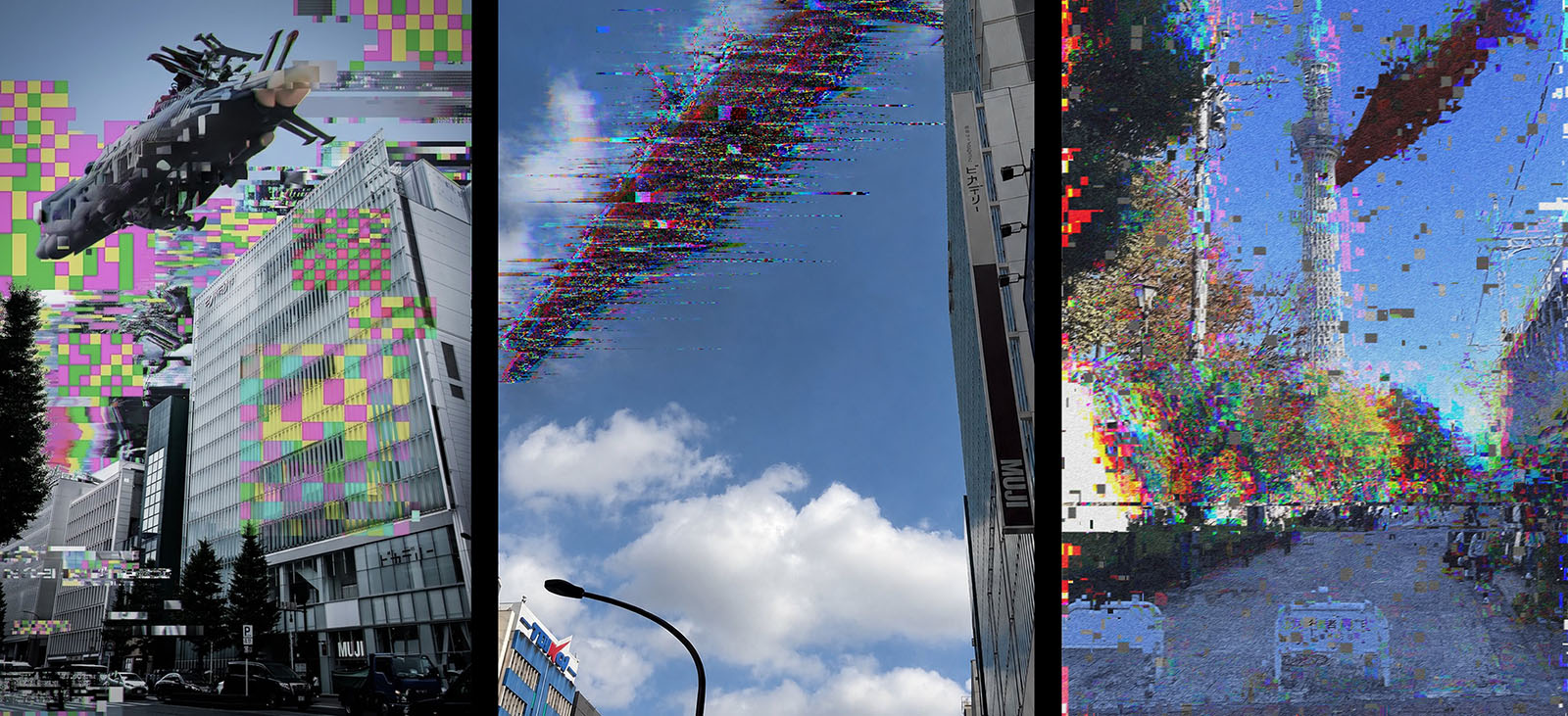
Hey!! I was just watching a movie at Shinjuku Piccadilly and stepped outside a moment ago, but suddenly it got dark, and then I saw something flying. What was that? A UFO…? And I must’ve taken tons of photos, but none of them came out right!! What’s going on…everyone around me seems to be having the same issue…
There was a ship floating in the sky over Shinjuku, but was that some kind of event? That 3D video tech is insane.
I was taking photos of the Tokyo Skytree when something that looked like a ship came flying in, so I hurriedly snapped a shot, but it turned out all noisy. What the heck was that thing?
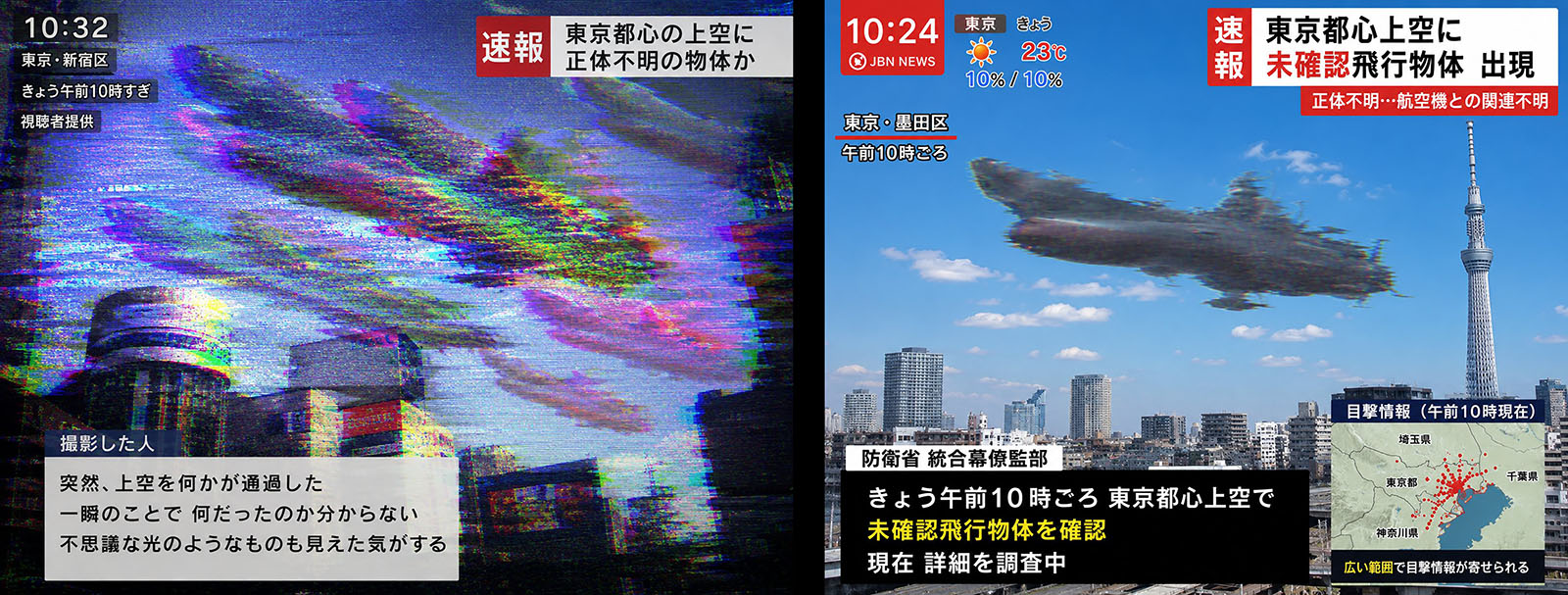
What on Earth happened today? (I wanted to go to Shinjuku~!)
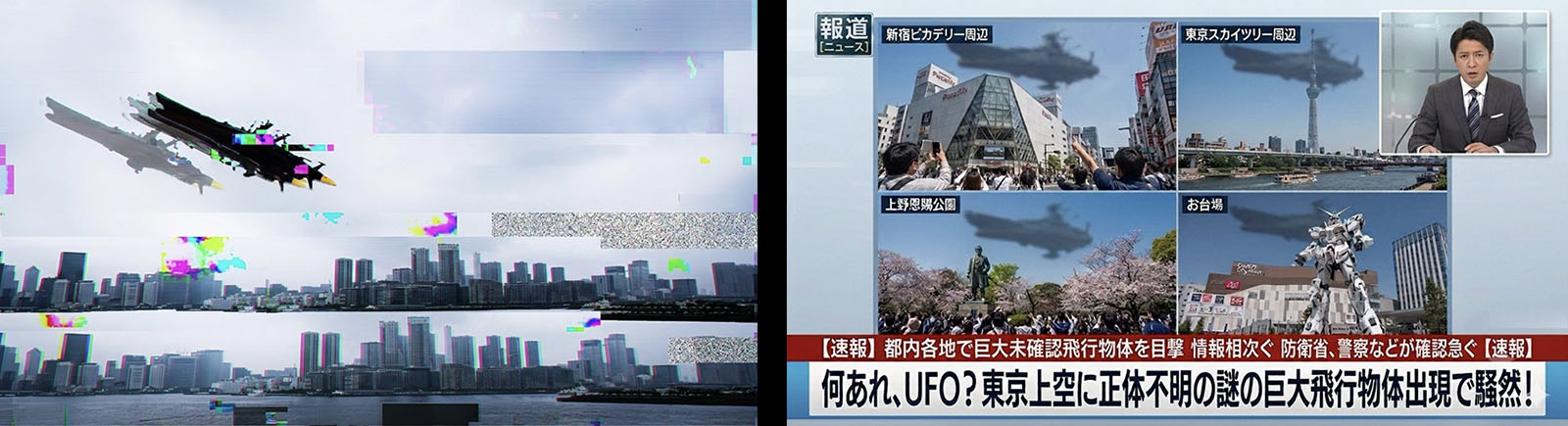
The view from Rainbow Bridge. I was thinking how amazing the visibility is, and then suddenly something HUGE is flying by…!?!! Such a loud noise!! I hurriedly took a pic with my phone, so the image is super blurry…and fighter jets were chasing it too…what on Earth was that…?
The thing that appeared in the skies over Tokyo today is being treated as the top story on the evening news across all stations, huh. Mysteriously, it seems like no station managed to capture any clear footage of it. It kinda looks like some sort of battleship.
– jm3xpf
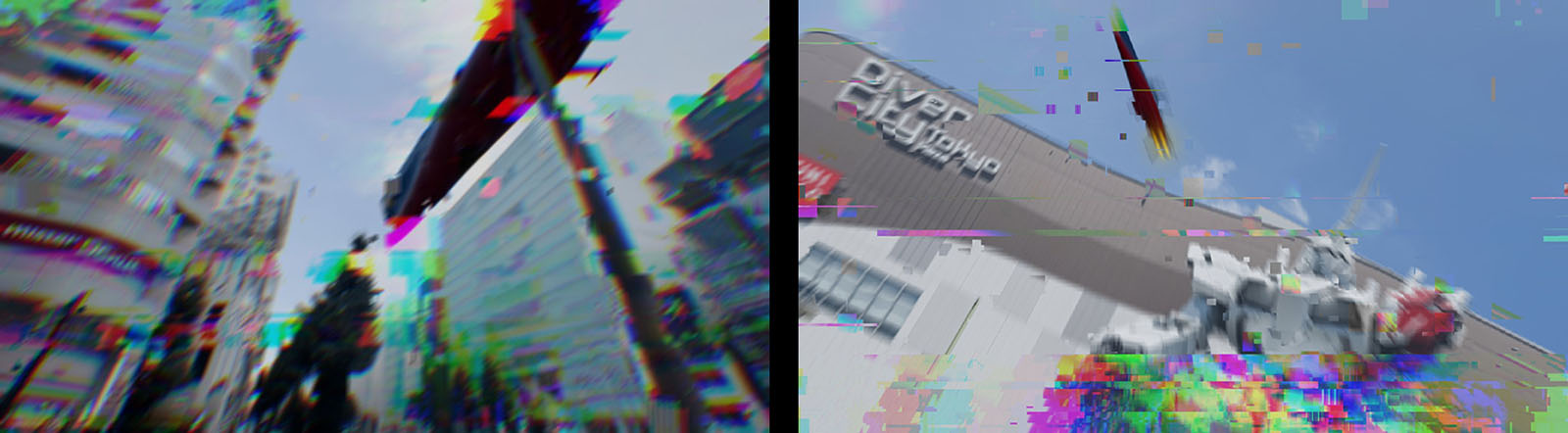
Weird. One of my cousins was at the Skytree and another one was visiting the DiverCity Tokyo Plaza to check out the Unicorn Gundam. We all swear that the pictures should have been much clearer.
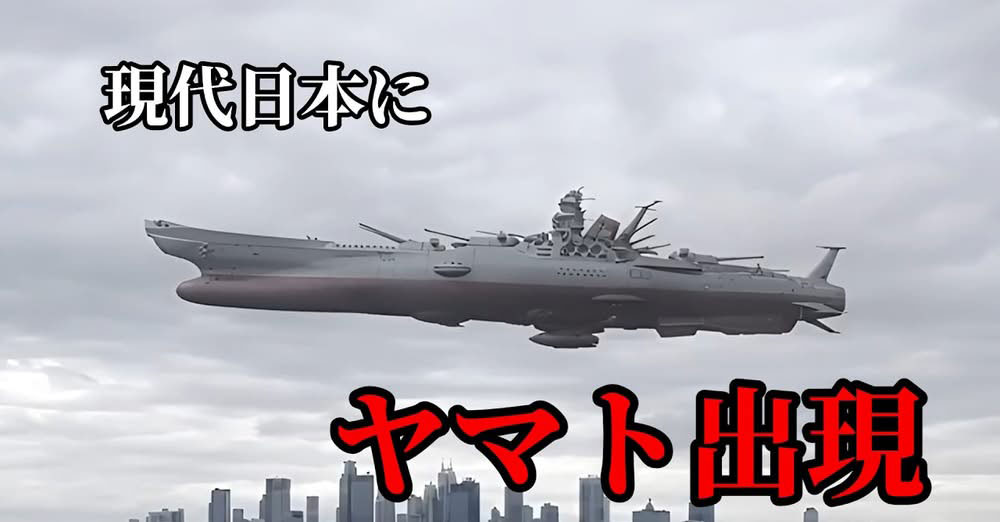
And finally, check out a 4-minute video report created by “Kunihro2199,” a video artist who also happens to be the wife of Hideaki Anno.
Watch it here (closed captions and autotranslate ON)
Official description:
The Appearance of the Space Battleship Yamato in Modern-Day Japan [Fictional Documentary]
On July 21, 2026, a massive flying object appeared in the skies over Shinjuku. It was a world where no one knew that the object was the Space Battleship Yamato.
Smartphone footage captured by citizens, chaos on social media, traffic restrictions imposed by the Metropolitan Police Department, disruptions at Haneda Airport, and surveillance and tracking operations by the government, the Ministry of Defense, and the Air Self-Defense Force…
How would Japanese society react if a massive, unidentified battleship suddenly appeared in modern-day Tokyo?
This work was produced as a fictional documentary, designed to evoke the feel of actual news broadcasts and archival footage. This is an unofficial, fan-made video based on Space Battleship Yamato. It has no affiliation with the official works or any associated companies.
(Generative AI and 3DCG were used in the production of this video.)