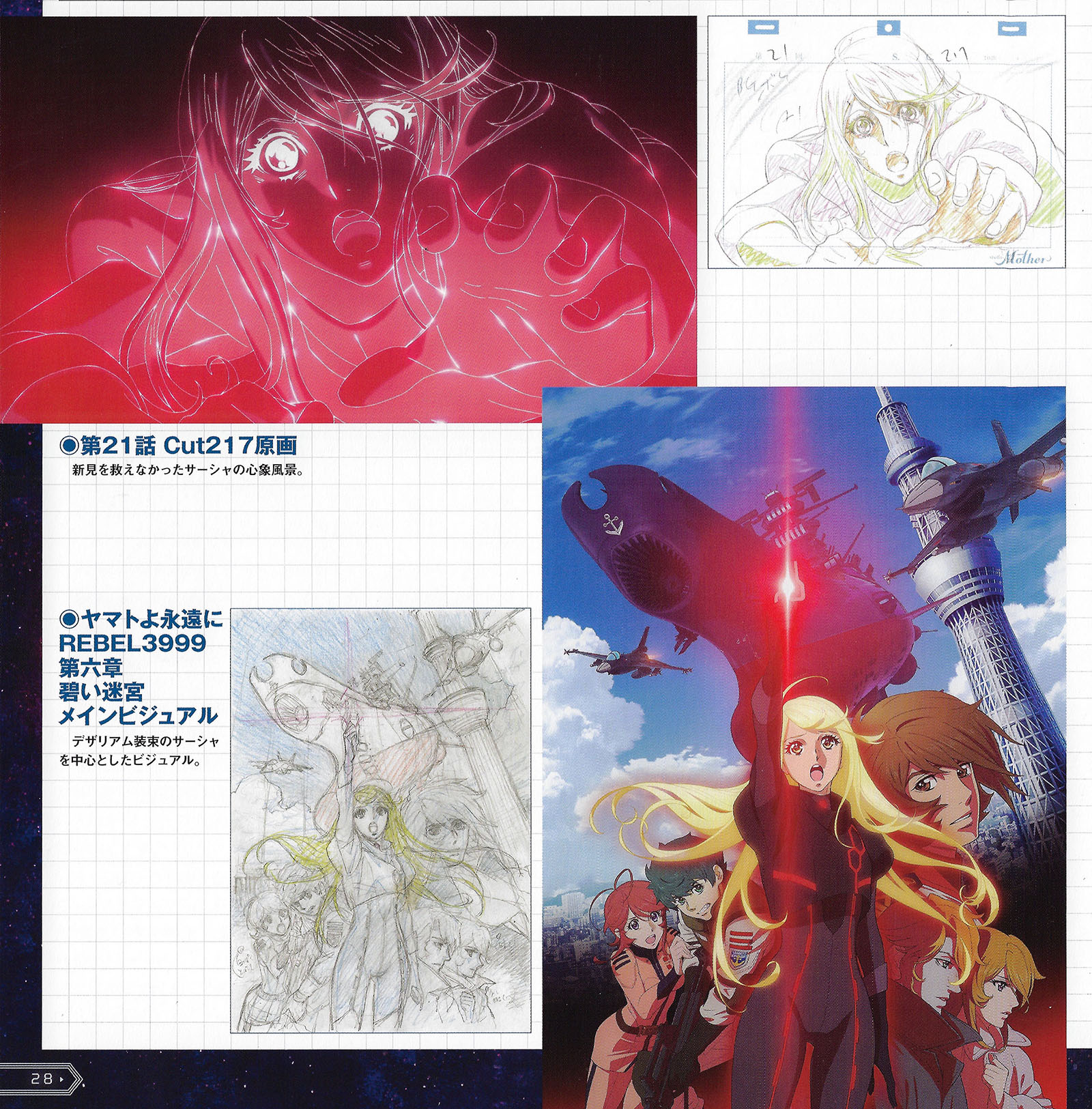
From the REBEL 3199 Chapter 6 program book: Nobuteru Yuuki discusses his tenure on the Yamato remake saga, describing his involvement in development, his approach to designing people, the responsibility of carrying a legacy, and Yamato‘s evolution over the last dozen years.
Those who challenge 3199
“I never expected the series to continue this long. I think it’s a testament to the greatness of the name Yamato.”
Profile
Born December 24, 1962, in Tokyo. After graduating from high school, he became a civil servant, but joined Artland Studio with the aim of becoming an animator. He later became a freelancer and has been active in character design and illustration. His major works include The Five Star Stories (1989), Record of Lodoss War (1990), The Vision of Escaflowne (1996), X (1996), Space Pirate Captain Harlock Endless Odyssey~Outside Legend (2002), Toward the Terra (2007), and Under Ninja (2013). See a longer credit list here.
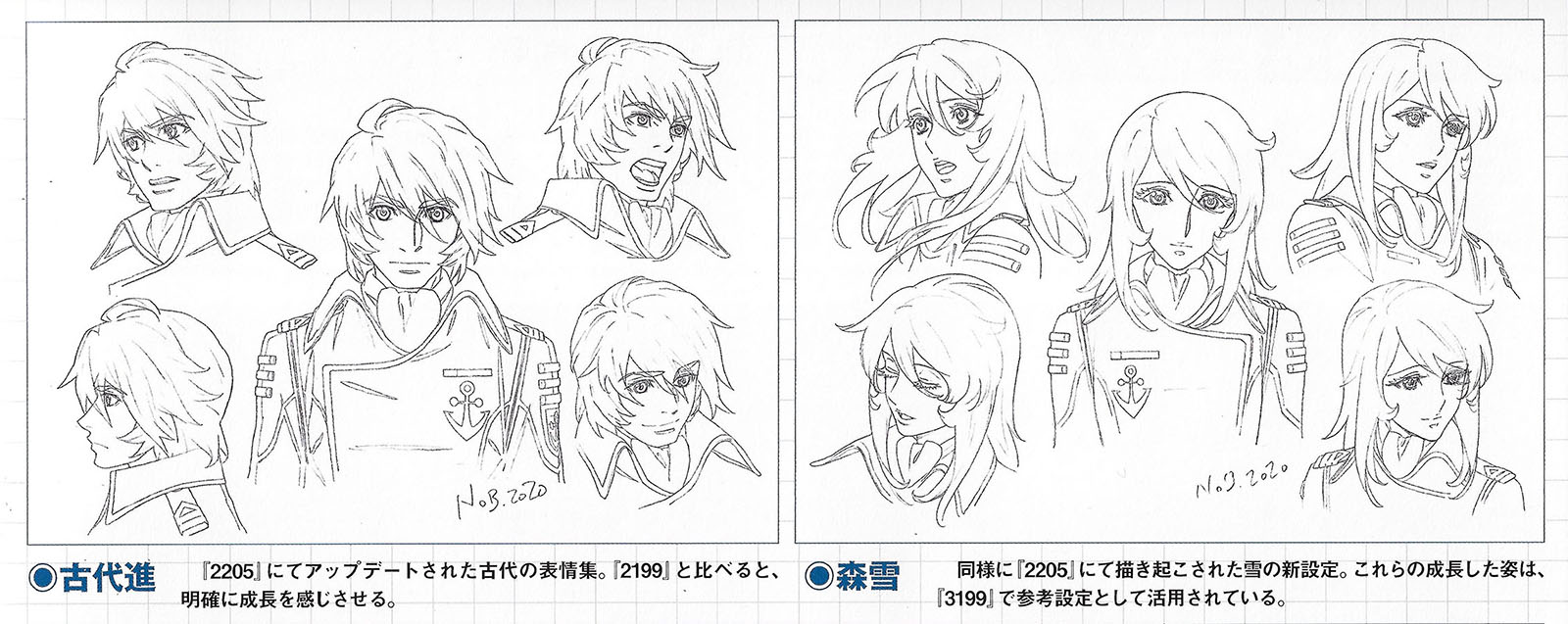
Kodai’s facial expressions were updated in 2205. Compared to 2199, there is a clear sense of improvement. Similarly, new designs for Yuki were created for 2205. These grown-up versions of her were used as a reference for 3199.
14 years have passed since the start of Yamato 2199, and I feel that there have been changes in your depictions of Susumu Kodai and Yuki Mori.
Their facial features have changed quite a bit, haven’t they? When Domon appeared in Yamato 2205, I thought of Kodai as being a bit more mature, taking a step back and watching over the youngsters as they rushed ahead. So now, when I portray Kodai, I’m conscious of making him seem more mature. In terms of image, he’s become closer to Mamoru Kodai.
Actually, even when I was reading the original manga, I was always very concerned about the age difference between Dessler and Kodai. I wondered if Kodai, who is a child from Dessler‘s perspective, could really be a worthy rival. In 3199, Kodai has grown up and reached commander age, so that gap has been bridged. I think that was a good thing.
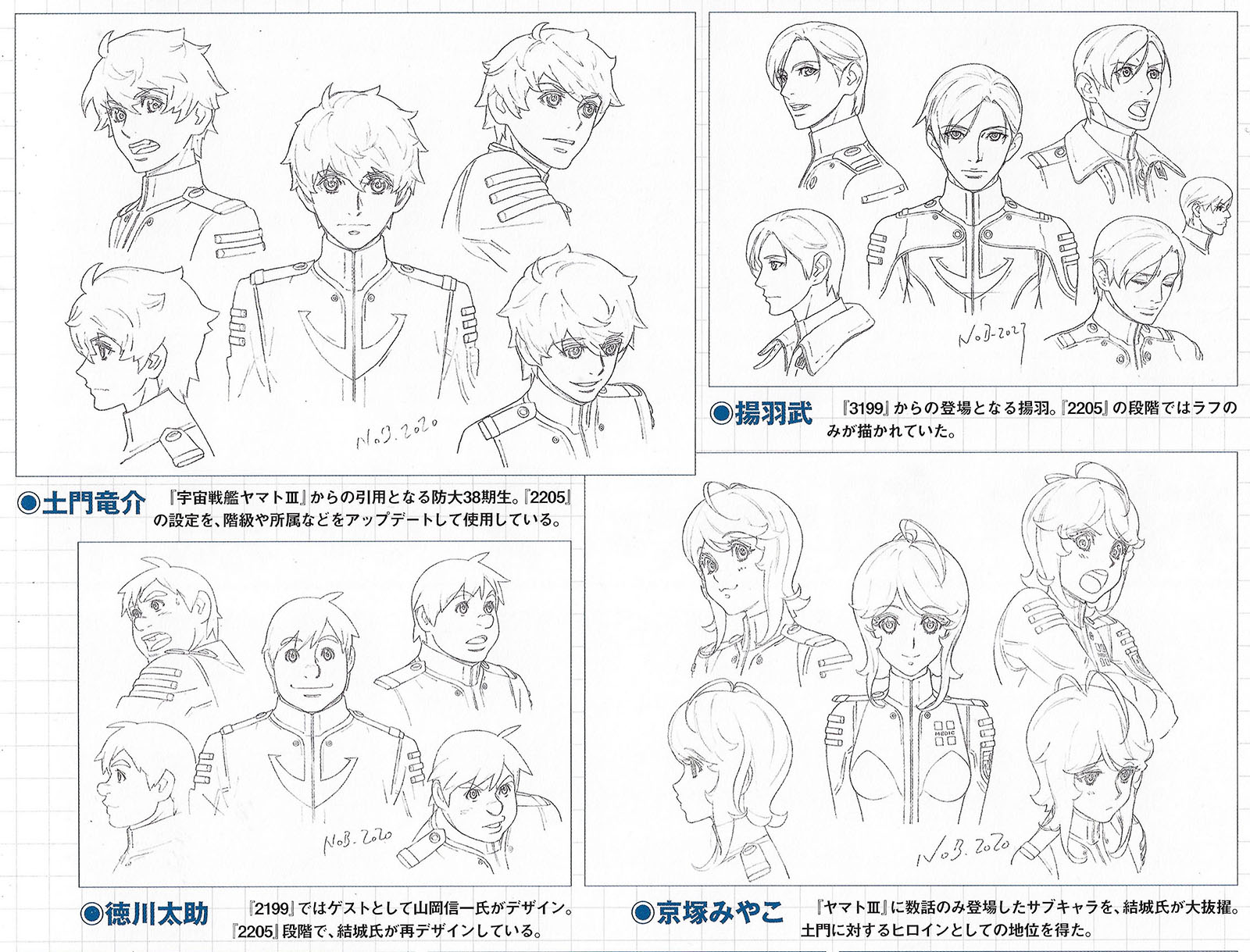
1. Updated designs for Ryusuke Domon, including rank and affiliation.
2. Takeshi Ageha made his debut and 3199. At the stage of 2205, only a rough sketch of him had been drawn.
3. Shinichi Yamaoka designed Tasuke Tokugawa as a guest character in 2199. Yuki redesigned him for 2205.
4. A major role was given to Miyako Kyozuka, a minor character who only appeared in a few episodes of Yamato III. She was given the position of heroine opposite Domon.
In chapter 6, Domon and his group revolt. How did you decide on the design direction for these newcomers?
I’ve been participating in brainstorming sessions since the time of 2199, making suggestions for characters and visuals. There were quite a few characters where the visuals came first, and then they were incorporated into the script. In particular, many of the new crew members in 2205 were suggested by me that in that way.
Ryusuke Domon’s design seems not to be constrained by the original work.
My impression of the original Yamato III is that it was an attempt to change the main character, but it failed. After all, there’s a clear main character in Kodai, so it would be impossible to change him. So I was thinking, why not make them like Harlock and Daiba from Space Pirate Captain Harlock?
Takeshi Ageha also seems like a character with a strong original feeling.
It would have been strange if he wasn’t there by the time of 2205. He’s such a great character that we set him up to be in line with Domon and the others. He doesn’t appear in 2205, but the fact that he’s actually around becomes more convincing later on. A prime example of a character whose appearances were swapped in this way is probably Hajime Hirata. Since he acts as a colleague of Kodai and the others in Yamato III, it would be strange if he wasn’t in 2199 as well. The fact that Domon and Hirata interact is one of the great pleasures of such a long-running series.
I was surprised by Miyako Kyozuka. I never imagined she would become the heroine.
Actually, in the original plot and script, there wasn’t a character like her among the newcomers. But when we received the order for those classmates to carry on a new story, I suggested that it would be strange if there wasn’t a heroine. I quickly drew a rough sketch and presented it to Harutoshi Fukui. He’s quite receptive to those kinds of suggestions. He takes our suggestions into account and incorporates them into the script. It creates an interesting synergy.
It seems to be a distinctive feature of a Yamato remake that the designers participate in the script brainstorming stage.
Yamato is a work where visuals are extremely important, so whether it’s the mecha or the character designs, I think it’s really important to get involved in the production from early on and contribute ideas.
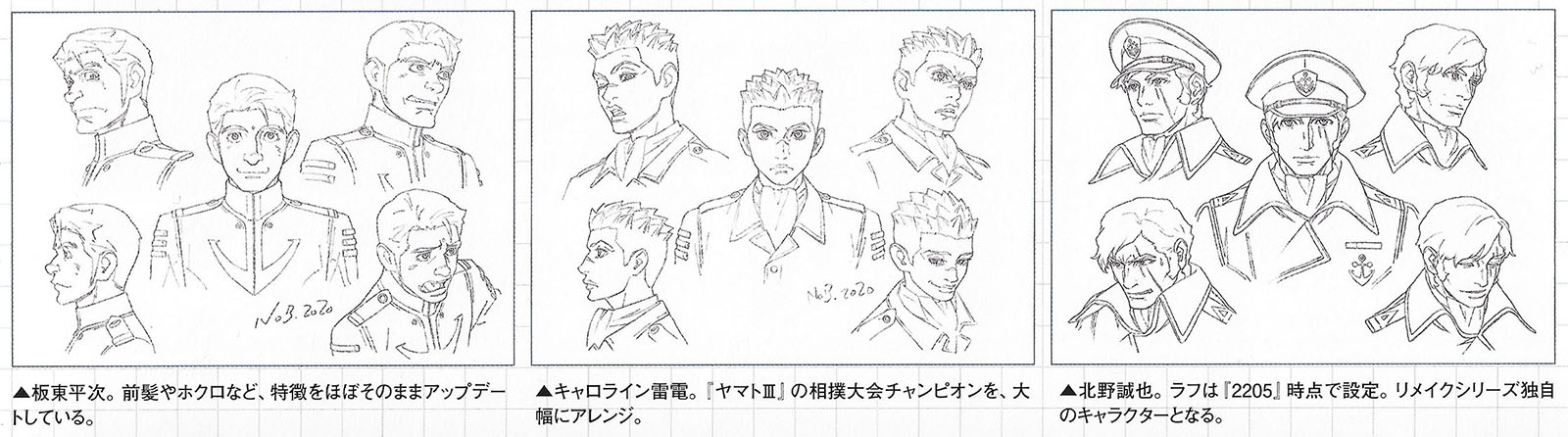
1. Heiji Bando’s features, such as his bangs and mole, have been updated almost exactly.
2. Caroline Raiden is a heavily-redesigned version of the sumo tournament champion from Yamato III.
3. A rough for Seiya Kitano was created at the time of 2205. He became a character unique to the remake series.
Raiden’s design was also unexpected.
The order was for a male judo character, just like in the original. So I suggested that it would be more interesting if it was a girl. There’s a story behind this. When the script for Yamato 2202 was being written, Mr. Fukui had envisioned a tough female crewmember named named Aya Arisawa as Hajime Saito‘s wife. But that role had already been created for Ark of the Stars, with Shiori Nagakura. I had suggested Nagakura, and Yutaka Izubuchi found her interesting and used her. So I told Mr. Fukui that it would be a problem if they didn’t use her in 2202 as well!
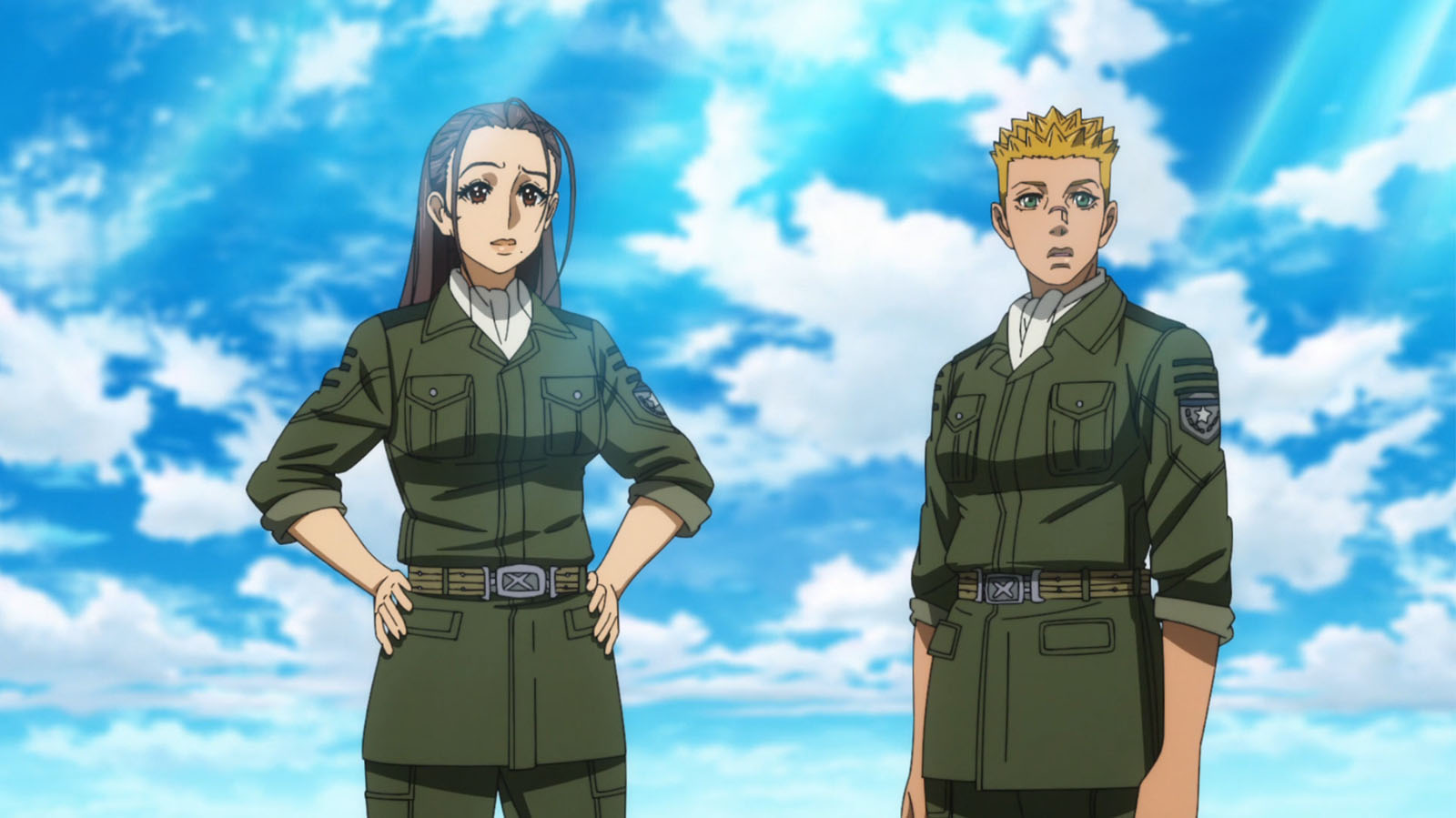
Mr. Fukui readily agreed to it. Thanks to that, the Saito/Nagakura story was able to conclude the way it did at the end of 2202. Later, when I asked, Mr. Fukui, “You’re glad we made it Nagakura, right?” He said, “Yes, I am.” (Laughs) Going back to Raiden, since Mr. Fukui had this tough female officer he wanted to include, I suggest suggested that we make Raiden that kind of character. I’m happy that Raiden and Nagakura turned out to be such a great team, since I suggested both of them.
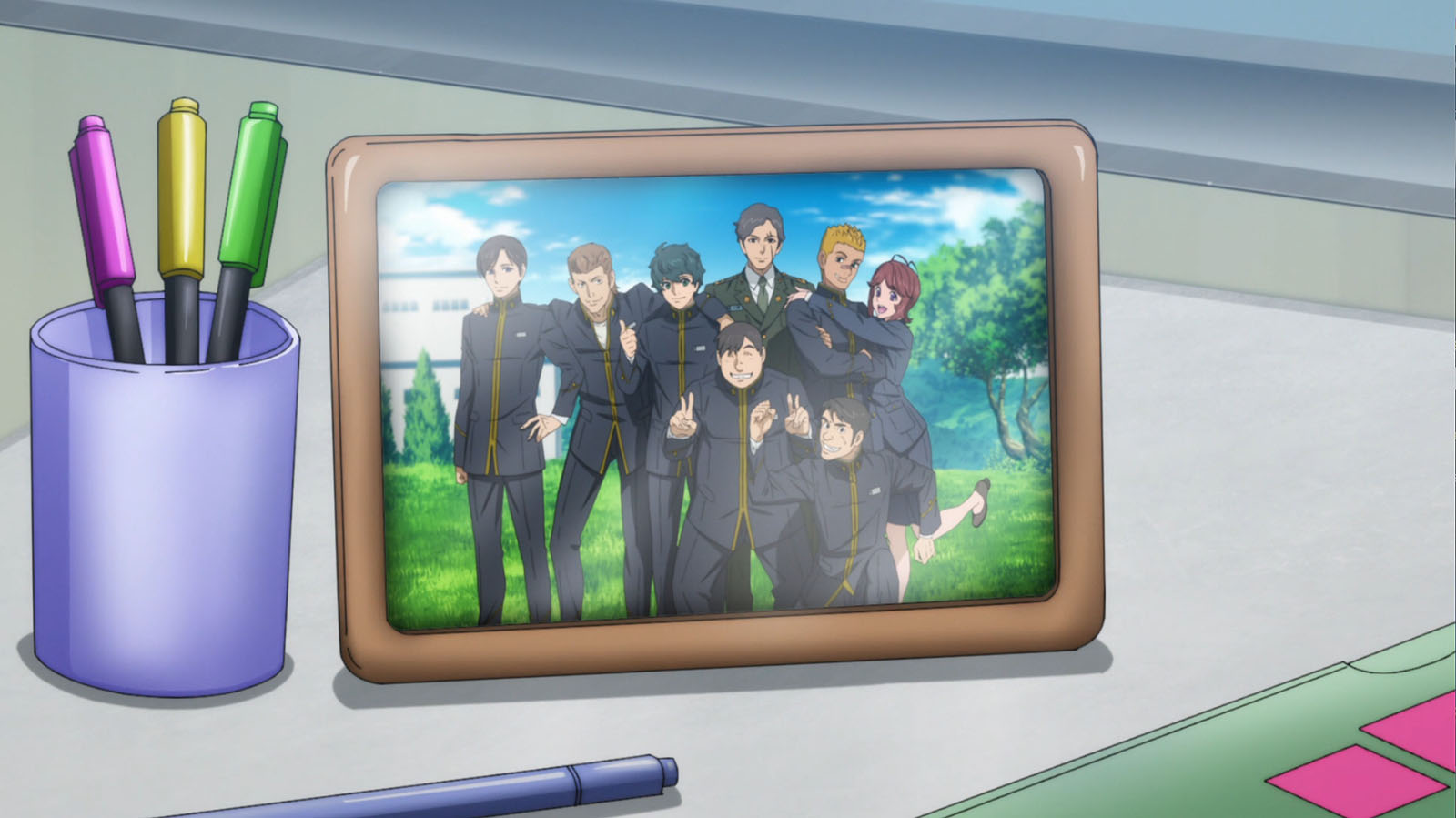
Among the newcomers, Seiya Kitano also appeared in the photo we saw in 2205, right?
In the original New Voyage, Tetsuya Kitano was treated as a main character, but because he was introduced earlier in 2199, he ended up being relegated to a supporting role. Shinichi Yamaoka did the character design, but in 2199, he was treated almost like an extra. In a way, it feels like in 3199 his older brother Seiya is taking on the role that Tetsuya originally played.
The fact that many crew members were established in 2199 is definitely connected to the present day.
By establishing a shift system for the first bridge, we needed a massive amount of concept information. Mr. Yamaoka also drew character designs, so I did only about half of it. Now, characters that were almost like background players are really growing. Characters drawn by Mr. Yamaoka, such as Miki Saijo, Sho Sawamura, and Hilde Schulz, are now being treated as main characters. This is truly a development that only happens because it’s a long-running series.
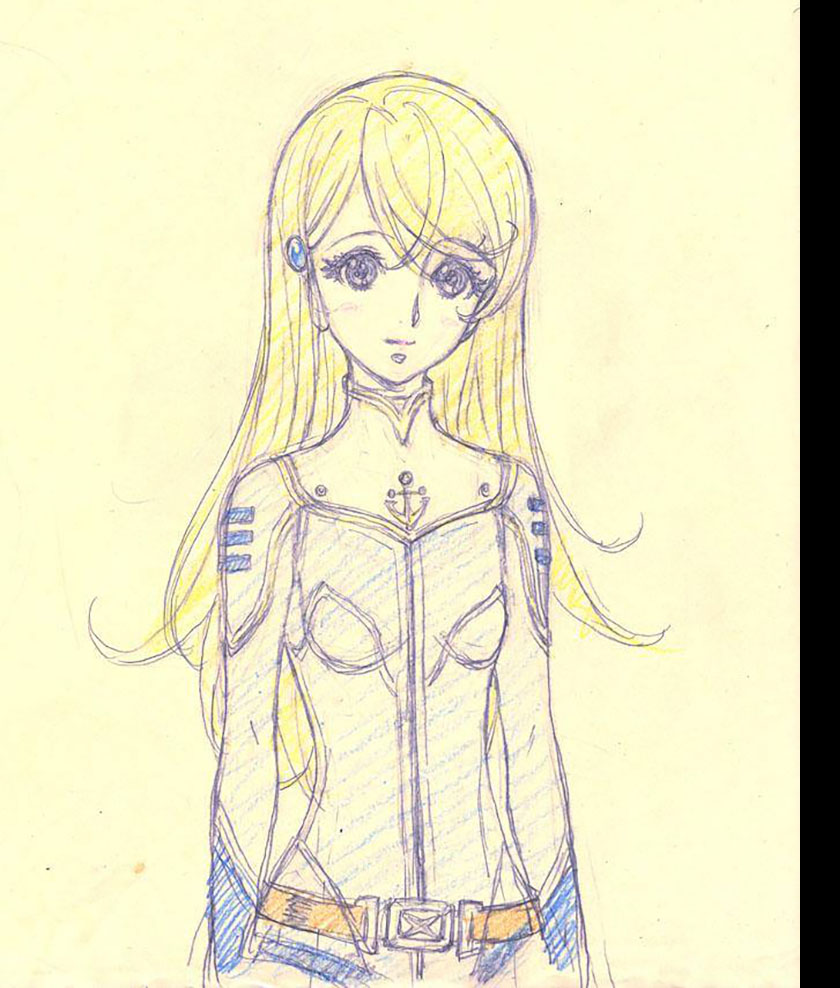
How was Sasha’s design decided?
In the past [2018], I drew Sasha just for fun, thinking about what she would look like if she were to appear. If she were to show up as part of the Yamato crew, I had no choice but to approach it from the perspective of the current crew’s uniforms. So the costume I drew at that time had the anchor mark, but it was a design that covered her completely up to the neck. I felt that if it wasn’t like the open-chest design from the original Be Forever, it wouldn’t feel like Sasha.
So I thought about what kind of clothes would make that work, and I came up with the idea that an Iscandar suit might work. I drew it that way this time, and I suggested to Mr. Fukui that since this is the only way Sasha can be, please make it work in the script. If she appeared as part of the Yamato crew from the beginning, that design wouldn’t be possible.
In the original story, Sasha was a character who suddenly blended in with the adults and acted like one. That sort of reflected the prevailing view of women at the time. This time, by joining the new crew, she seems to have found a position more appropriate for her age. It feels more modern, or rather, more natural.
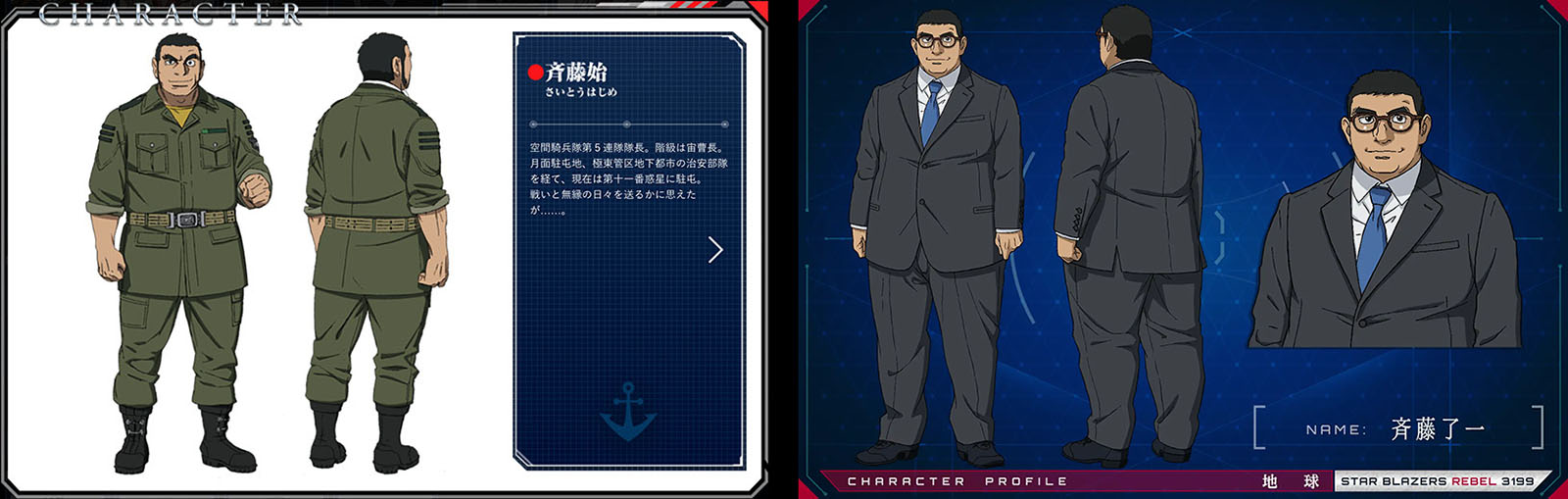
One unexpected character to appear in this chapter is Ryoichi Saito.
When I heard the idea that Yamato would be sent to a different era, to what is known as modern day earth, I thought it was quite interesting. And having Hajime Saito’s ancestor appear as a character would be more convincing than being sent to a world with no connection whatsoever.
It must have been an interesting subject for design, as well, wasn’t it?
When designing characters, I start by thinking about their backgrounds, so it was a rewarding process. Although they both have sturdy builds, Hajime Saito has a more trained physique. A major difference is, for example, the shape of their ears. Fighters, especially those with black belts in judoka, tend to rub their ears on the tatami mats, so their ears are usually flattened. That’s why Hajime‘s ears are flattened, but Ryoichi’s are not. Through the design, I’m trying to express how different life experiences result in different appearances.
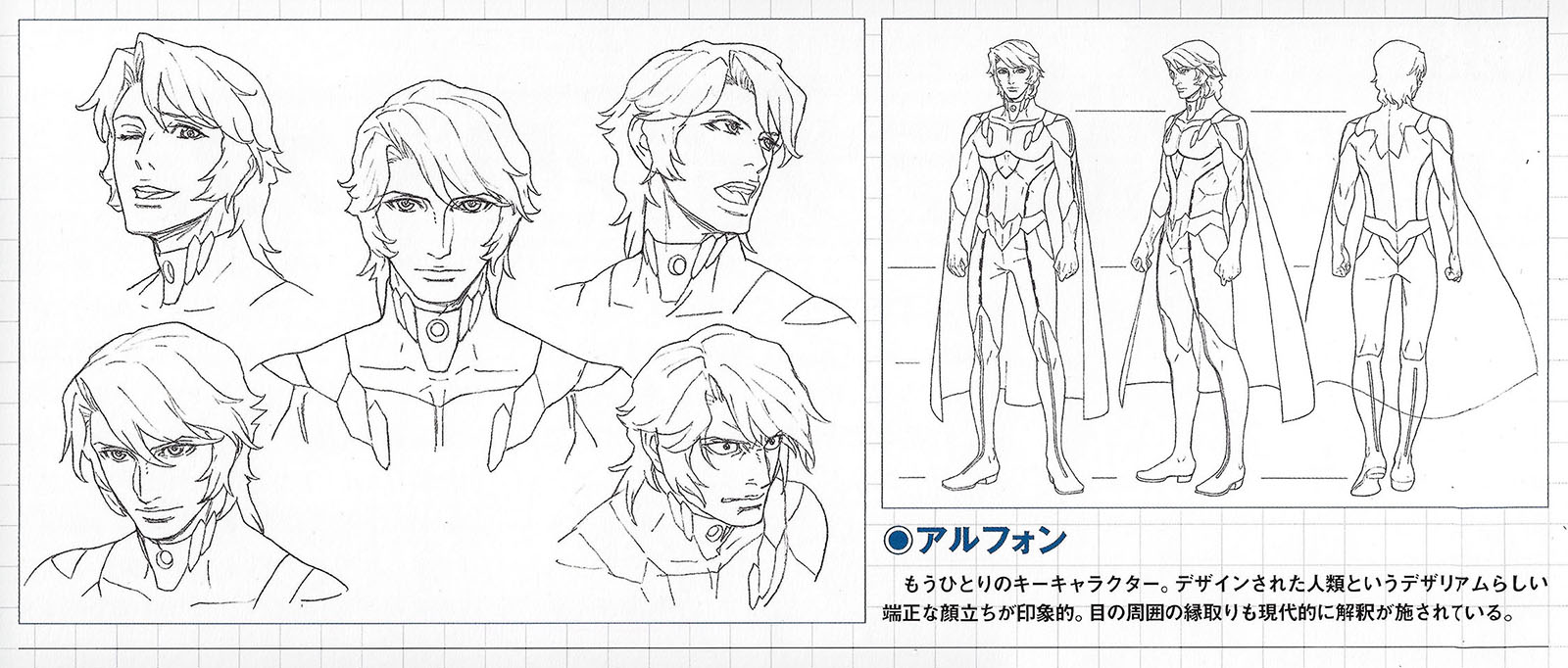
Alphon’s refined features, typical of Dezarium’s concept of designed humans, are striking. The framing around his eyes also features a modern interpretation.
What was the direction you took in developing Alphon, one of the most important characters in this work?
We aimed for a perfect design that wouldn’t be inferior to the protagonist, Kodai, and yet wouldn’t be ostentatious. The Dezarians are designed humans, so they’re no longer purely biological beings. The black above their eyes is their way of entering combat mode, and when they swipe the corner of their eye, a shield descends over their eye. We set up this combat mode as a form of super science. It was also something I suggested, and Mr. Fukui and scriptwriter Hideki Oka Incorporated it.
Are the Dezarium people’s clothes more like shields than actual clothing?
To put it simply, I imagine something like the aerial element fixing device from Cutie Honey. The idea is that it gathers surrounding elements and attaches something like a shield to its body. In my interpretation, Iscandarian clothing works on the same principle. Dezarium has reached a level of scientific technology that is superficially somewhat similar to Iscandar. This is just my interpretation, though. From their perspective, even the Gamilans are barbarians. The only opponent they can’t defeat in terms of civilization is Iscandar.
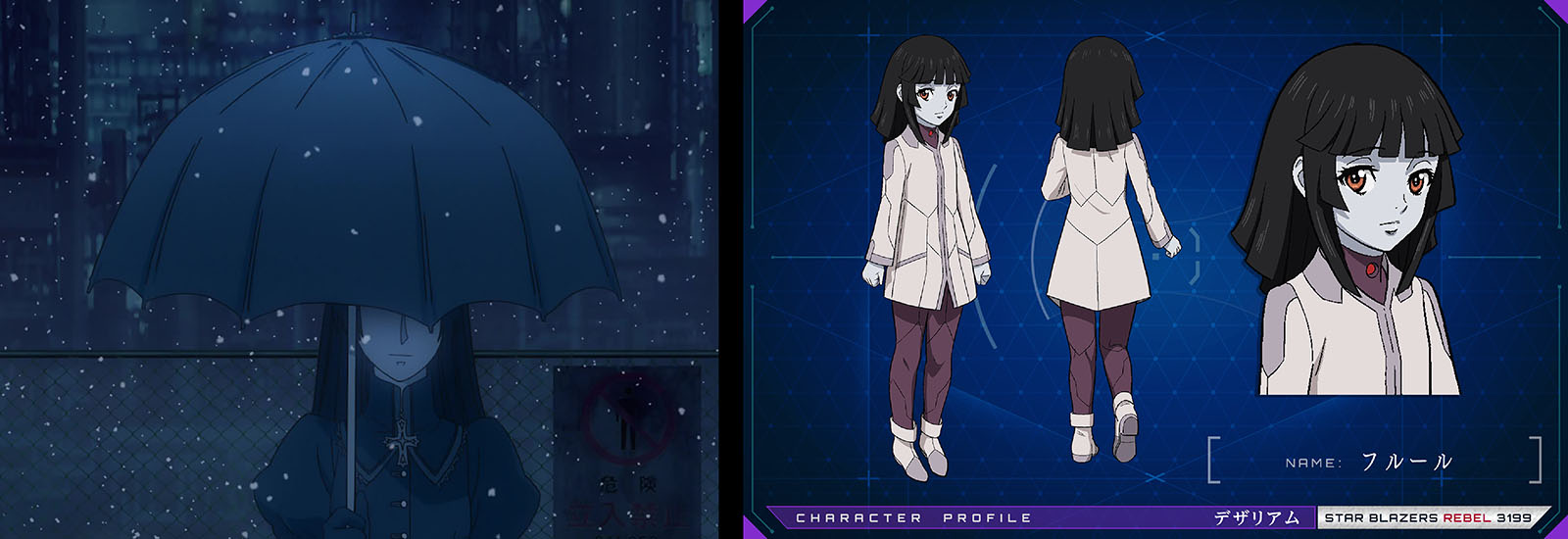
I’d like to ask about how you create original characters that are not present in the source material.
When Fleur came to me, the story was that she was a girl from Dezarium who would become friends with Tsubasa. When I asked Mr. Fukui about it, he said that she was kind of like Mirenel Linke, who made a guest appearance in 2199. Mirenel wore gothic Lolita clothing in the spiritual world, so I thought she might be something like that. That’s how I created her, gathering information as needed. By the way, the cat ear hoodie in Hokkaido was Mr. Yamaoka‘s idea. He and the others who help with the design have taken over and expanded on various aspects, which I’m very grateful for.
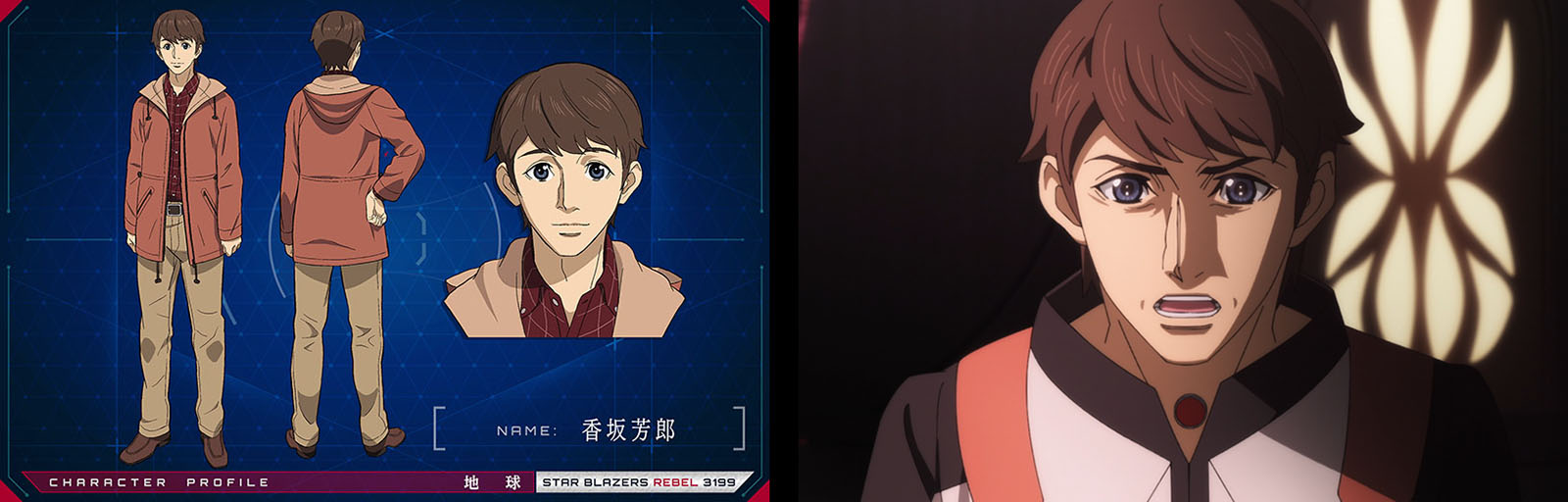
Yoshio Kosaka has changed quite a bit by this chapter, but was that information available beforehand?
I was given a rather vague explanation, something like, “he’s a really nice teacher, but in the end, he goes crazy from the brainwashing by Dezarium.“ So I started exploring what school teachers are like. Teachers wear track suits, right? I decided to start from there. Since 2199, I’ve decided to create designs for the Earth side that are not much different from modern times.
A situation where brainwashing takes place in a modern school is easy for viewers to understand, isn’t it? This is something I felt since 2202, but I get the impression that Mr. Fukui incorporates popular emotions like the anxieties and frustrations that ordinary people feel in the real world into his stories. If viewers think, “it’s disgusting that children are being subjected to brainwashing in a school like the one I went to,” then I think it’s a success.
In this work, the mecha is divided among different factions, but you designed all the characters for all the factions by yourself.
I try to define the boundaries within myself, like this for Earth, this for Gamilas, this for Gatlantis, this for Bolar, and this for Dezarium. Otherwise, I lose sight of the design. If I lose sight of it, then people like Yamaoka, who are in charge of expanding on that design, will get confused. So I make sure to clearly define the design boundaries as I see them. I think that’s the most important thing required of a designer.
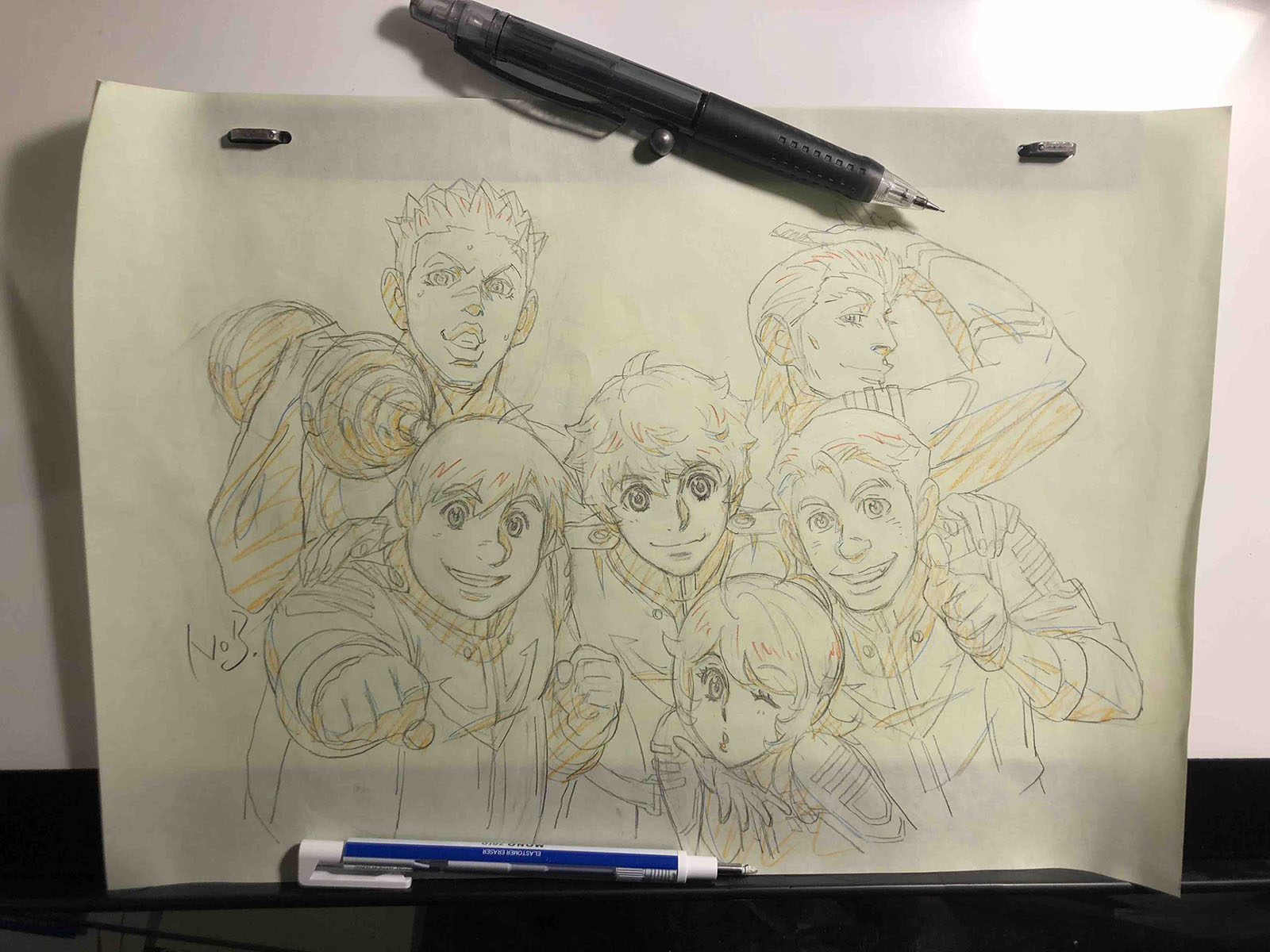
A sketch posted online in 2021
Please tell us your overall impression of working with Director Fukui
He deliberately chooses to avoid delving into the characters in the plot stage. He doesn’t write much about how the characters behave or speak. Only the core of the storyline is written for the most part. So when I get a character design order, all I have is information like, “there is a character in this position.“ Then I work on it and come up with something like, “Wouldn’t it be interesting if it was like this?“ And sometimes he responds with, “That’s interesting,“ but other times he responds with, “Not like that…“
Perhaps Mr. Fukui is hoping that something unexpected will emerge by deliberately not stating anything specific?
Perhaps he’s hoping that something unexpected will be depicted, which would be interesting. Because he’s a novelist, he probably doesn’t have a very firm image of what the visuals should look like. So I think he might want someone who makes a living from drawing to create those visuals.
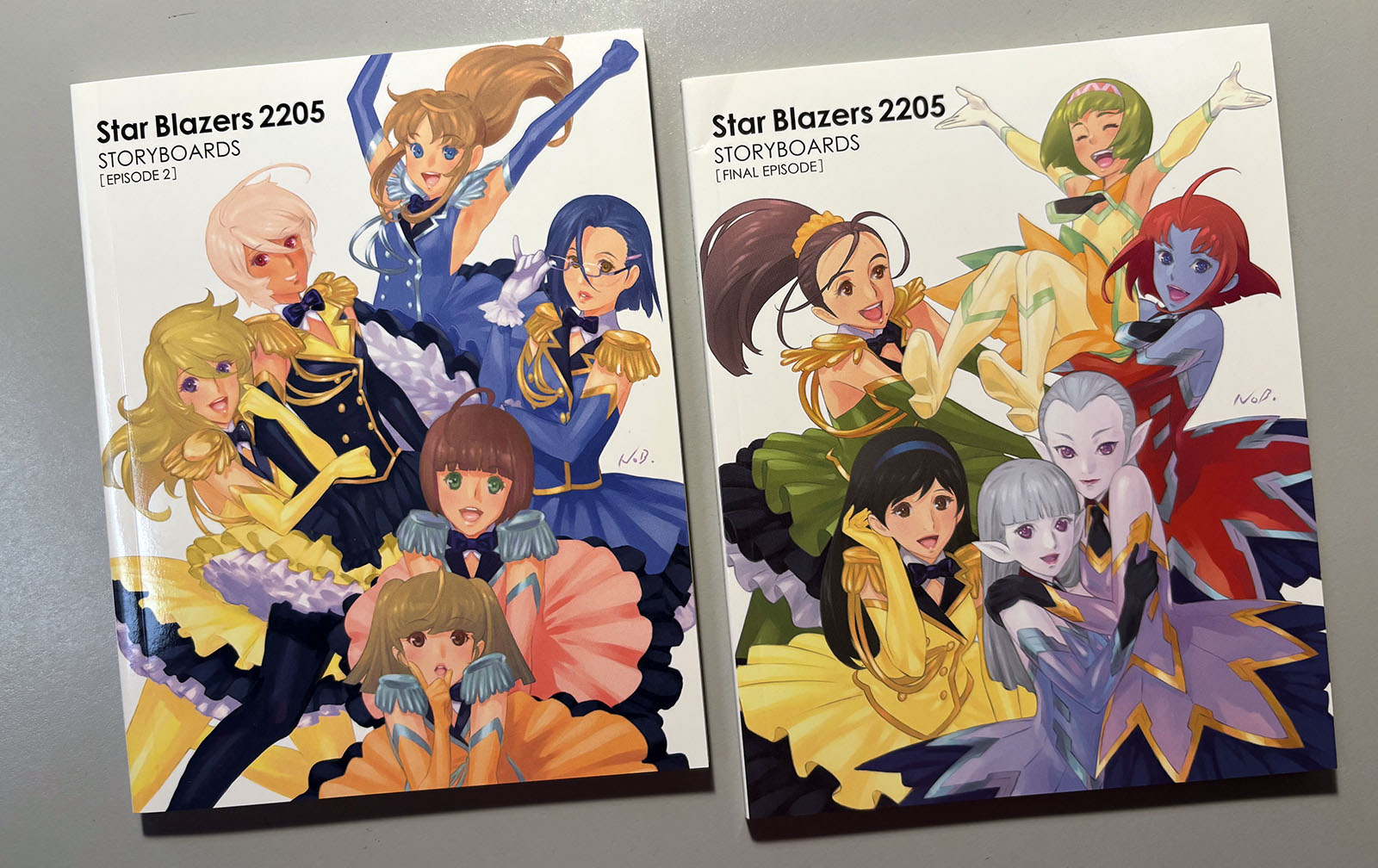
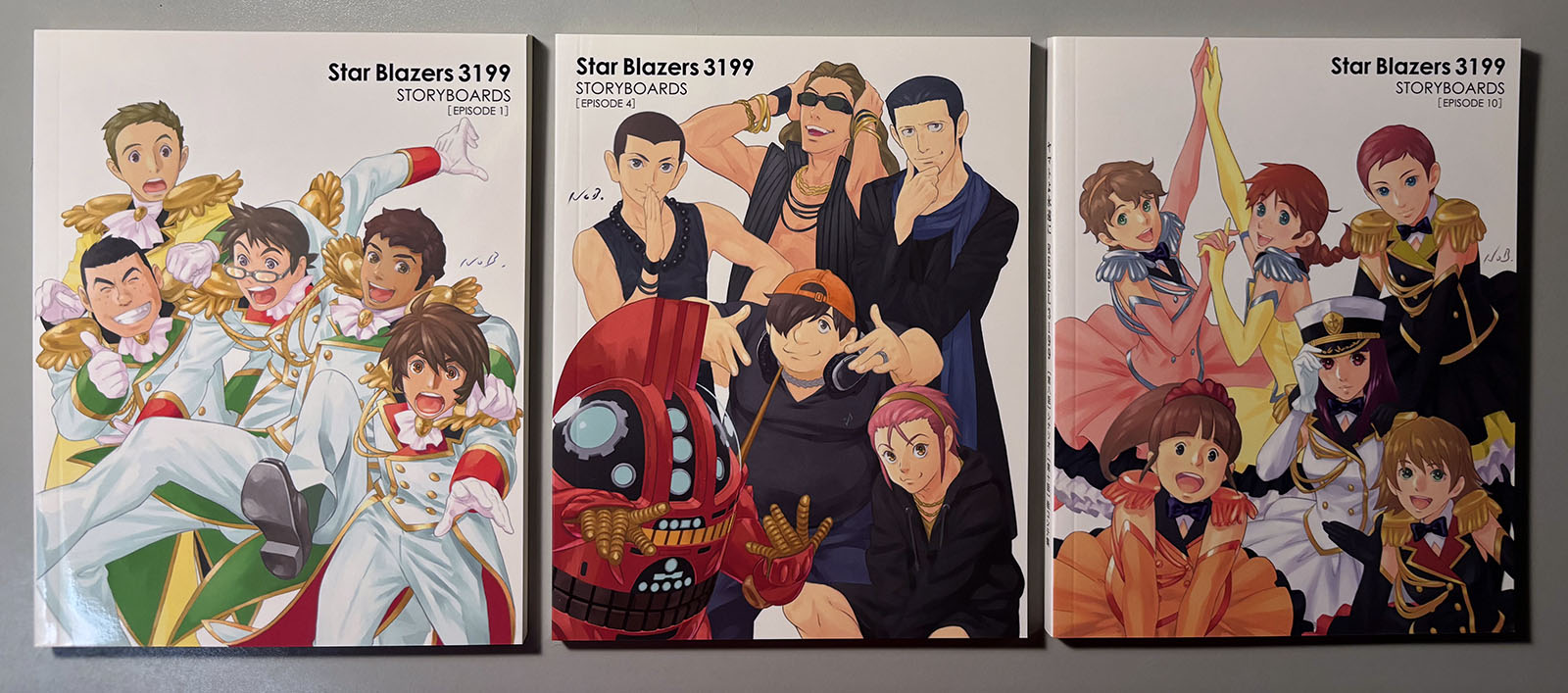
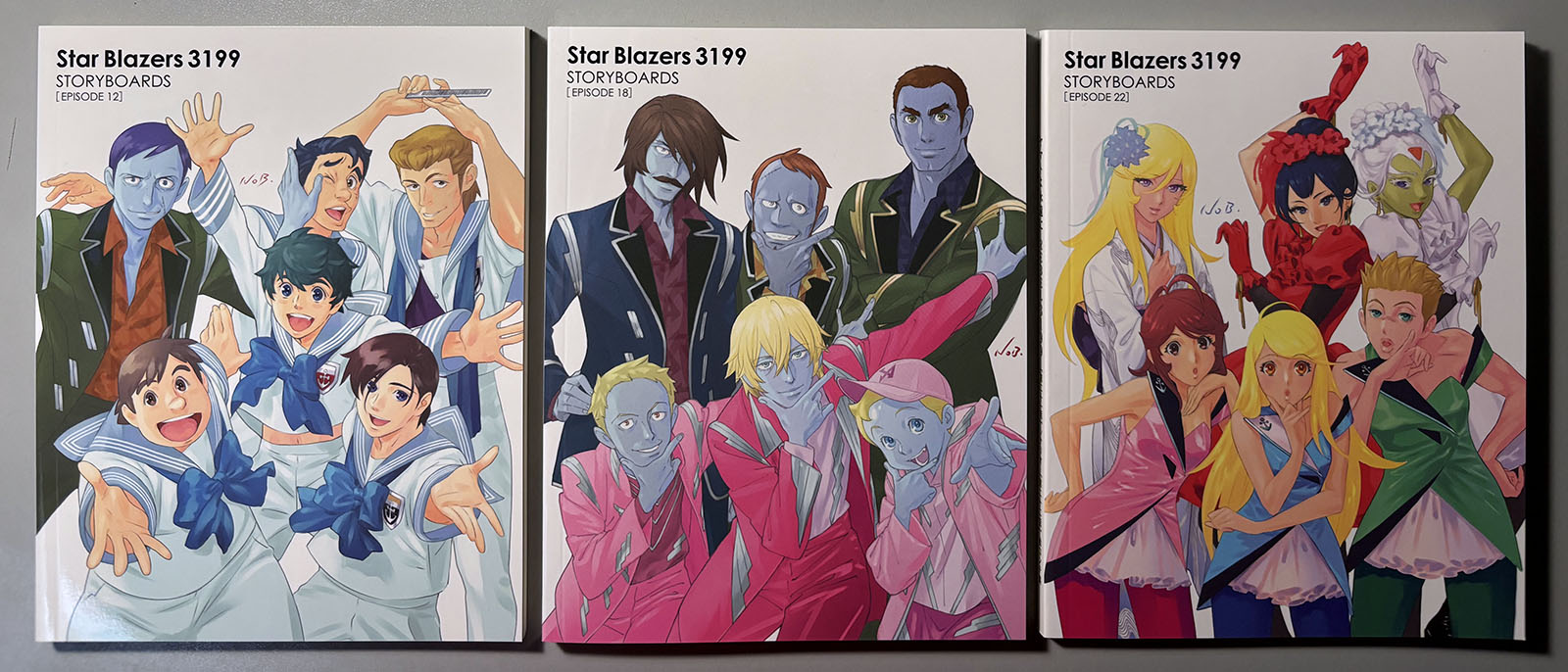
The cover of the script and storyboard collections included in the limited edition Blu-ray feature an interesting theme.
When I was working on 2205, I was told I could draw anything I wanted, so I suggested that I draw something I would enjoy. That’s how I ended up doing an illustration with a backstage punchline. It’s like the world of 2199 is actually a backstage punchline where pop idols are acting in a play. I thought that kind of illustration would be fun.
After 3199 was officially confirmed, I thought about what to do next, and since I still wanted to draw something fun, I decided to continue with the backstage-like situation. This time I decided to draw the male characters as well as the female characters. I don’t know if anyone else is happy about this, but at least I am. (Laughs)
Could you tell us again about your thoughts on having worked on the design from 2199 onward?
At the time, the live-action film, Resurrection, and the 2199 project were all being developed simultaneously, and we were very conscious of differentiating 2199 from the others by targeting new fans. This was a shared opinion with [director] Yutaka Izubuchi, and we had in mind that we wanted to show it to people of today, rather than to those who grew up watching the original.
Stray hair became a topic of discussion as a symbol for the new generation.
It’s not that I added it simply as a modern element. Rather, it’s an element that’s characteristic of me. When I worked on my original story, The Vision of Escaflowne, the protagonist’s hair was like that, too. I wasn’t pandering to modern trends. If I’m going to do it, I’m going to rely on designs that come from within myself. On top of that, I’m looking for points of fusion with the original.
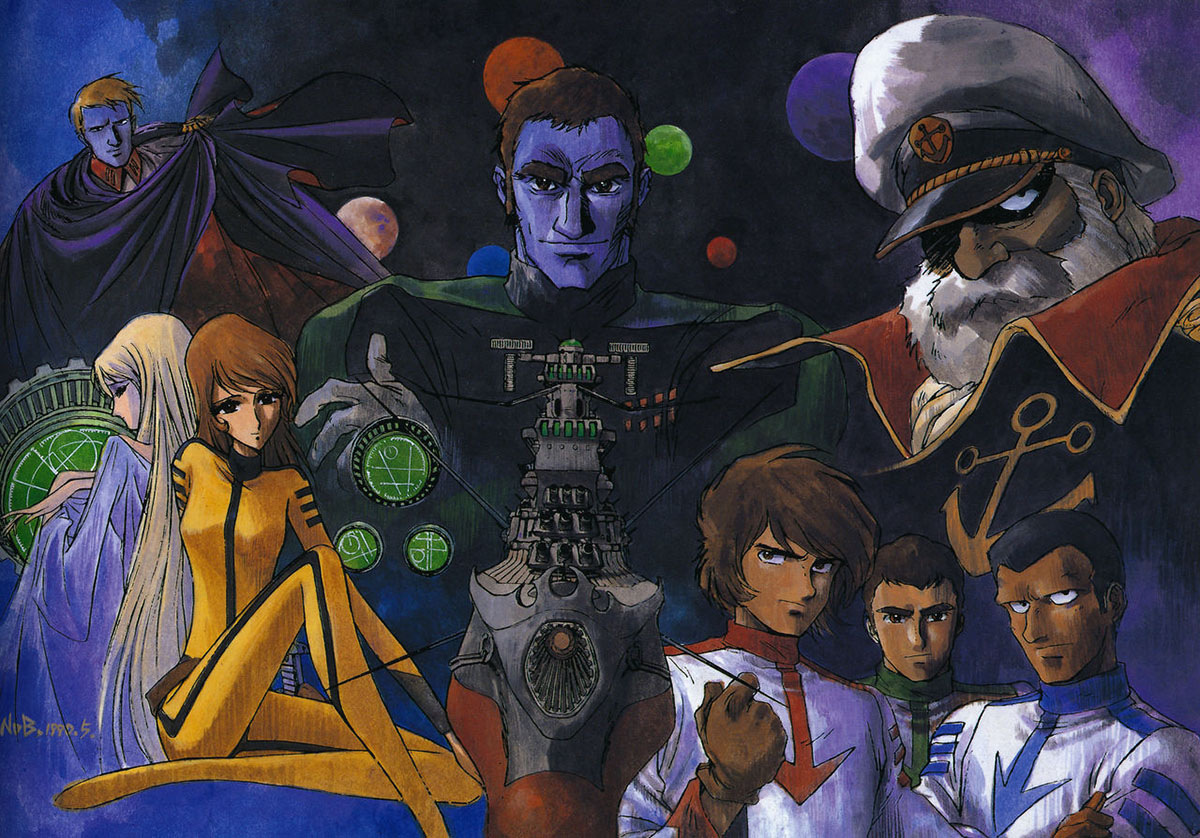
Illustration for Series 1 LD box set, 1990
From the latter half of 2202 onward, I feel like the series has incorporated increasingly unique elements as a remake.
I am exactly the generation that saw Farewell to Yamato when I was in my second year of junior high school, and I loved that movie. I’m a little different from Izubuchi in that respect. (Laughs) But I really wanted to go up to the White Comet Empire. However, we just wanted to make a work of a quality that was worthy of being “the current Space Battleship Yamato.” For me, the works made after Farewell felt a bit redundant. So if we were to depict what happens next, I thought it would have to be a different path from the original Yamato that we saw.
I found Mr. Fukui’s adaptation of 2202 to be very interesting. He chose to build upon the original to some extent, while incorporating insights that resonate with modern audiences. In fact, there’s a development in the upcoming 3199 Chapter 7 that I’m not entirely happy with, but he’s very confident and has declared that he will make it something that I’ll be completely satisfied with. So I’m really looking forward to seeing what he can do.
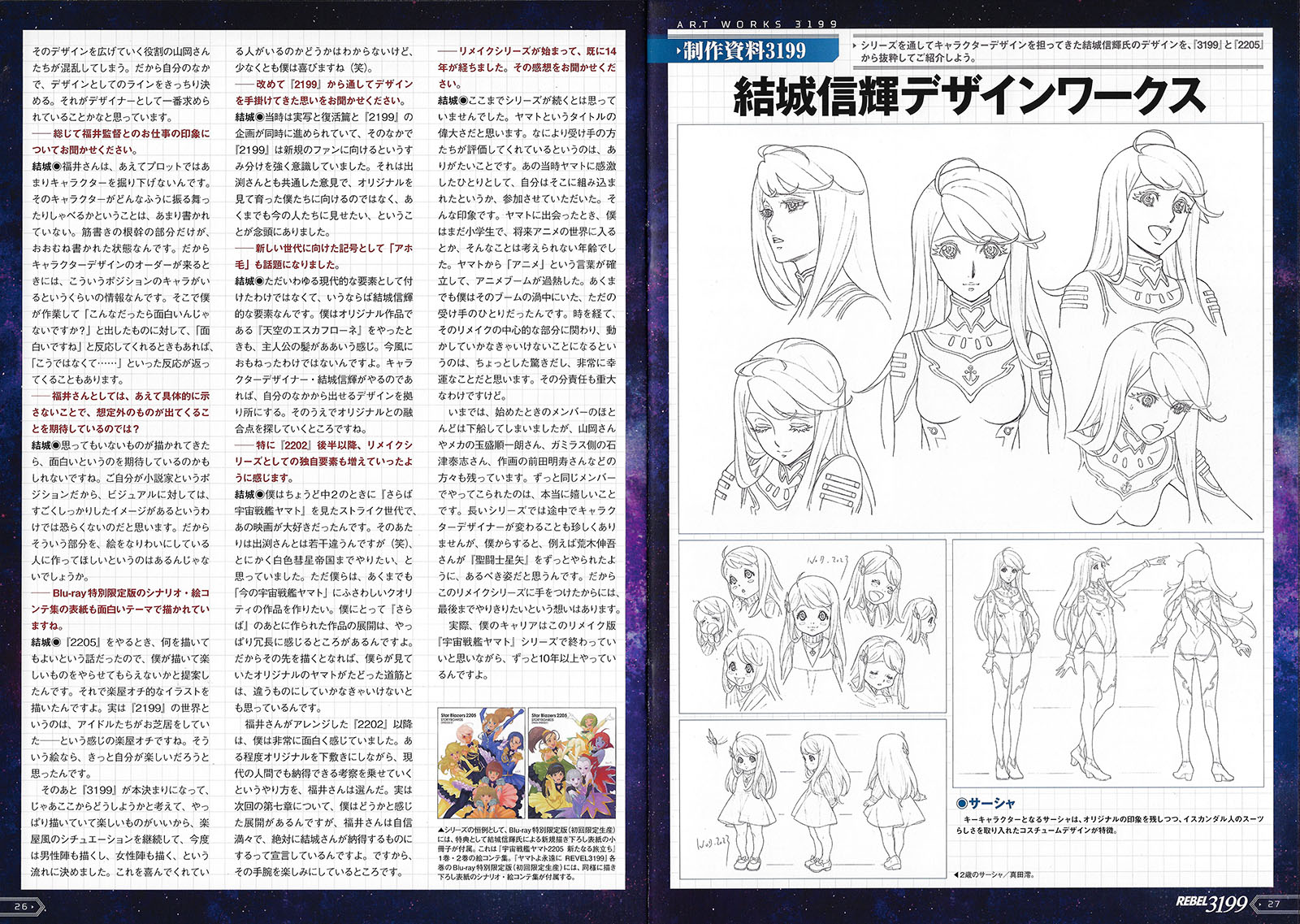
Sasha features a costume design that retains her original look while incorporating elements of the Iscandarian suit.
It’s already been 14 years since the remake series began. Please share your thoughts on it.
I never thought the series would continue this long. I think it’s a testament to the greatness of the name Yamato. Above all, I’m grateful that the audience appreciates it. As someone who was deeply moved by Yamato back then, I feel like I’ve been incorporated into it, or rather that I’ve been given the opportunity to participate. That’s the impression I have.
When I first encountered Yamato, I was still in elementary school, and I couldn’t even imagine entering the world of anime in the future. Yamato established the word “anime,“ and the anime boom intensified. I was simply one of the audience members caught up in that boom. To be involved in and drive the central part of the remake now, years later, is quite a surprise. I consider myself very fortunate. Of course, that also means a great deal of responsibility.
Nowadays, most of the original staff members have left the project, but people like Mr. Yamaoka, mecha designer Junichiro Tamamori, Yasushi Ishizu (Garmillas side), and Akihisa Maeda (animator) remain. I’m truly happy that we’ve been able to continue with these same staff members all this time. In a long-running series, it’s not uncommon for the character designer to change midway through, but to me, this is how it should be, like how Shingo Araki continued to work on Saint Seiya for so long. Since I started with this remake series, I want to see it through to the end.
In fact, I’ve been working on it for over ten years now, and I’ve thought that it would be fine to end my career with it.