
Thoughts after watching Episode 4
See the original blog post here
This is a pivotal episode in which Yamato defies the Earth Defense Force’s orders and launches into space once again — this time as a rebel ship.
In short, the heart of this episode lies in the decision made by Susumu Kodai, now acting captain, and the return of Daisuke Shima, who had been torn between discipline and his sense of duty. We see Kodai voicing his anxieties to the portrait of the late Captain Okita, Shima taking the helm after being encouraged by Dr. Sado, and the Commander-in-Chief showing compassion through the failure of the magnetic missiles to detonate.
Orders or duty? Through Kodai’s decision, Shima’s return, and the Commander-in-Chief’s compassion, we explore Yamato‘s uncelebrated departure and the crew’s resolve.
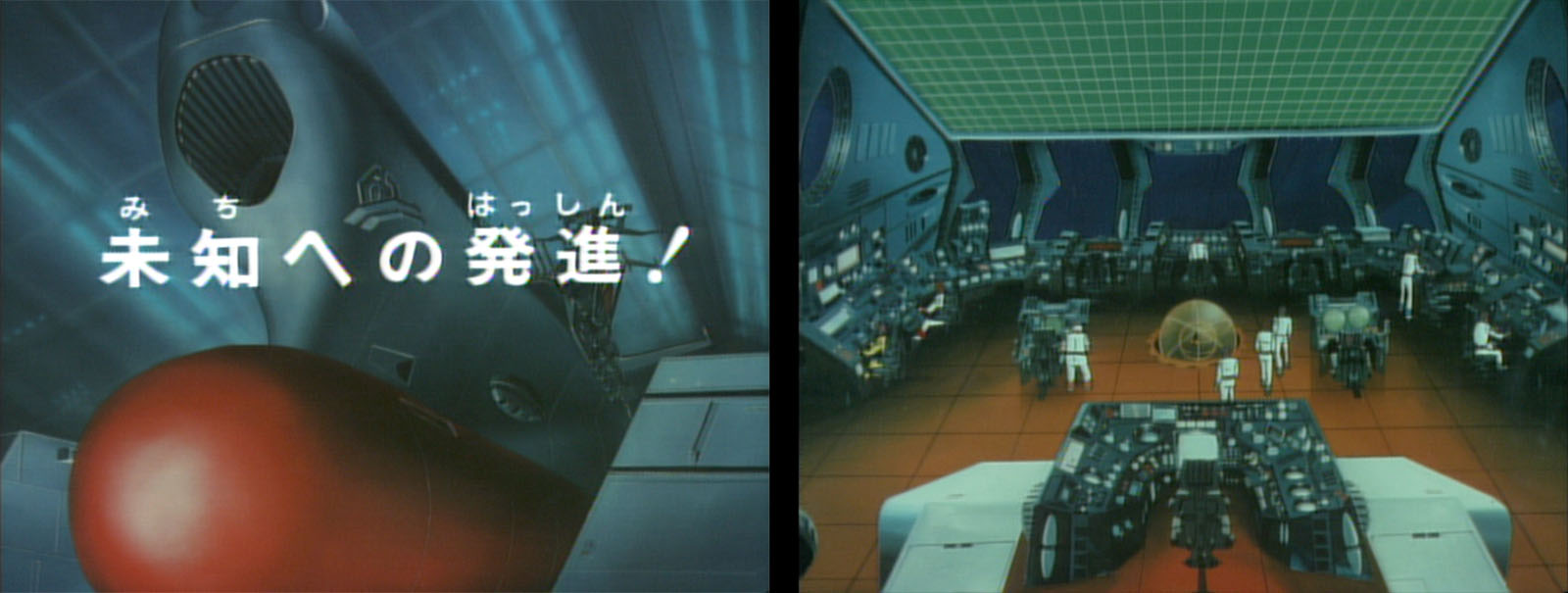
Synopsis
A.D. 2201: The Approaching White Comet Empire vs. Earth’s Complacency
The year is A.D. 2201, and a crisis is looming over the galaxy. The White Comet Empire, led by Great Emperor Zordar, has begun to reach out toward Earth as it walks the path of prosperity.
A nearby solar energy collection and transmission base has already been destroyed by the Nasca Vanguard Fleet, and the Earth Defense Force has dispatched its state-of-the-art battleship, Andromeda, to investigate.
At Earth Defense Force Headquarters, a meeting was held regarding an incident where Yamato, while on patrol, encountered the suddenly appearing White Comet. However, Earth lacked a sense of urgency, and Susumu Kodai’s warnings were dismissed.
Gazing at the devastation of the underground city, a place still struggling against the lingering effects of radioactive contamination, Kodai became increasingly convinced that only Yamato can save Earth from this crisis.
Kodai, who had come to see Yamato while feeling deeply troubled, found his former Yamato comrades waiting for him, men who share his resolve. These former crew members gathered not because of orders, but of their own volition. Shiro Sanada, Hikozaemon Tokugawa, Saburo Kato, and others assembled, having answered the call to reunite.
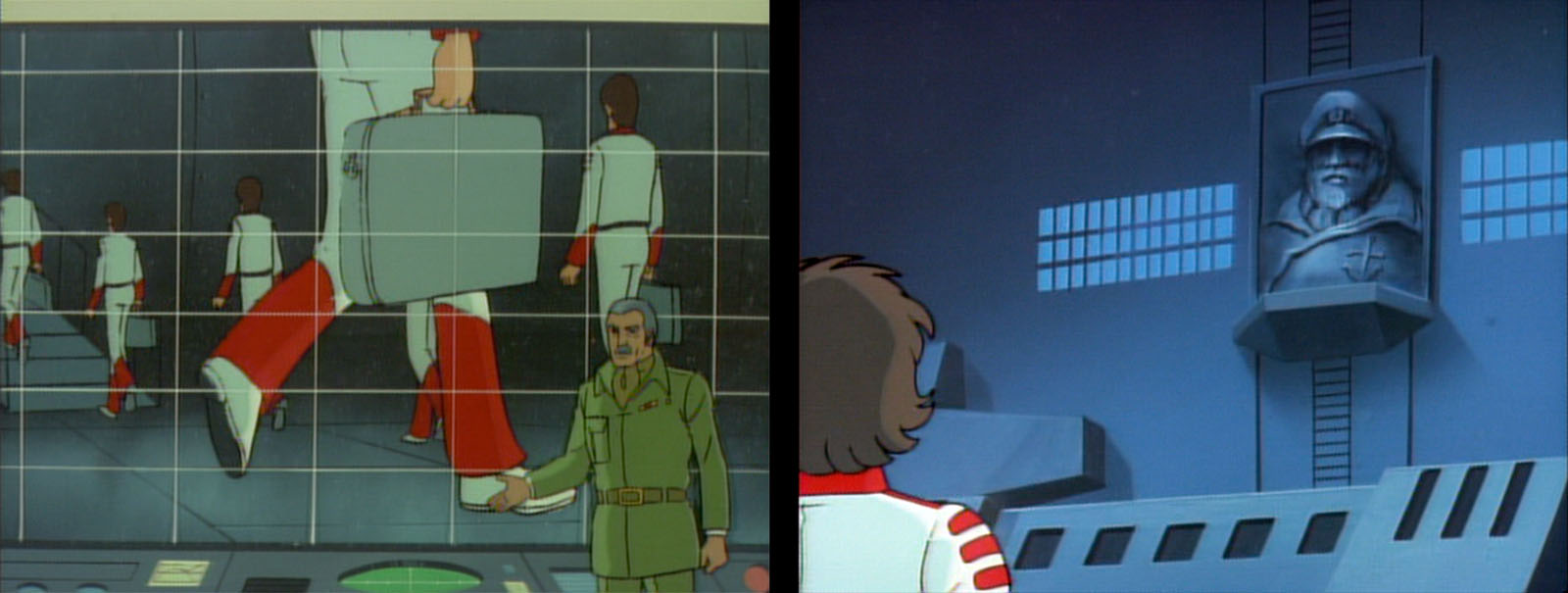
3:00 AM: The Earth Defense Force Headquarters Takes Action
Meanwhile, a report reaches Earth Defense Force Headquarters. “As of 3:00 AM, the former Yamato crew members are abandoning their posts and gathering at the dock.” A staff officer advises the Commander-in-Chief to issue an immediate order to disembark in order to maintain discipline.
Accepting this advice, the Commander-in-Chief orders the disembarkation command to be transmitted.
Kodai Confides His Anxiety to Captain Okita’s Portrait
Inside Yamato, Kodai stands before the portrait of the late Captain Okita and speaks of the heavy burden of responsibility. He pours out his unsettled feelings to the late captain.
“Captain Okita, I am deeply anxious. I feel the weight of this responsibility pressing heavily upon my shoulders. Did you feel this way too, Captain, when we set out for Iscandar?”
Just then, a report arrives confirming that the communications systems check is complete, and Kodai decides to set the departure time for 7:00 AM.
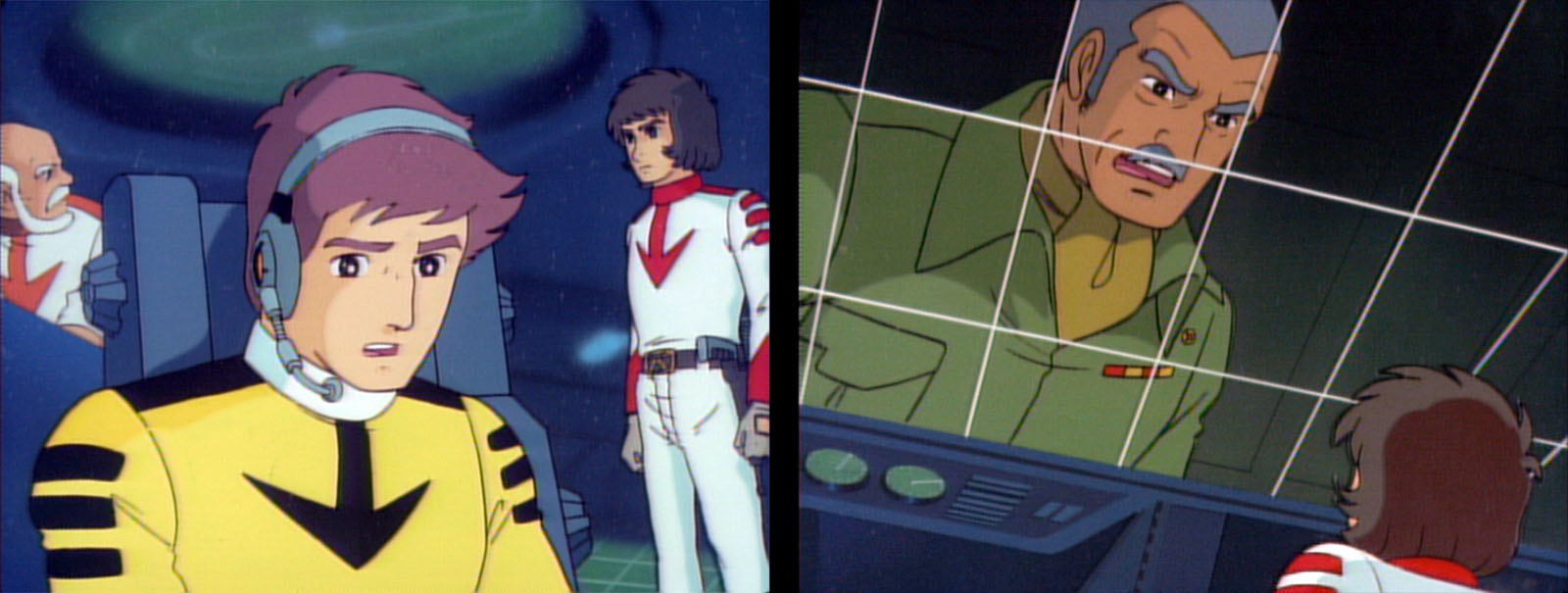
Tokugawa and Sanada Counsel Kodai
Seeing Kodai’s impatience, Chief Engineer Tokugawa and the technical team’s Shiro Sanada urge him not to rush.
“Proper preparation is essential to get Yamato moving.” Sanada explains that one can never be too careful when conducting these checks.
The Order to Disembark and Kodai’s Refusal
A representative from Earth Defense Force Headquarters sends a transmission. A staff officer conveys the order to disembark via video link, but Kodai refuses, stating, “Not a single one of us came here under orders. There is no one here who intends to leave the ship.”
The staff officer warns that they will face severe punishment, but Kodai replies, “We are fully prepared for that.”
The officer presses them to reconsider, granting a thirty-minute grace period, but Kodai declares, “That won’t be necessary,” and the gates of the underwater dock are closed.
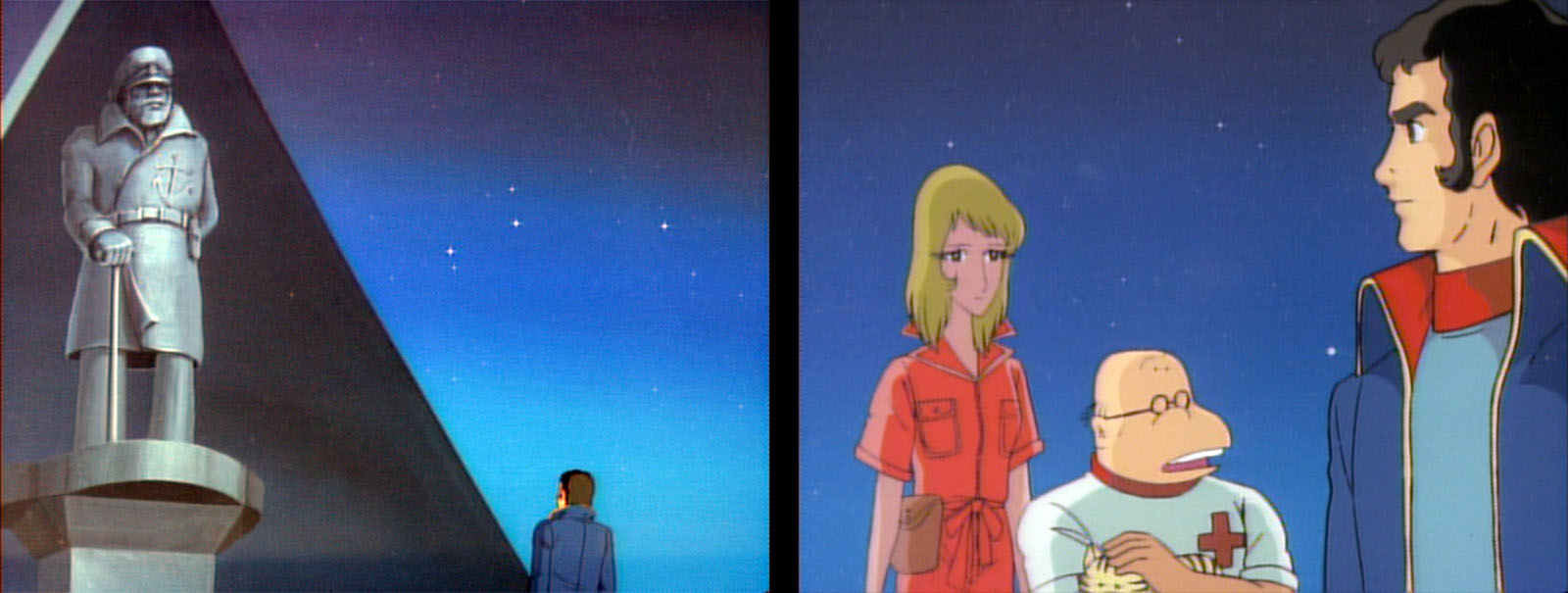
Sado, Yuki, and Shima’s Hesitation
Meanwhile, at the Central Hospital, Sado receives a phone call from Daisuke Shima. Shima voices his hesitation regarding the violation of discipline. Yuki Mori also refuses orders to remain on Earth, insisting, “Don’t leave me out,” and resolves to join Yamato alongside Dr. Sado.
Preparations for Yamato‘s launch proceed steadily, yet Shima has not arrived.
Kodai outwardly dismisses him, saying, “Suit yourself, that stubborn mule,” but Sanada argues, “We need every veteran we can get. It’s people who make the ship move, after all.”
Shima is still wavering.
“If we defy the Defense Council’s decision, we’ll be forcing the crew to violate regulations. Is that really okay?”
Dr. Sado replies: “No, the day will come when the people of Earth finally understand us. I believe that.” He adds, “For a man of the sea, the ocean is simply the best place to live, even if that ocean goes by the name of ‘Space’.”
These words give Shima the push he needs.
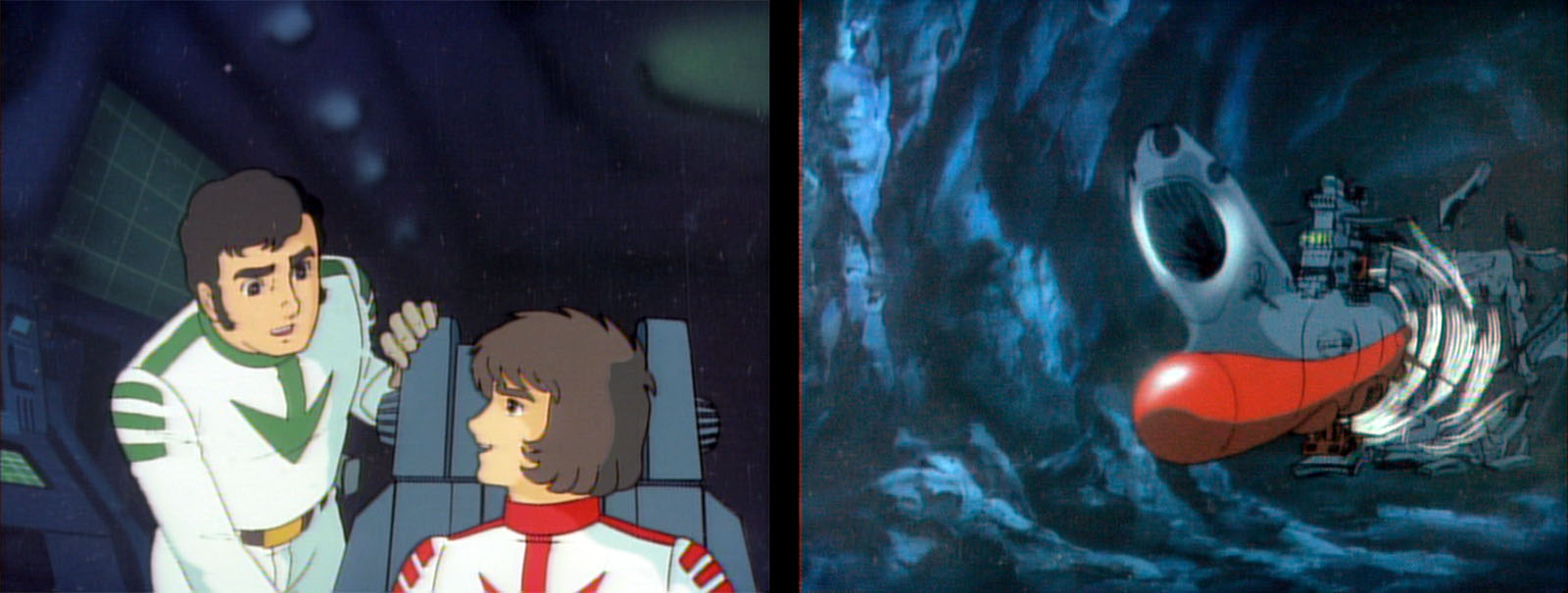
Smashing Through the Gate for an Underwater Launch
Just as the gangway lifts and the hull locks disengage, Shima comes rushing in. He accepts Kodai’s judgment, that there is no other choice, saying, “All right, Kodai, leave it to me,” and takes the helm.
Communication with the high-pressure dome, closing the aft gate, and flooding the dock are completed. Yamato smashes through the gate and moves forward underwater at slow speed.
Earth Defense Force Headquarters launches magnetic missiles, aiming to capture Yamato on the ocean floor. Just prior to this, a scene depicts the Commander instructing his staff officer: “Make sure the fuses are removed.”
The staff officer shows irritation, asking, “Do you really think such a half-measure will make Yamato turn back?” but the Commander replies, “If we can simply pin Yamato down on the ocean floor, that should be enough to achieve our objective.”
The magnetic missiles strike Yamato but fail to detonate. One can infer that this was a decision born of the Commander’s compassion.
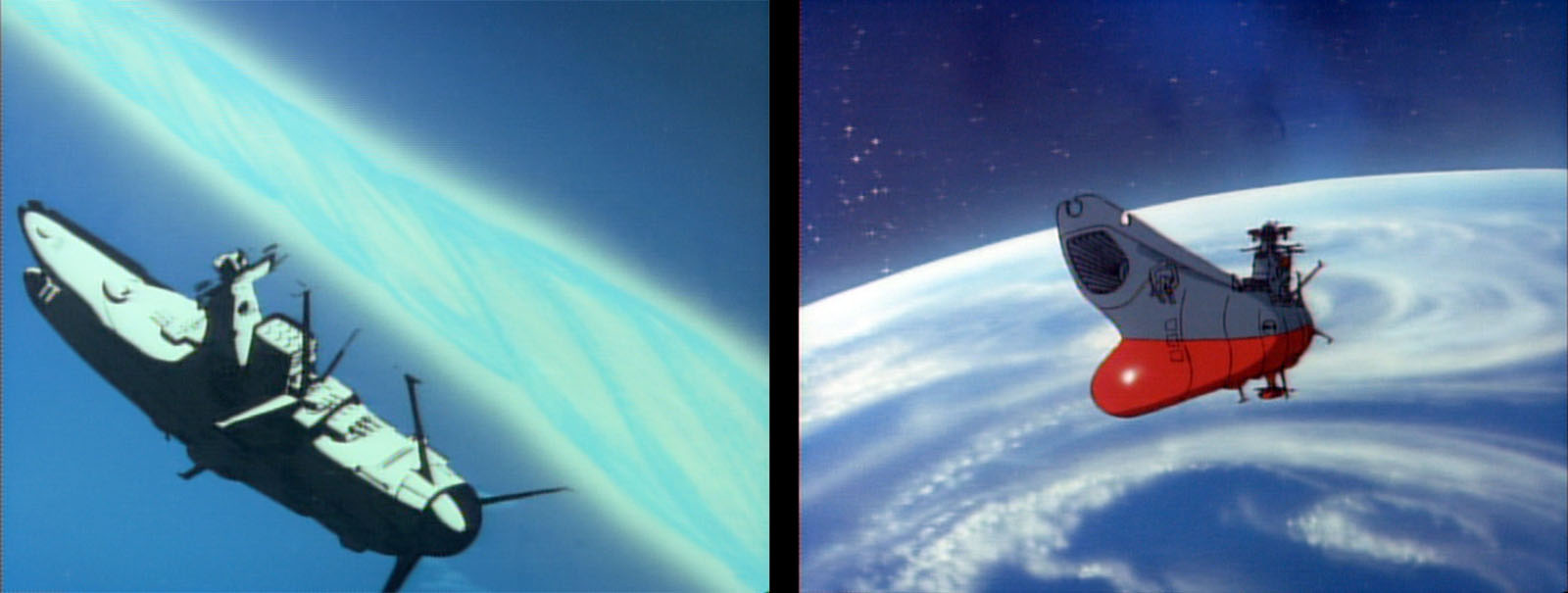
Activation of Combat Satellites and Departure from the Gravity Well
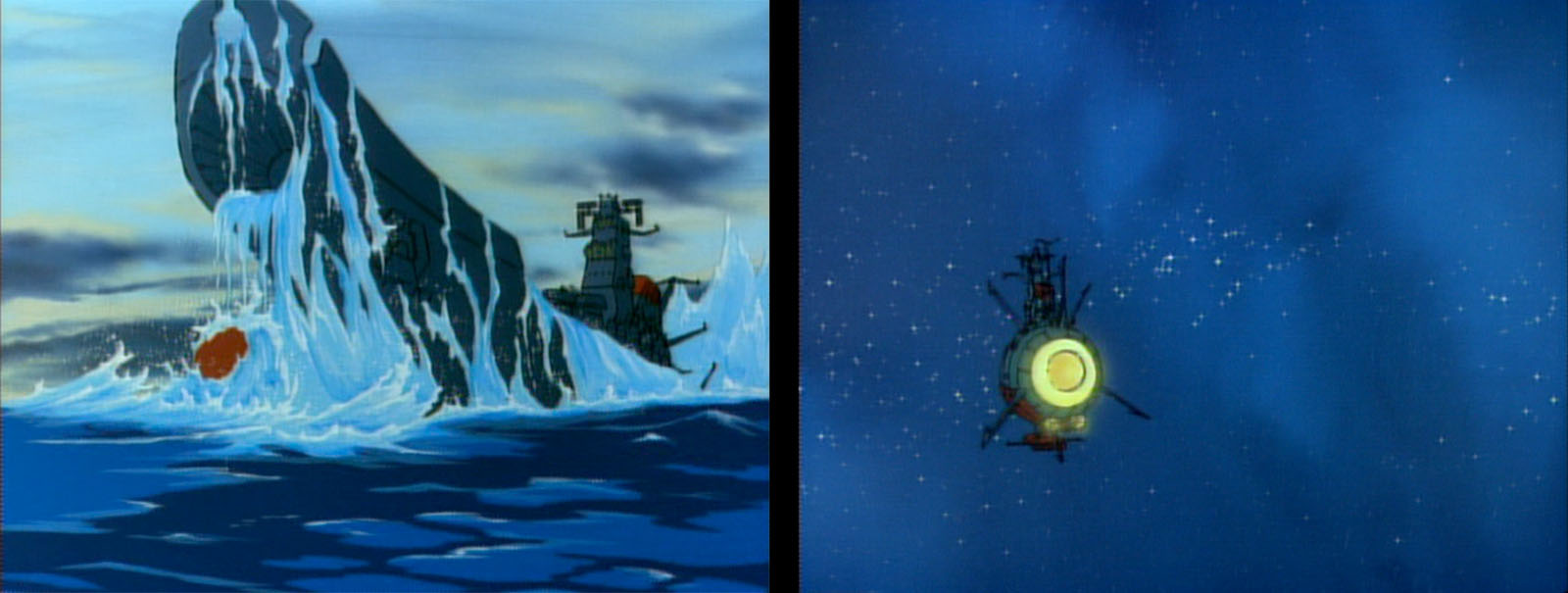
Yamato surfaces and ignites its Wave-Motion Engine. It ascends, tracing a trajectory through the atmosphere.
The staff officer, his anger laid bare, declares, “There is no longer any room for leniency,” and the Earth Defense Force activates the unmanned combat satellites originally developed to counter a Gamilas landing on Earth.
Powered up for the first time, the combat satellites lock onto Yamato as their target. The staff officer insists, “Shoot it down in one hit,” but the Commander stops him, saying, “Yamato is still within the atmosphere. If it crashes to the surface, it would be a catastrophe.”
amato destroys the combat satellites with warning shots from its shock cannons, exits the atmosphere, and breaks free from Earth’s gravity well. The Commander finally gives the order: “Let them go.” The staff officer then issues a sortie order to the Andromeda at the Venus Energy Collection Base.
The White Comet Empire also confirms Yamato‘s launch and continues its surveillance.
The date is November 4, 2201, and thus, Yamato embarks on a departure devoid of celebration.
Three Key Highlights
Kodai’s solitude, Shima’s hesitation, and the Commander’s compassion, Yamato‘s launch was not merely a matter of momentum, but the result of a chain reaction of individual resolutions.
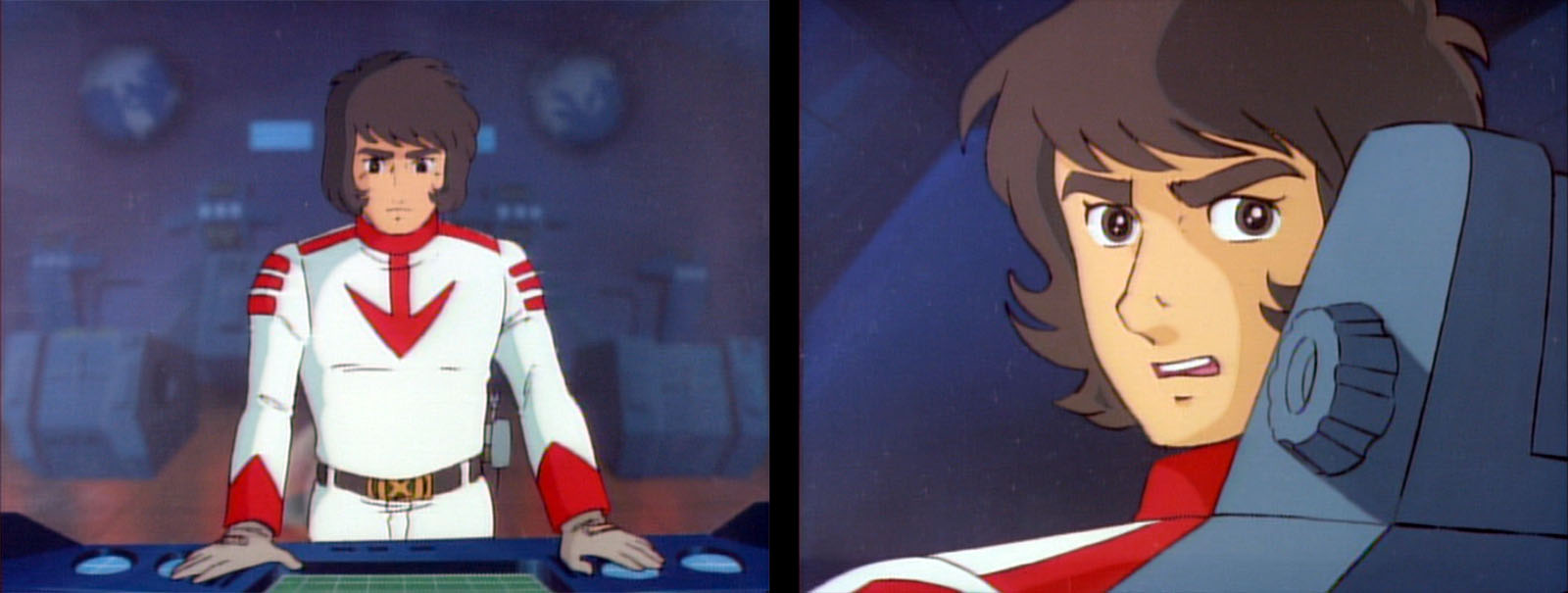
Highlight 1: Kodai’s solitude as he speaks to Captain Okita’s portrait
The sight of Kodai speaking to the portrait encapsulates the loneliness inherent in his position as Acting Captain.
Standing before Captain Okita’s portrait, Kodai honestly reveals his inner feelings, admitting, “I’m anxious,” and “The weight of responsibility is pressing heavily on my shoulders.”
While the rest of Yamato is bustling with launch preparations, the area near the captain’s seat remains still.
Even in the scenes where Chief Engineer Tokugawa and Shiro Sanada counsel him not to rush, it is clear that Kodai is not yet a fully seasoned commander. That is precisely why there is such humanity in the way he shoulders that responsibility.
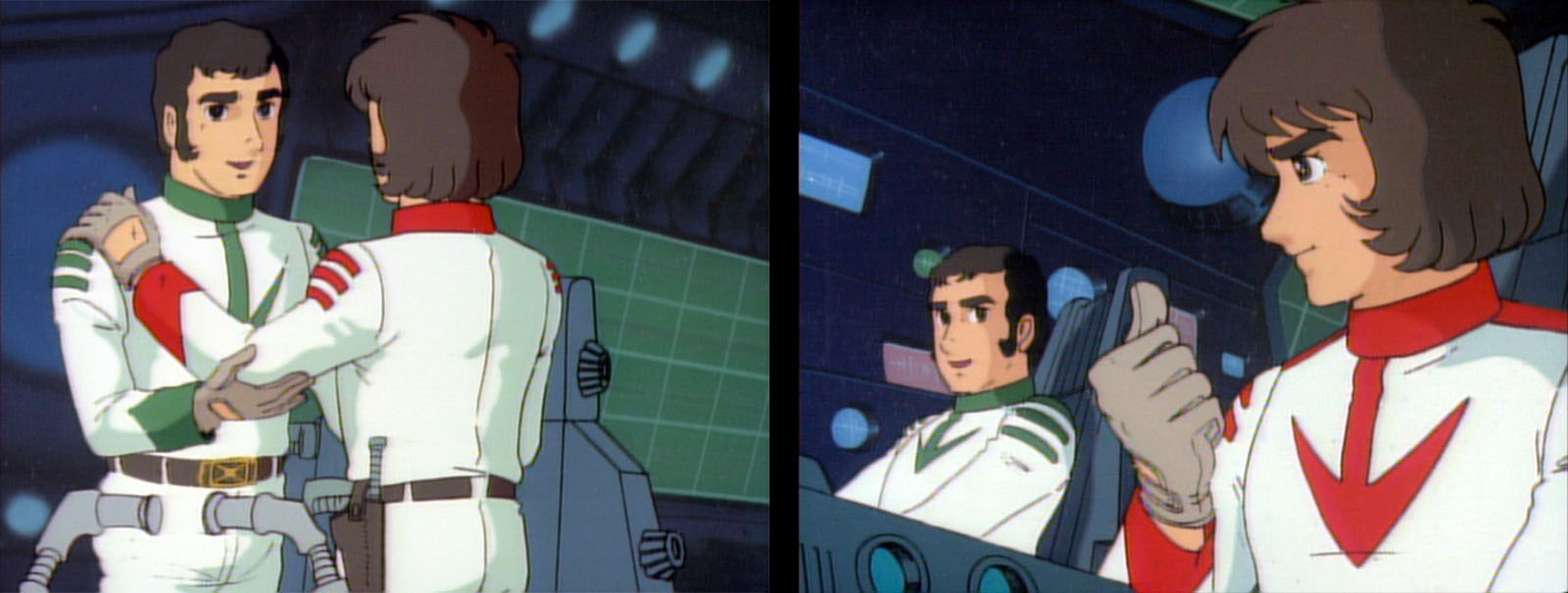
Highlight 2: Shima Daisuke’s hesitation transforms the launch from a “reckless dash” into a “voyage”
Because his courage is tempered by hesitation, this launch becomes something more than just a burst of impulsive momentum.
Shima’s delay isn’t merely a matter of being late. Fully aware that he is defying orders, and bearing the weight of responsibility for leading many crew members to violate discipline, he voices his hesitation over the phone to Sado.
Shiro Sanada’s words, “What we need right now isn’t time; it’s personnel” are spoken based on a premise that Shima has not yet reached the ship.
Just as the gangplank is being raised, Shima rushes aboard and takes the helm. In that instant, Yamato‘s launch ceases to be the reckless act of Kodai alone; it transforms into a voyage where multiple crew members share the responsibility.
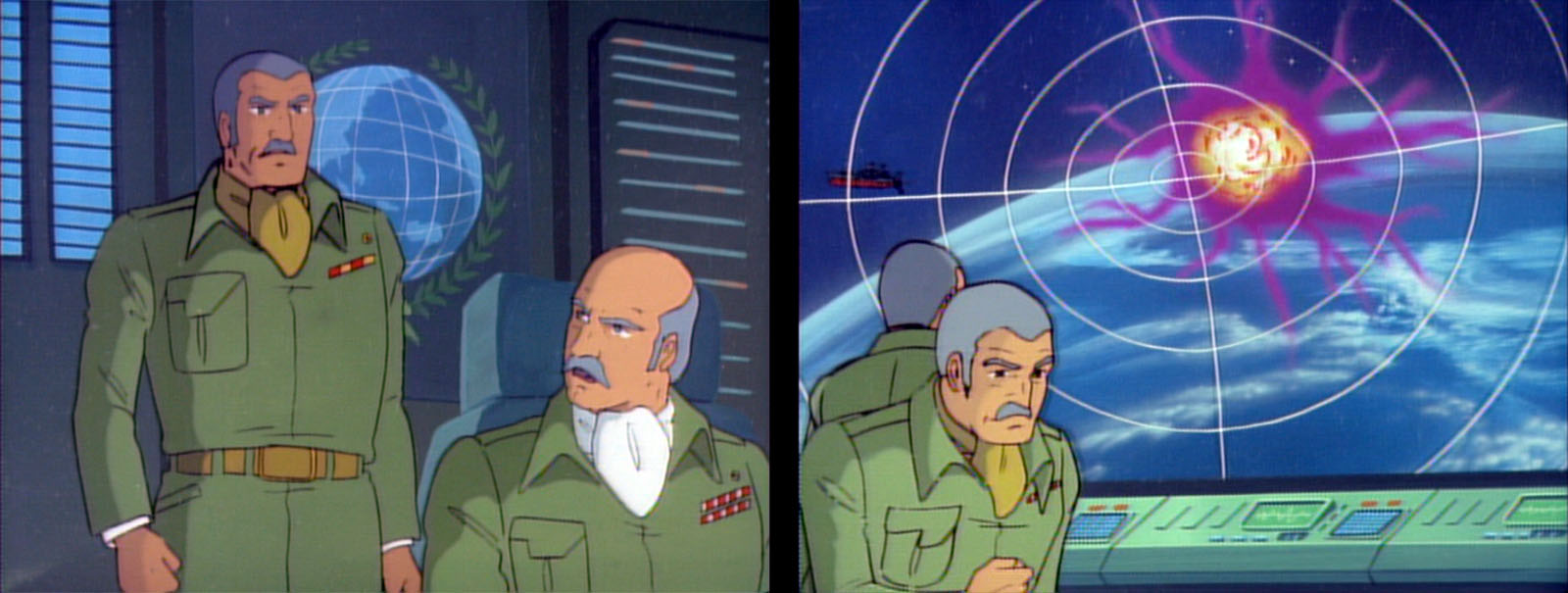
Highlight #3: The contrasting attitudes of the Commander-in-Chief and the Staff Officer reveal the complexities on Earth’s side.
The failure of the magnetic missiles to detonate reveals the Commander-in-Chief’s hesitation and compassion.
The Staff Officer prioritizes discipline and military prestige, advocating for harsh disciplinary action. The Commander-in-Chief, however, stops short of completely cornering the crew.
Just before the magnetic missiles are fired, the Commander-in-Chief orders the removal of the fuses, ensuring that none of the missiles actually detonate.
Regarding the combat satellite, he halts a strike, fearing a crash onto the surface would cause a catastrophe, and ultimately gives the order to “let them go.”
These actions suggest that, even though his official duty was to stop the launch, he likely never truly desired the destruction of Yamato.
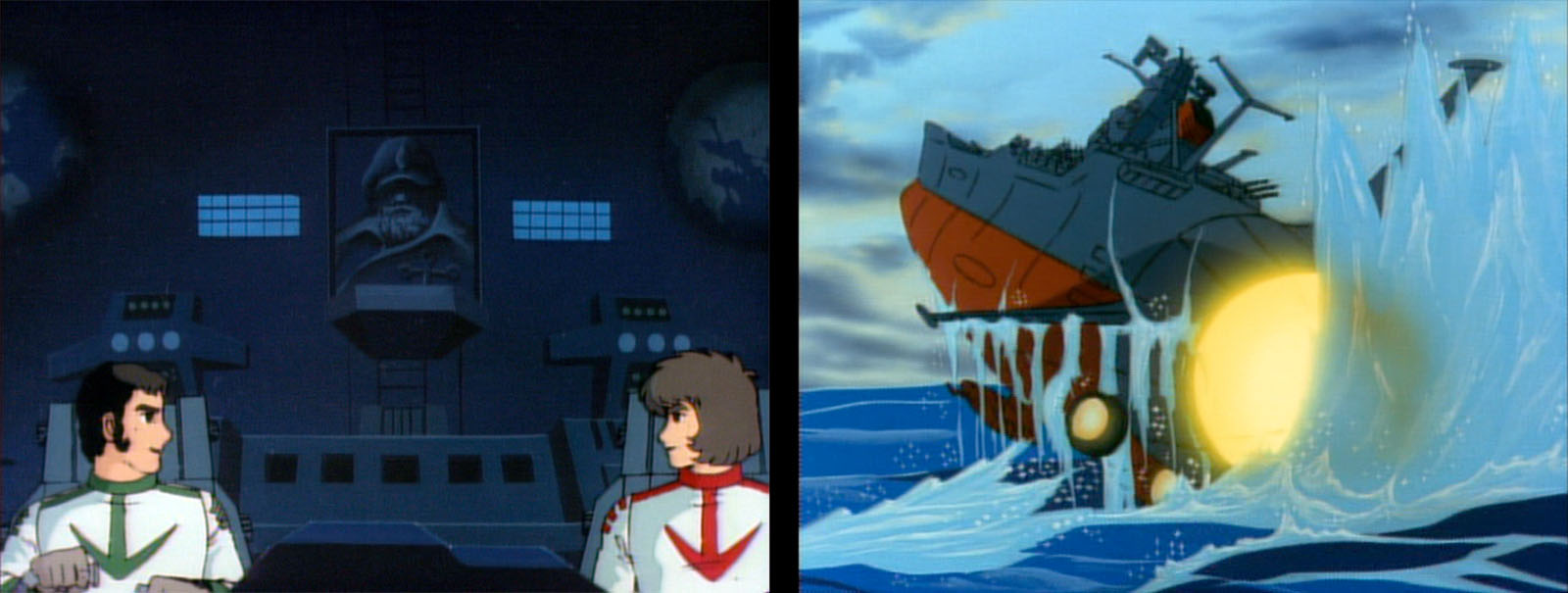
Analyzing Episode 4 through the clash of “Discipline vs. Mission”
Discipline or mission?
Let’s examine Kodai, shouldering the burden of decision-making as acting captain, by comparing him to the song leader who raises the first voice at a festival. Kodai takes on the role of making the “decision”, the weight of the chant leader
In the neighborhood where I live, we need a chant leader when it comes time to hoist the mikoshi (portable shrine) for the summer festival. That is the person who initiates the “Wasshoi!” chant. Until that first cry is raised, the shrine won’t budge, no matter how many bearers have gathered. I believe the role Kodai assumes is akin to the decision to utter that very first cry.
When Kodai speaks to the portrait of the late Captain Okita, he is not yet a fully realized commander. Yet, bearing the title of Acting Captain, he shoulders the judgment that “if we don’t move now, it will be too late.”
If they wait for orders, Earth will go under. Relying solely on that conviction, he lets out that first “Wasshoi!”
Shima takes on the role of “resolve.” The shrine won’t rise without the bearers
A portable shrine cannot be carried by the chant leader alone. Without the bearers assembled, the chant rings out in a void. Shima takes on the role of one of those bearers.
Shima is fully aware that Kodai’s decision will turn many crew members into rule-breakers. That is precisely why Shima’s hesitation is not an act of opposition to Kodai. I believe it was a moment for him to confirm whether he, too, could truly shoulder the weight of Kodai’s decision.
The moment Shima grips the control stick, Yamato‘s launch ceases to be the reckless act of a single man. The one who makes the decision, and the one who supports it after wrestling with doubt; only when these two come together does Yamato begin its voyage once more.
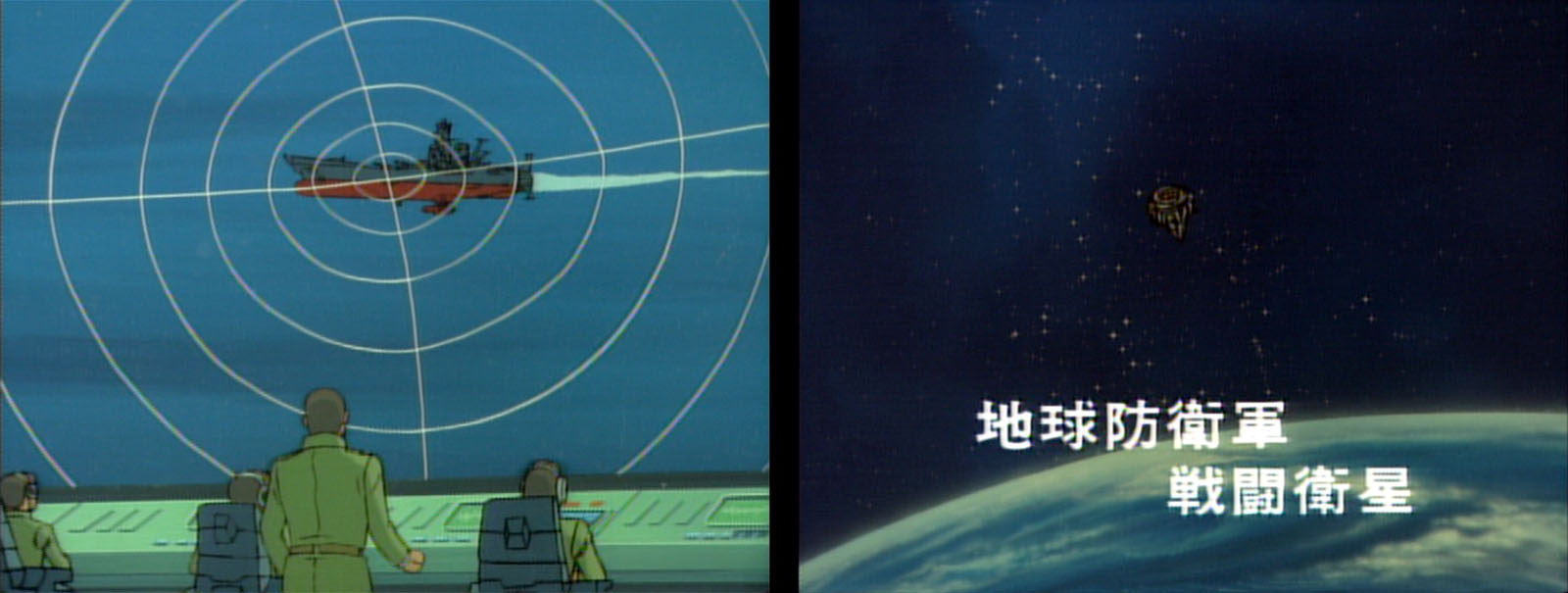
Is the Commander’s response a tacit endorsement? The protocol of a neighborhood association president
Strictly speaking, if a neighborhood association president is ordered to cancel a festival, he has no choice but to declare it cancelled. However, there are ways to avoid halting the drum preparations, or subtle tactics like intentionally weakening the gunpowder for the fireworks.
The scene where the Commander orders the removal of the magnetic missile fuses is akin to that latter approach. The staff officer prioritizes discipline and military prestige, advocating for harsh disciplinary action. The Commander, unable to openly support Yamato, maintains the official order to block its launch while striving to avert a catastrophe.
Even regarding the combat satellite, he halts a plan to shoot Yamato down in one strike, citing the disaster that would ensue if it crashed to the surface, and ultimately gives the order to “let them go.” Conflicts within an organization are rarely a battle between the “right” and the “wrong.” They are simply a clash between the “rightness” of two individuals holding different positions.
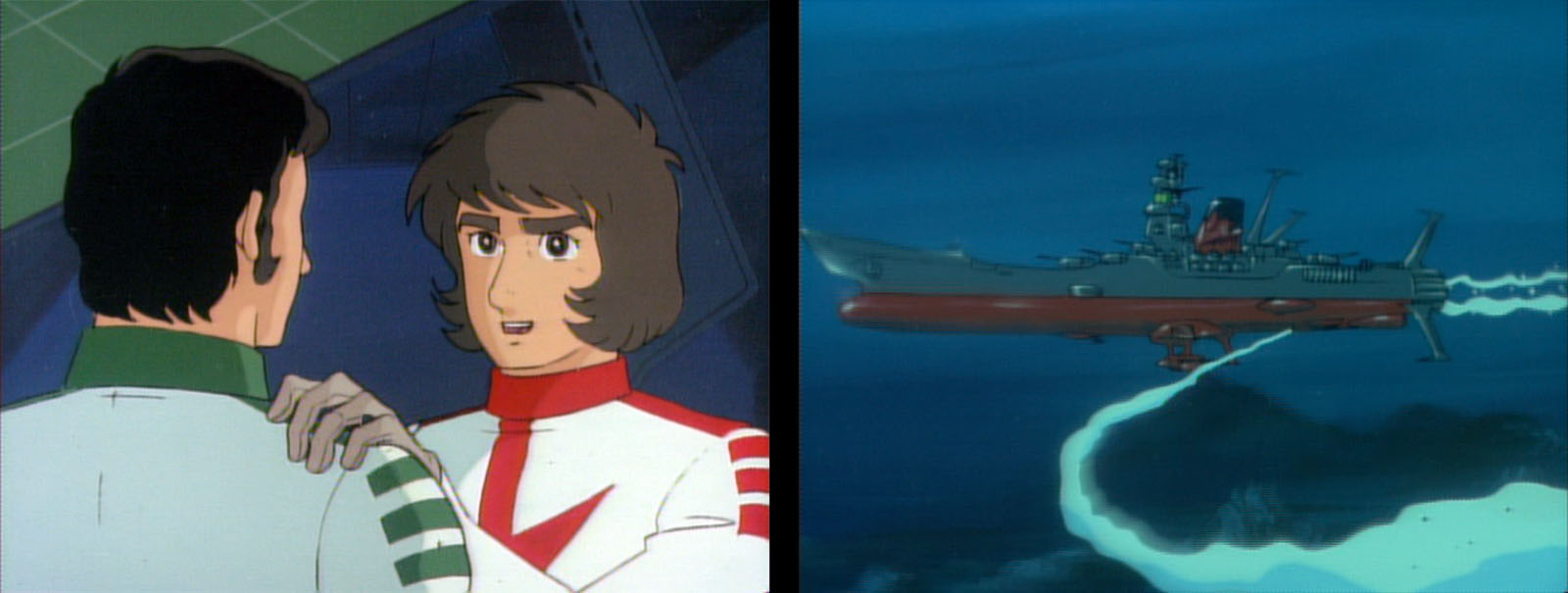
An Old Man’s Musings
Beyond the screen door, the distant sound of cicadas still lingers. With a glass of barley tea in hand, here in Sapporo at 2:00 AM, I am rewinding the scene of Yamato’s launch.
When it came to Sapporo’s summer festivals back in my youth, the order of events was set: starting with the children’s mikoshi (portable shrine) parade, moving to the adults carrying the main shrine, and concluding with fireworks. For some reason, Yamato’s launch tonight keeps reminding me of that scene with the children’s mikoshi.
A mikoshi is something that can absolutely never be carried by a single person. Unless the chant leader’s call of “Wasshoi!” and the bearers’ timing in shouldering the load are perfectly synchronized, the shrine will wobble and crash to the ground.
Kodai’s decision was the chant leader’s call; Shima’s last-minute dash was the moment the final bearer stepped in to shoulder the weight. Tokugawa, Sanada, Sado, and Yuki Mori were all already in position. It was only when Shima stepped in to shoulder the load that the shrine finally rose into the air.
To me, the Commander’s handling of the magnetic missile incident looks just like the fireworks at a summer festival. With fireworks, the blast radius is largely determined at the stage where the gunpowder is loaded. Whether to launch a massive shell or stick to a modest display, that decision rests on the judgment of the person giving the order.
The Commander chose not to launch the kind of firework that explodes. “Remove the fuses.” I believe that instruction was the neighborhood association president’s way of averting catastrophe without technically breaking the rules.
In my own 32 years in the field, there were many nights I spent staring at a pressure gauge, wondering, “Is it okay to proceed as usual today?” There were times when the manual alone wasn’t enough to make a call; I had to assess the equipment’s condition and choose the safer course of action.
The answer only becomes clear in hindsight. Kodai’s decision, Shima’s resolve, the Chief’s act of leniency, none of them could have seen the “correct” answer at the very moment they acted.
Haven’t you, too, had nights where you were torn between the rules and your own judgment, unsure of which path to take?
Summary of Episode 4
Episode 4 depicts the responsibilities borne by those who make decisions and those who waver, all set against the backdrop of a spectacular launch sequence. Kodai makes the call as acting captain, while Shima, after wrestling with the conflict between discipline and his mission, ultimately embraces that decision as his own resolve.
The Chief, too, while officially ordering Yamato to halt, stops short of driving them into a corner from which there is no escape.
Branded as rebels by the very Earth they sought to protect…
Believing that inaction would mean it was already too late, they set out on a voyage that would receive no blessing. Episode 4 is the story of that bitter departure.
A departure without a blessing tests one’s resolve like nothing else. Even a launch without a blessing is driven by a desire to protect something. Yamato, carrying both firm decisions and lingering doubts, sets sail on a new voyage.
Postscript
My glass of barley tea is already empty. Outside the screen door, the cicadas are still chorusing. I want to finish writing this before the caregiving call bell rings. Watching the scene where Yamato launches in defiance of orders, I was reminded of a night when I, too, struggled with a decision on the job: “Should I follow the rules, or should I act right now?”
The answer only becomes clear in hindsight. I hope something in this article resonates with you during your own late-night moments.