

February 15: High school chorus festival
From the time the Yamato theme stormed its way into pop culture, it was destined to become a standard in school music performances. This created a new and eclectic channel for music releases when some of those performances were preserved on keepsake LPs like the one shown here. It was recorded at the February 1978 Tokyo Metropolitan Musashi Murayama High School 3rd Chorus Festival and released later in presumably limited numbers. It may have been the first, but it would not be the last.
April releases
With Yamato‘s popularity boosting everything else around it, the theme song continued to appear on multi-track collections like these…

TV Anime Original Soundtrack Definitive
A mishmash of music and drama tracks from Yamato, Cyborg 009, and Gatchaman. Find data here.

Family Best TV Manga Action Deluxe, Space Battleship Yamato/New Star of the Giants

A collection of opening and closing songs from six different anime series. Find data here.

Family Pack, Golden Terebi Manga All Star Big Hit
A 2-LP set with songs from 24 different series. Find data here.

Space Fantasy
This was the only April release that wasn’t a reprint of earlier material. Instead, it was a true pioneer in the rapidly-expanding world of electronic music. It featured trailblazing synth musicians Hideki Matsutake, Hiroki Inui, and Rei Sekimori, performing selections from Yamato, Close Encounters, and other sources. A live version would be released later in the year.
Both the studio and live albums can be purchased on CD here. (CosmoDNA approved!)
From a wider historical standpoint, this is the first known album of purely-synth anime music. It broke ground on a trend that Nippon Columbia would soon exploit with the “Digital Trip Synthesizer Fantasy” series.

May 25: Mitsuko Horie, World of Anime Roman LP
In 1978, the accomplished anime theme singer Mitsuko Horie was still two years away from recording a Yamato song (for Be Forever) but she managed an amazing tie-in that may have been unintentional. The album shown here was released three full months before Farewell premiered in theaters. Only one day before this album was released, Yukiko Hanai’s design for Yuki’s pink daywear was revealed for the first time at the press conference. And yet, Ms. Horie somehow found a perfect replica for her album cover.

It may have been a simple coincidence, but she was well-connected to the anime industry, which just might have given her the means to pull this off. For all we know, Yukiko Hanai herself made it for her. Either way, it would have been quite a coup to have this album in stores when the movie premiered in August. Special thanks to Solachan1104 for posting this on Twitter.
Find out more about this album here.
Listen to it on Youtube: A side | B side
Read an interview in which Mitsuko Horie shares her Yamato memories here.
See a Mitsuko Horie discography here.
May releases

Friend Concert I LP
Nippon Columbia, AX-7152
Kazuo Funaki seems to have a somewhat parallel career to Isao Sasaki, though he stuck with singing and acting rather than breaking into anime. But that didn’t stop him from delivering his own rendition of the Yamato theme on this album, a live concert in which he performed Yamato in a rare duet with a female singer. That made it the first time in history anyone released a live stage recording of the theme. It would take until fall 1980 to get one from the “home office.”

Terebi Anime Dynamic March LP & single
Nippon Columbia released both of these simultaneously, a 13-track LP and 2-track single featuring anime themes you could march to. These were all-new arrangements performed by the Columbia Brass Orchestra, which qualifies this as an early anime theme “cover album.” Yamato and Triton of the Sea were the top picks for both discs.
Find more information here.

July: Terebi Animation Exciting Brass LP
Besides the Rival/Teresa Forever single, this was the only music release for July, a Nippon Columbia album featuring several classic anime themes rendered by a brass band. The Yamato theme and The Scarlet Scarf were joined by Gatchaman, Star of the Giants, Astro Boy, Triton of the Sea, Devilman, and others.

August 1: From Yamato With Love single
After plenty of hype, fans finally got to hear the end title song, written by Yu Aku and sung by Kenji “Julie” Sawada, four days before the premiere. Ten days after this release, it was prominently featured on Sawada’s next album, titled And Now the Glorious Banquet (Polydor MR3130). Collectors, take note: the album version has a slightly different mix than the single version. The B-side of this single was an original Sawada tune that had nothing to do with Yamato, either thematically or stylistically.
Read more about the single (and find lyrics) here.
Listen to the single version here.
Listen to the entire album here.
The song would be later covered by Isao Sasaki in order to provide Nippon Columbia with clear copyright to release it themselves. In the meantime, a spoken-word version by Yoshinobu Nishizaki himself would be recorded for the Farewell drama LP.

August 1: Voice Voice Voice Festival
This unusual event was the first of its kind, a live variety show featuring an army of 56 anime voice actors celebrating the 10th anniversary of their mutual talent agency, Aoni Production.
The lineup included three Yamato actors: Kei Tomiyama (Kodai), Akira Kamiya (Kato), and Kenichi Ogata (Analyzer). The young audience was overjoyed to see and hear their favorite actors performing songs and skits, and dramatic scenes from series such as Candy Candy, Danguard Ace, and Captain Harlock.

One particular highlight was a live rendition of The Scarlet Scarf. It didn’t measure up to Isao Sasaki’s version, but that didn’t matter; from the first note to the last, the crowd screamed continuously as if they were in a Beatles concert. This and many other segments would be released on LP in October.

August: Very Best Movie Music Series single 71
Based on the number alone, King Records must have been publishing this series for a while. It was the first time their path crossed with Yamato by combining the theme song with that of Osamu Tezuka’s Phoenix, which had been made as a live-action film. Both songs were by the Massimo Leone Orchestra, which seemed to specialize in cover tunes.
Listen to this version of the theme here (starts at 19:50).
October releases
There was no shortage of sources for Yamato songs as 1978 proceeded. In fact, their numbers grew far beyond what’s shown here, but since exact release dates aren’t always available we’ll save them up for later.

At left is a single from ELEC Records’ “Terebi Manga Series” containing covers of From Yamato With Love and The Rival. At right is another 2-LP omnibus from Nippon Columbia called Anime Request Best 28. The Yamato theme and The Scarlet Scarf were joined by songs from its most popular contemporaries including Captain Harlock, Triton of the Sea, Cyborg 009, Devilman, Lupin III, and more.

Nippon Columbia also released the biggest Isao Sasaki collection yet, a 2-LP set called Isao Sasaki Best 24. This one had all five of his Yamato songs and others from his best-known super robot anime, including Grendaizer and Dangard Ace. Of course, all these songs have been released on CD many times over since then.

Columbia music flyer 78>79
“Power Lineup” was the appropriate name for this foldout flyer from Columbia to promote its late 1978/early 1979 album releases to the exploding anime market. A Yamato album was only one drop in the biggest wave seen so far.
See the entire flyer here

December 25: Space Cruiser Yamato single
This one remains something of a curio, with no ready explanation for what motivated it. The Yamato theme and The Scarlet Scarf are sung phonetically in English by Sasaki, maintaining the spirit of the original while rushing admirably through some obviously unfamiliar syllables.

“Space Cruiser” was the international title given to the first Yamato movie, but there was no obvious connection between that film and these songs, since they were produced long after its release.

What is known, however, is that this wasn’t a standalone release; it was part of a larger project that formed the third release for this day.
Read more about the single and find lyrics here.

December 25: Isao Sasaki Singing His Beloved Animation Hits
the “larger project” was an entire LP of Sasaki singing anime songs in English; a total of 13 tracks from Yamato, Danguard Ace, Galaxy Express 999, Captain Harlock, and others. The lyrics are credited to music teacher/arranger Donald P. Berger, who took on the heroic task of rendering concise English phrases to fit the original Japanese melodies.

The album’s insert contained sheet music and lyrics to all 13 songs. It was released only once on CD in 1999, a 5-disc box set from Columbia titled Isao Sasaki Deluxe Collection (COCX-30275 > 279).
Release dates unknown

All of Japan Film Music, Victor
Contains a VERY energetic and creative medley of Yamato themes by “The Film Studio Orchestra.” Read more about this album here.
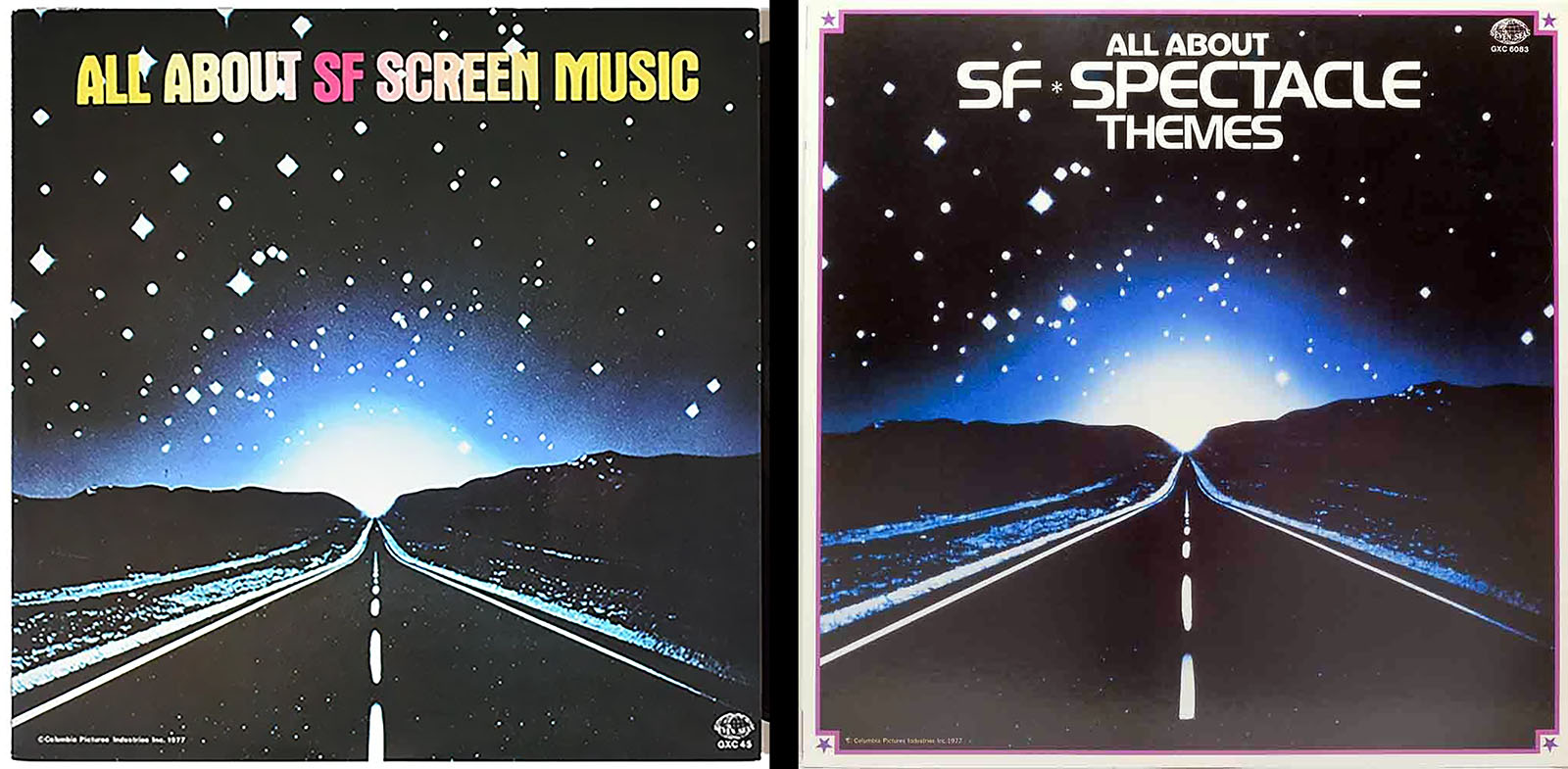
Seven Seas
Seven Seas
Seven Seas was a label that specialized in cover compilations of movie themes from around the world, often placing the Yamato theme among the best-known SF and action movies from the west.

L to R:
Live Space Fantasy, For Life records
Live version of an anime synthesizer album released in April 1978 (released on CD in 2010: FLCF-5027)
Space Roman, Victor
“Starship Synthesizer Orchestra” covers themes from Star Wars, 2001, Yamato, etc.
Listen to the album on Youtube here
Yamato/Cyborg 009/Gatchaman TV Anime Original Soundtrack Definitive, Columbia
Selections from all three series

Columbia
Bourbon (single)
Teichiku Orchestra (single)

Golden Pops Concert
Polydor
V.A., Seven Seas
Polydor

Screenland Orchestra, CBS/Sony
Overseas Records
Double Power Plus Orchestra, Seven Seas
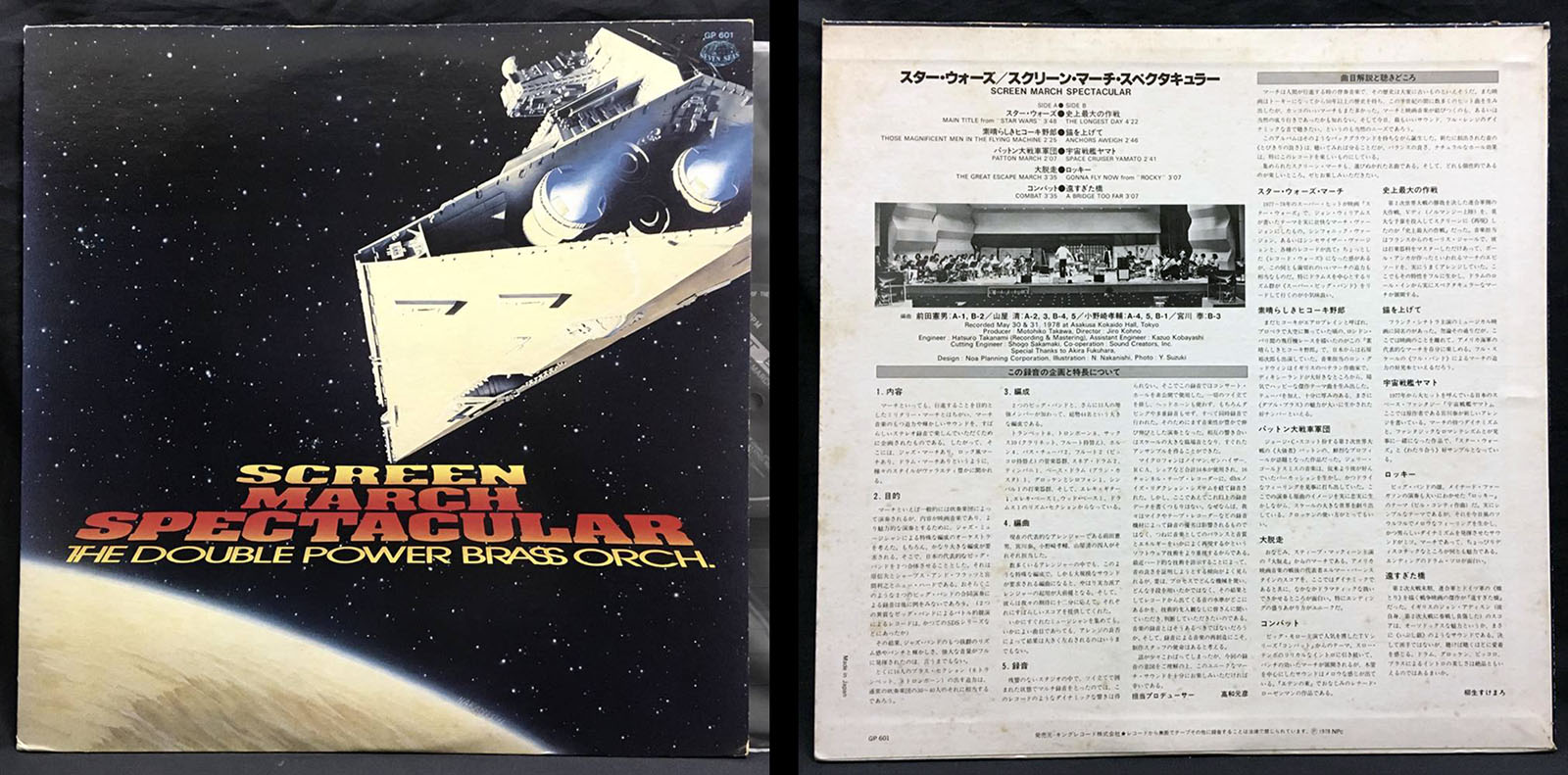


Space SF Compendium, collecting Star Wars, Close Encounters, 2001, Capricorn 1, Yamato, Message From Space, Star Wolf, and The Bionic Woman.

Asahi Sonorama
Toshiba Records
Micro Records

Toshiba Records (single)
Jack Records
Space Records

(SF Anime volume)
Jack Records
Jack Records
Seven Two

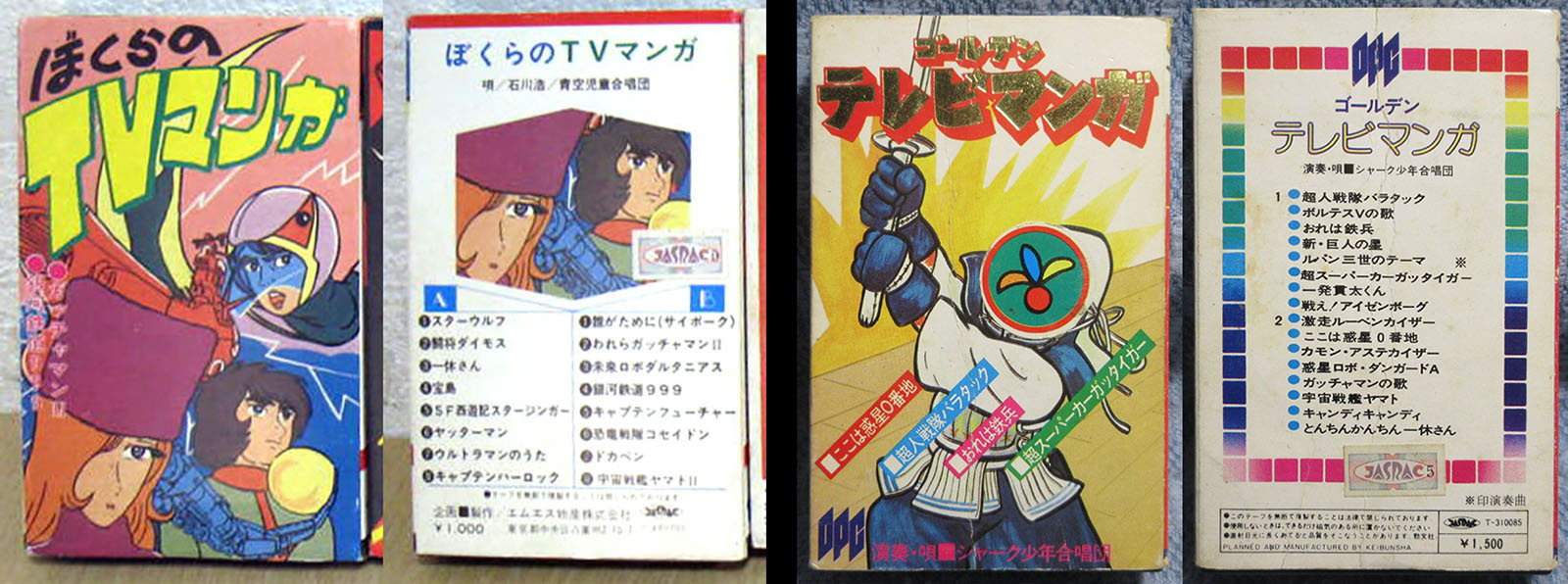
Unknown label
OPC
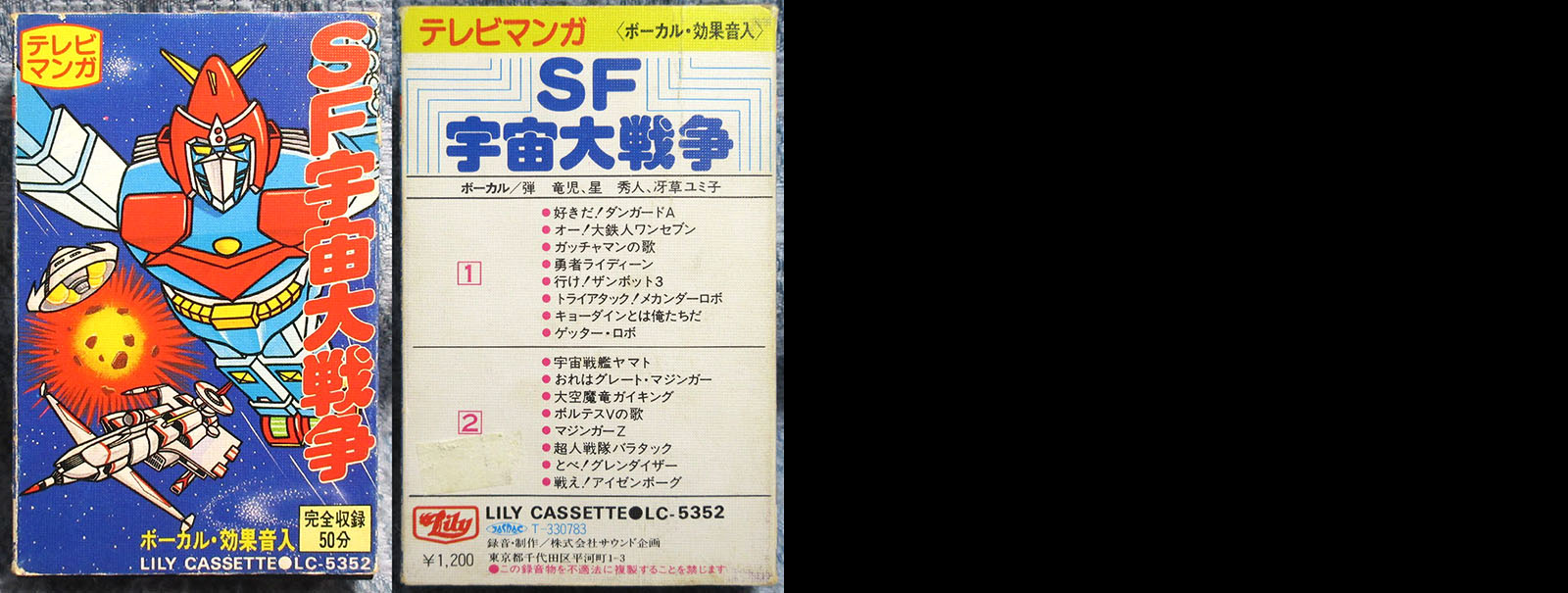
Lily Cassette