
From Yamato 2199 to REBEL 3199, a series explaining the mechanics of battleships and other vessels appearing in the Space Battleship Yamato remake series. Part 15 covers the Cosmo Falcon, a fighter of the United Nations Space Forces. We will take a closer look at the performance of this machine, which was active in the Garmillas War.
Explanation: Yuka Minagawa
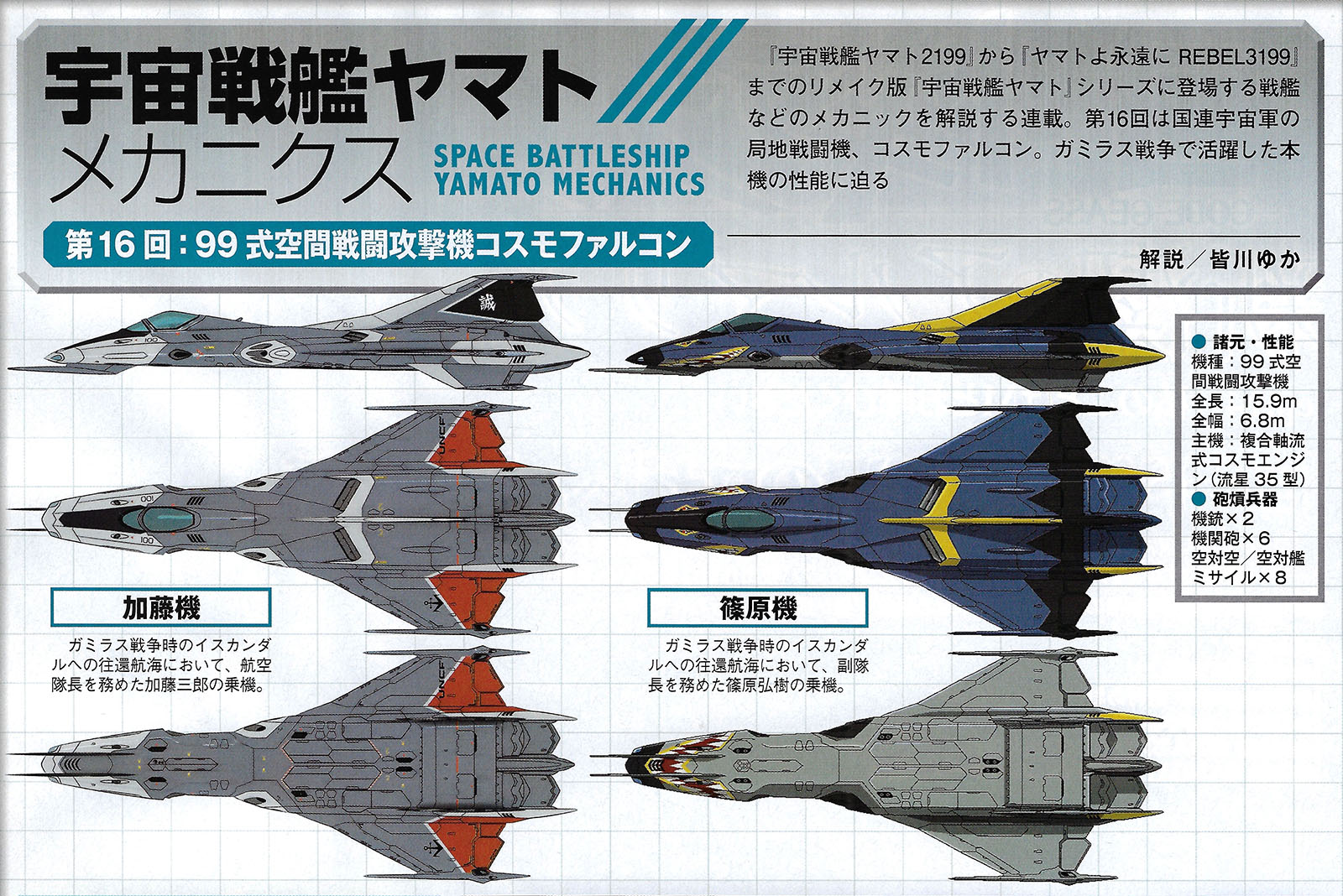
● Specifications and Performance
Model: Type 99 Space Combat Fighter Aircraft
Overall Length: 15.9m
Wingspan: 6.8m
Main Engine: Compound Axial-Flow Cosmo Engine (Meteor Type 35)
● Armament
Machine Guns x 2
Autocannons x 6
Air-to-Air/Air-to-Ship Missiles x 8
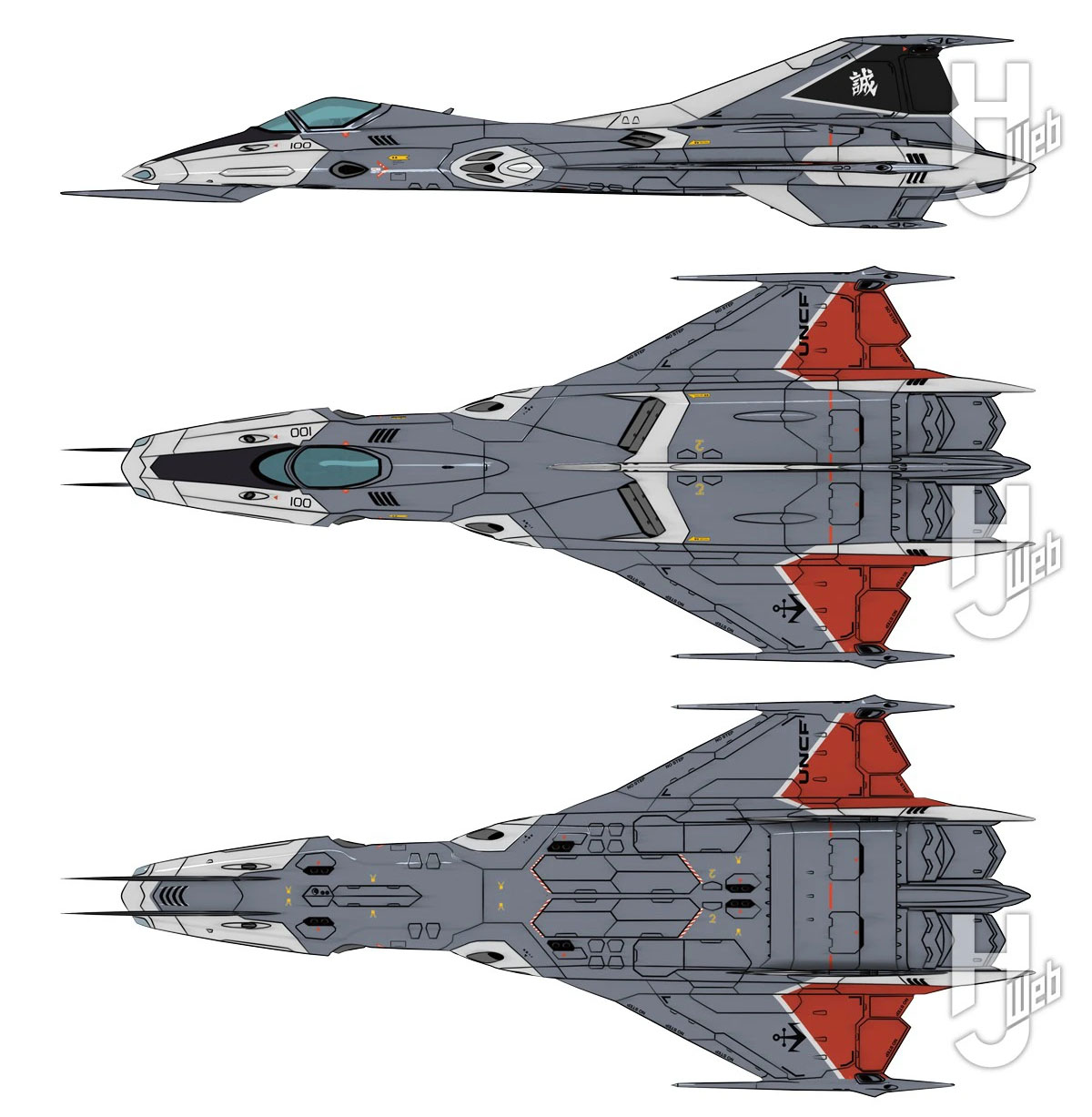
Kato’s model
This was the aircraft flown by Saburo Kato, who served as the air squadron commander on the voyage to and from Iscandar during the Garmillas War.
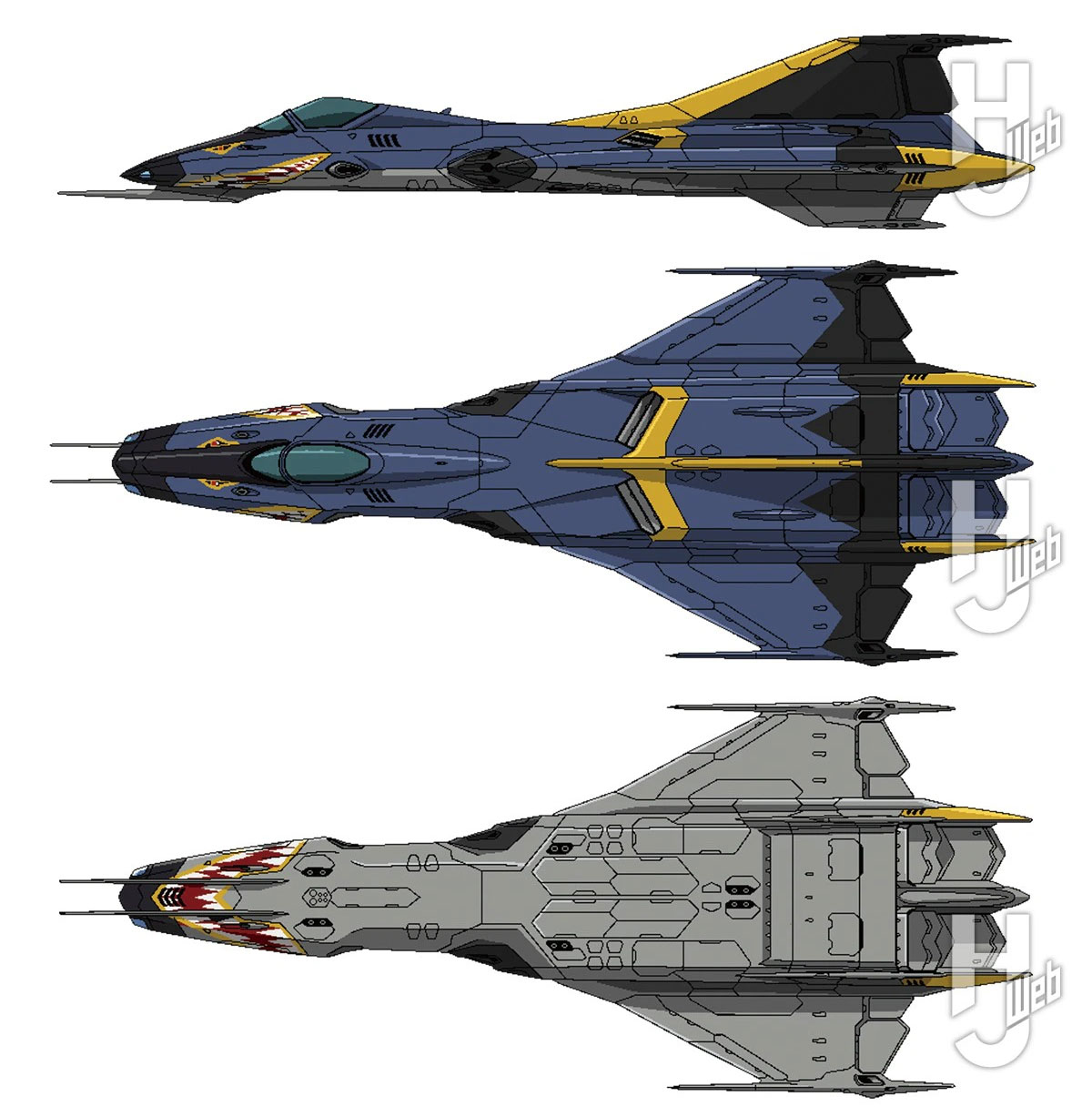
Shinohara’s model
This was the craft piloted by Hiroki Shinohara, who served as second-in-command on the voyage to Iscandar during the Garmillas War.
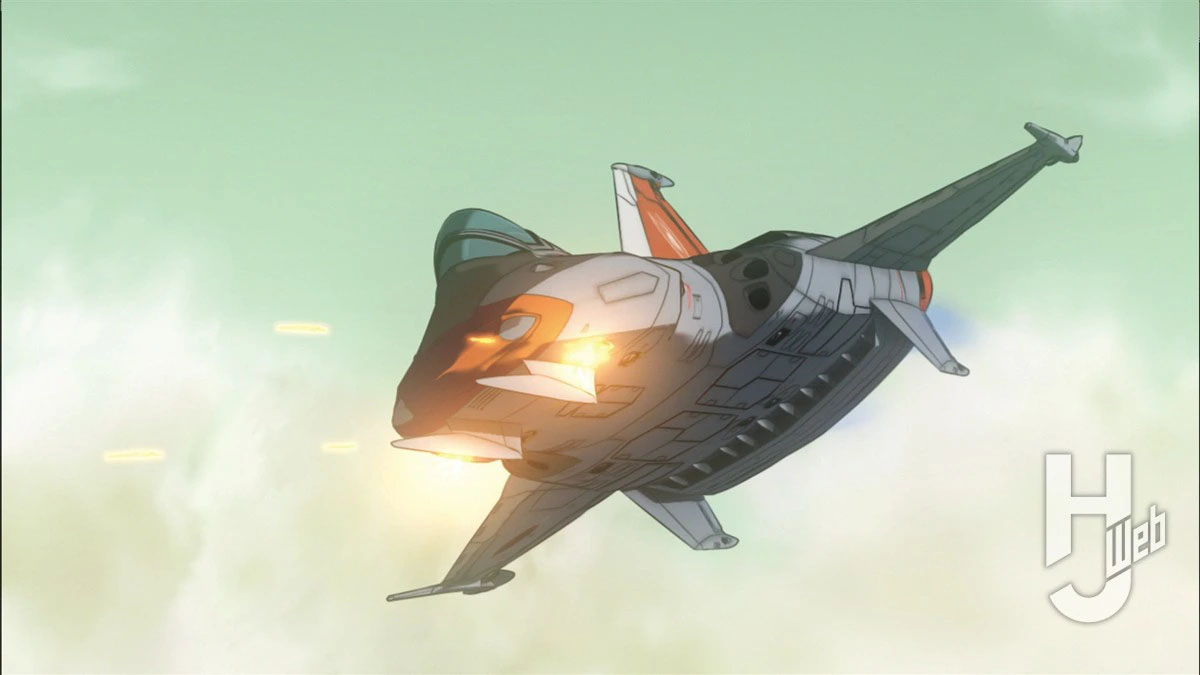
UN Ground Forces Specification
Deployed to ground bases during the final stages of the Garmillas War. Kato used it to shoot down a Garmillan attack fightercraft Melanka
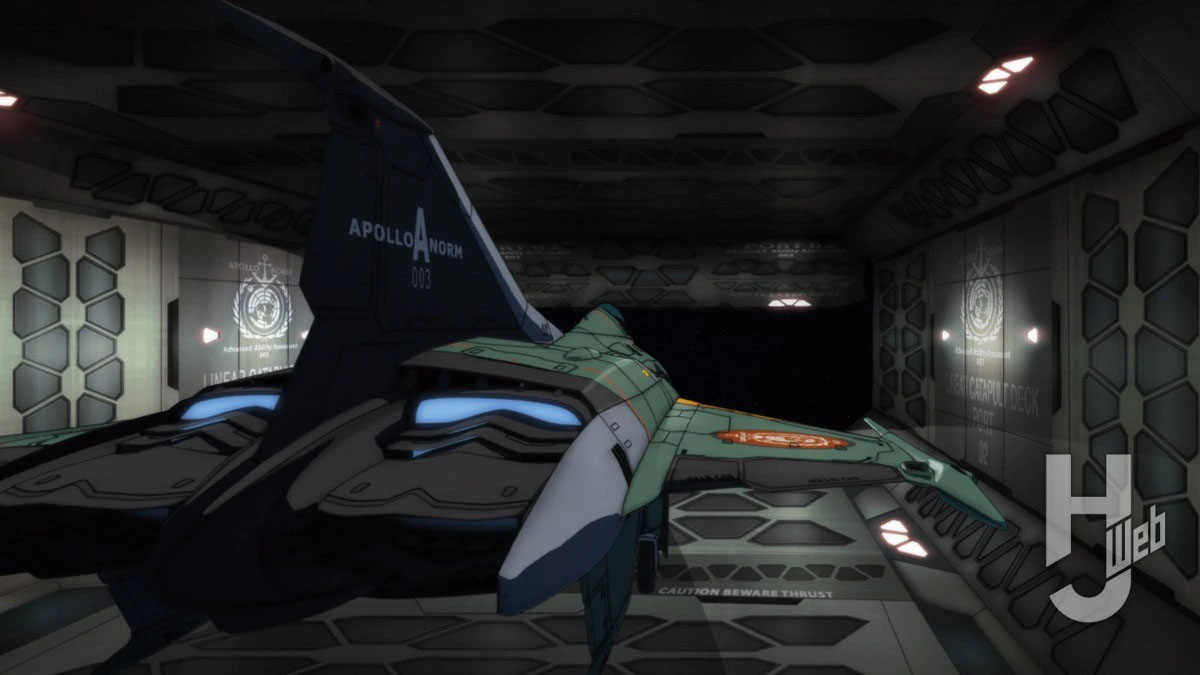
Carrier-Based Aircraft
This aircraft deployed to the Andromeda-class vanguard armed carriers Apollo Norm and Antares. The name of the assigned ship is written on the vertical stabilizer.
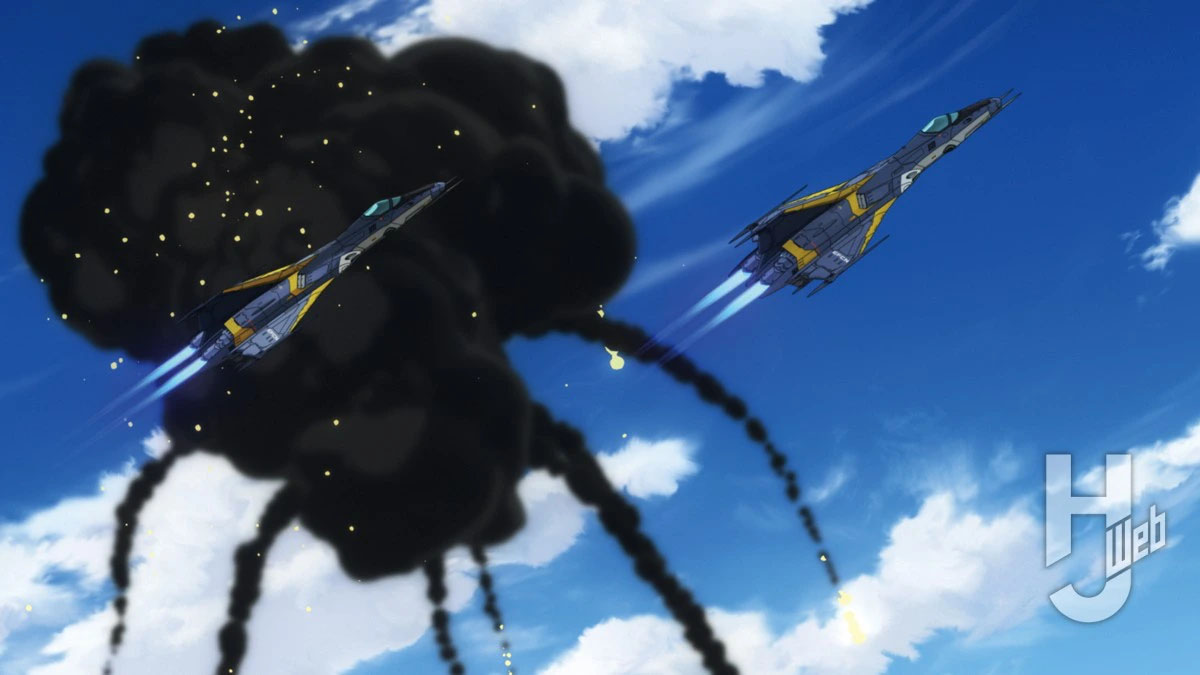
Partisan Operation Aircraft
Piloted by Shinohara, Sakamoto, and others, they engaged in an aerial battle with Dezarium’s Caterpillar fighters.
The Type 99 Cosmo Falcon was officially adopted in 2199, at the very end of the Garmillas War. Its development and mass production were carried out by the United Nations Ground forces, Far East Space Battle Group, and the Space Technical Arsenal. Positioned as a local fighter to defend Earth’s absolute defense zone, which was on the brink of destruction due to the Garmillan invasion, this aircraft was capable of operating both inside and outside the atmosphere, and was therefore adopted by the UN Space Navy as a carrier-based aircraft, as well as being used for aerial defense missions on the moon.
It was used as an Air Force for Yamato on its round-trip voyage to Iscandar in 2199, but this was due to delays in the mass production of the Type 52 Space Fighter Cosmo Zero, which was planned as a carrier based aircraft. Yamato carried 32 of these aircraft, equivalent to two air squadrons, which were already inactive service with the ground forces, plus four reserve aircraft.
The heart of the all-purpose Cosmo falcon is a compound axial flow Cosmo engine (Meteor Type 35), which allows for high maneuverability in any environment. One of the key features supporting this maneuverability is thrust vectoring technology. This technology employs two dimensional nozzles for the main jets, with the left and right sides moving independently. In addition to normal flight, this technology enables complex maneuvers, such as rolling, breaking, reversing, and hovering using opposing thrust. This not only allows the aircraft to operate without a runway under gravity, but also provides outstanding maneuverability in zero-gravity dog fights.
The aircraft was designed with stealth in mind, and various weapons are stored in the weapons bay on the underside of the fuselage, but additional weapons can also be mounted on hard points on the upper and lower sides of the wings, depending on operational requirements, giving it versatility for a wide range of use uses from air superiority combat to anti-ship attacks.
Throughout the Garmillas War, Earth’s space battleships and cruisers were inferior in performance to Garmillas warships, but the Cosmo falcon was a match for Garmillas air power, as evidenced by the numerous successes of Yamato on its voyage to and from Iscandar.
After the Garmillas War ended, the Earth Federation government proposed a Wave-Motion Gun fleet concept, and drew up a plan for the next generation of carrier-based tactical fighter combat aircraft, commonly known as the CT plan. Under this plan, the type-1 Space Combat Fighter Cosmo Tiger II was developed and officially adopted as a successor. However, until the Cosmo Tiger II could be mass produced, this aircraft was deployed and operated as a placeholder.
As mentioned above, because it was a machine capable of all domains, it was also used by ground forces. But after the end of the Gatlantis War, it was gradually replaced by the Cosmo Tiger II. Operational Cosmo Falcons were mothballed and stored. Some of these were used by the resistance movement within the defense force after Dezarium’s occupation of earth.
Given its operational track record, the Cosmo Falcon can be positioned as a masterpiece that demonstrates the reliability of Earth’s spacecraft technology.