
PUBLISHING
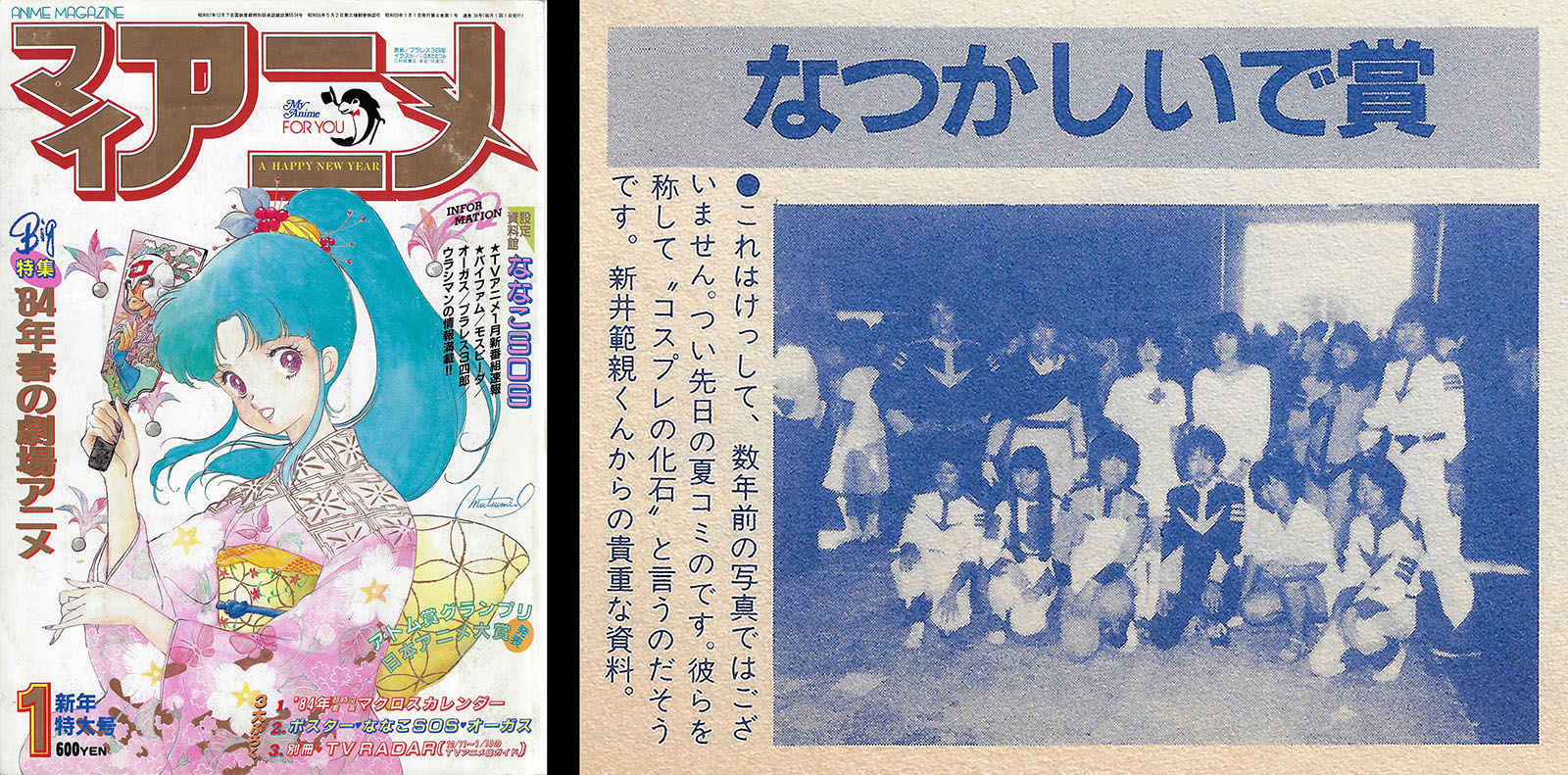
December 10, 1983: My Anime, January issue
The first entry in this section actually appeared in December ’83, but hey what’s that thing on your shoulder? The January ’84 issue of My Anime included an article (part 8 in a series) advising fans on the culture and etiquette of cosplay at anime events. Nestled into this article was a sight to rival the infamous “Star Blazers gang” that appeared at the 1983 Worldcon in Baltimore.
The text reads as follows:
Nostalgic award
This is definitely not a photo from several years ago. It’s from the recent summer Comiket, and is referred to as a “cosplay fossil.” It’s a precious photo from Norichika Arai.
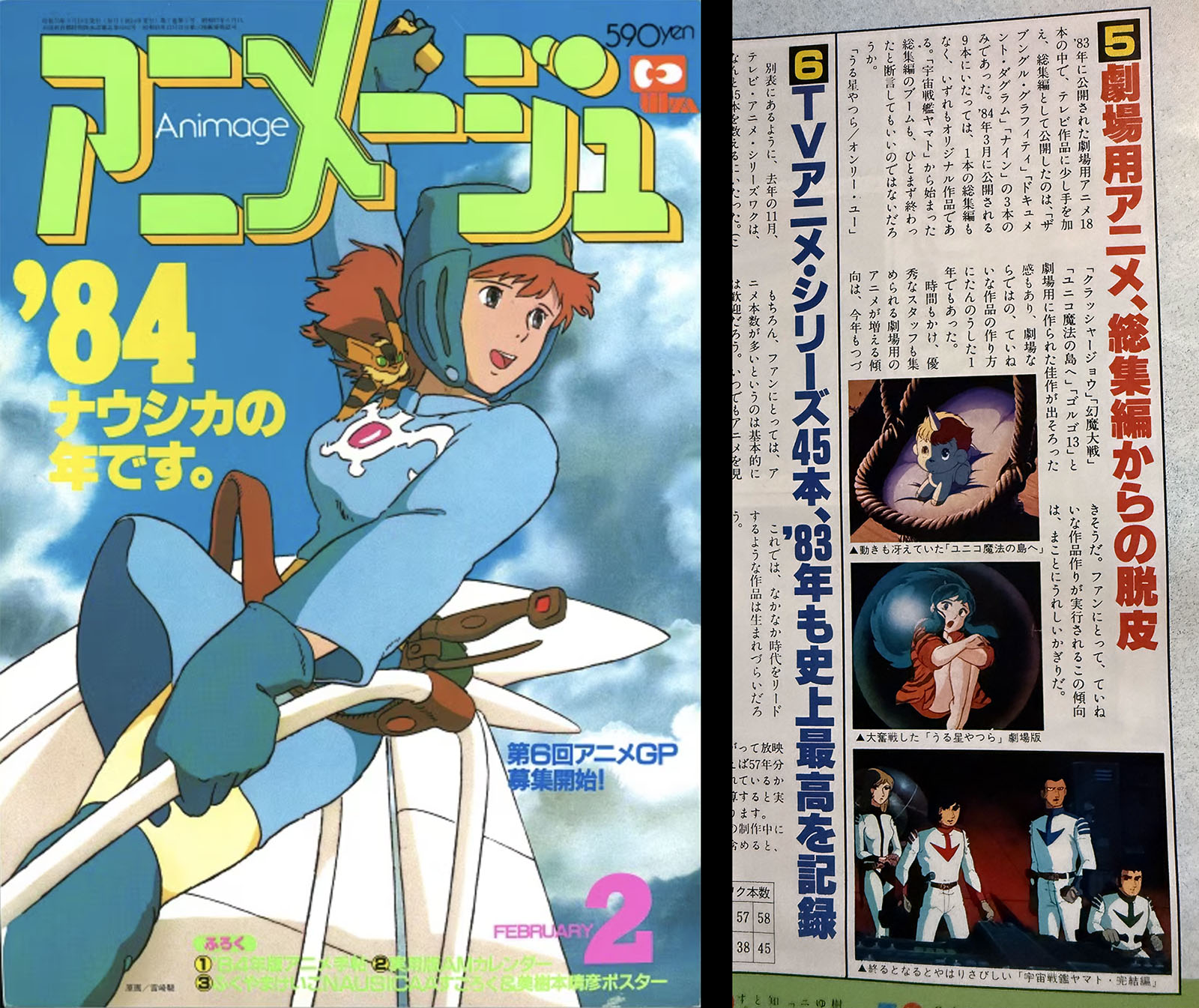
January 10: Animage, February issue
The first Animage for 1984 took a look back at the state of the expanding anime industry in ’83, and one segment offered this enthusiastic outlook:
Theatrical anime, moving beyond compilation film
Of the 18 animated films released in 1983, only three – Xabungle Graffiti, Document Dougram, and Nine – were slightly modified versions of TV series released as compilation films. Of the nine films released in March, none were compilation films. All were original works. It’s safe to say that the compilation film boom, which began with Space Battleship Yamato, has come to an end.
With excellent films made specifically for theaters, such as Urusei Yatsura/Only You, Crusher Joe, Harmagedon, Unico, and Golgo 13, it felt like a year in which we could fully appreciate the meticulous way films are made, a style unique to theatrical releases. The trend of increasing the number of theatrical animated films, which require more time and involve gathering a talented staff, will continue this year as well. For fans, this is truly wonderful.
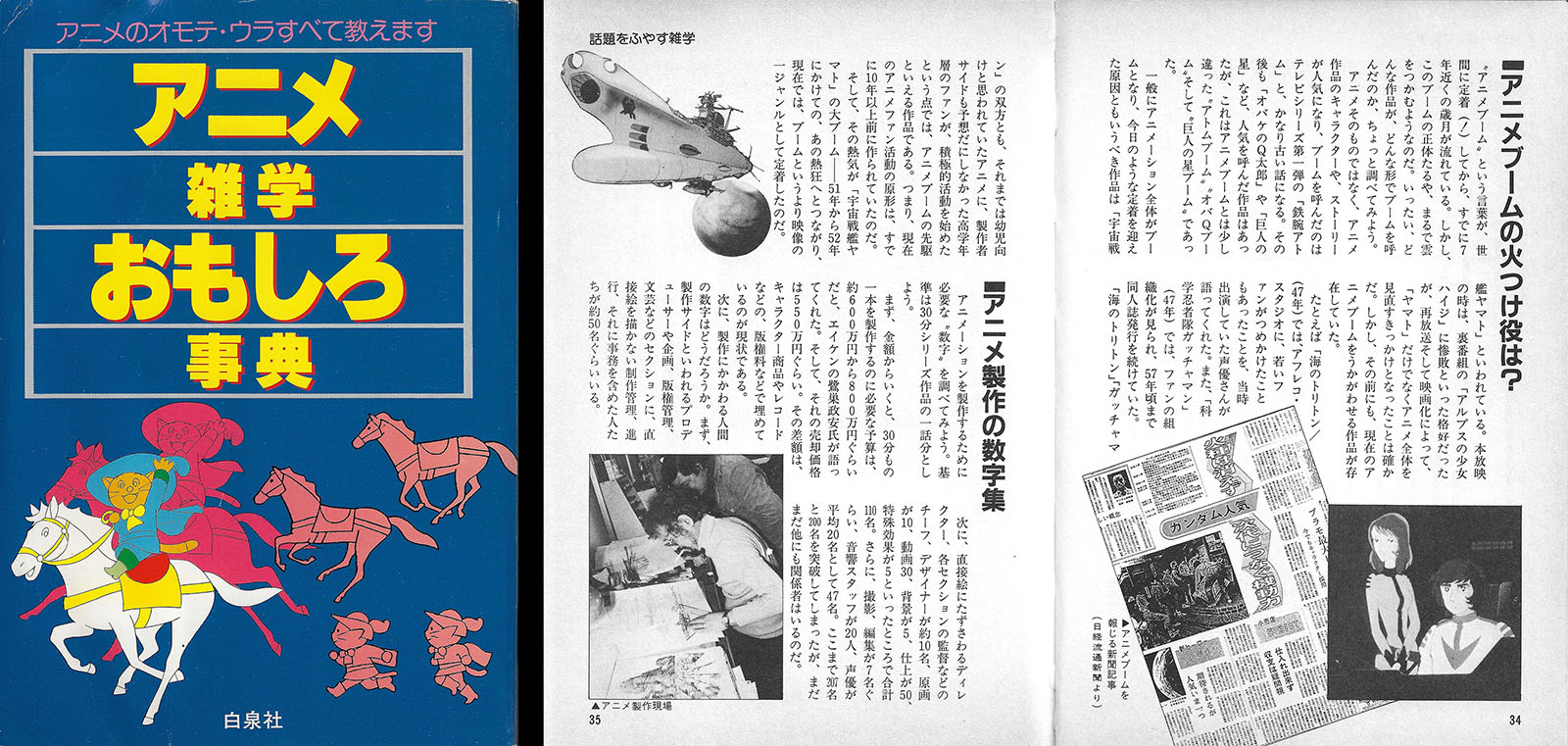
February 15: Anime Trivia Fun Encyclopedia
The good people at Hakusensha released a satisfyingly dense paperback of interviews, insights, anecdotes, backgrounders, and tutorials. TV anime was now just 20 years old (one more year to drinking age) and there was plenty of info to round up, including more than a few Yamato features that added new details to the archive.
Read all the Yamato-related content here
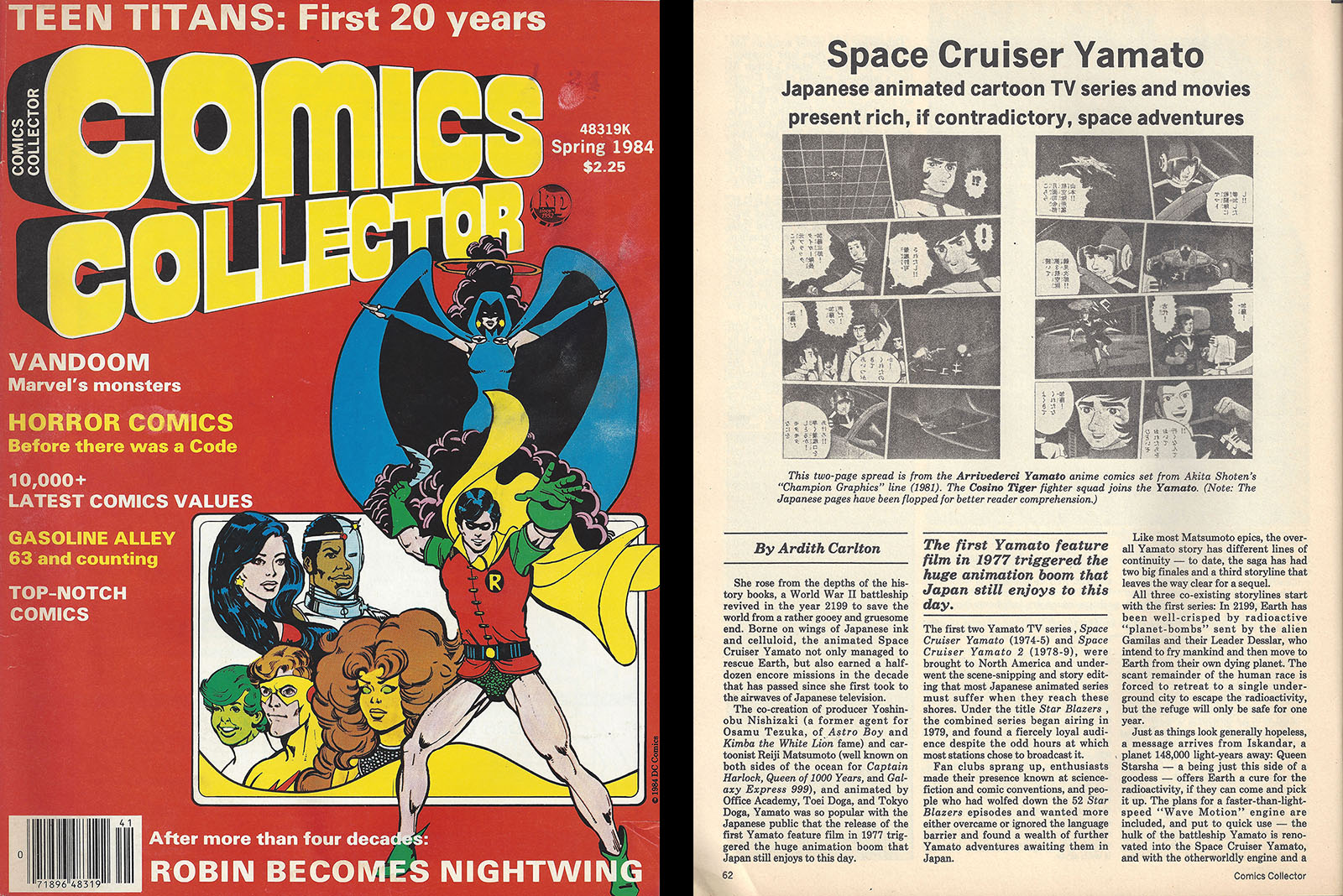
March: Comics Collector No. 3
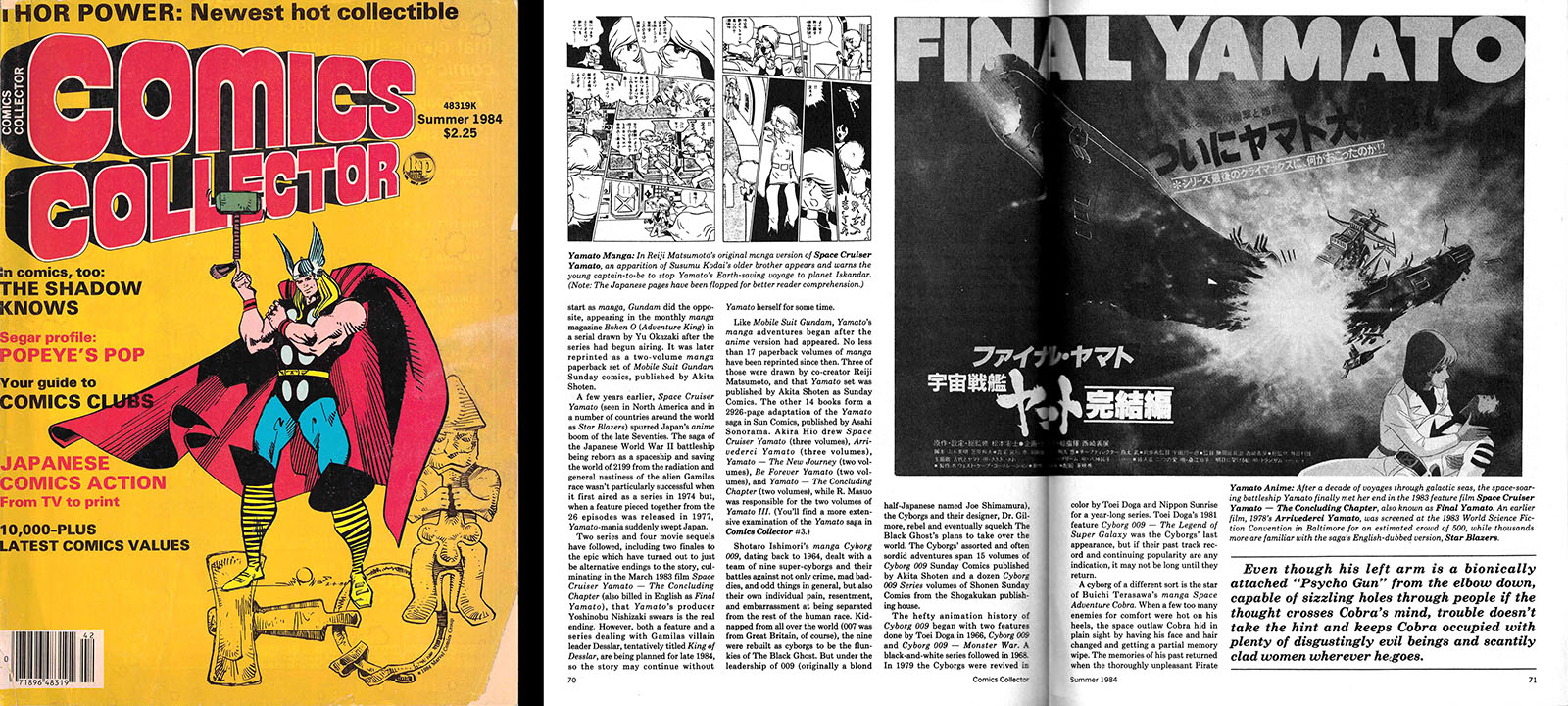
This bi-monthly magazine from Krause Publications (who also brought us the Weekly Comics Buyer’s Guide) was an excellent source for comics news, history, and analysis. It eased into the world of anime when an energetic young fan by the name of Ardith Carlton contributed an article that introduced the world of Yamato to English-speaking fans.
All the images in the article were horizontally flipped for no very good reason, but Ardith was (and still is) one of the world’s most informed Yamato fans, so the content was thoroughly reliable.
Read the article here
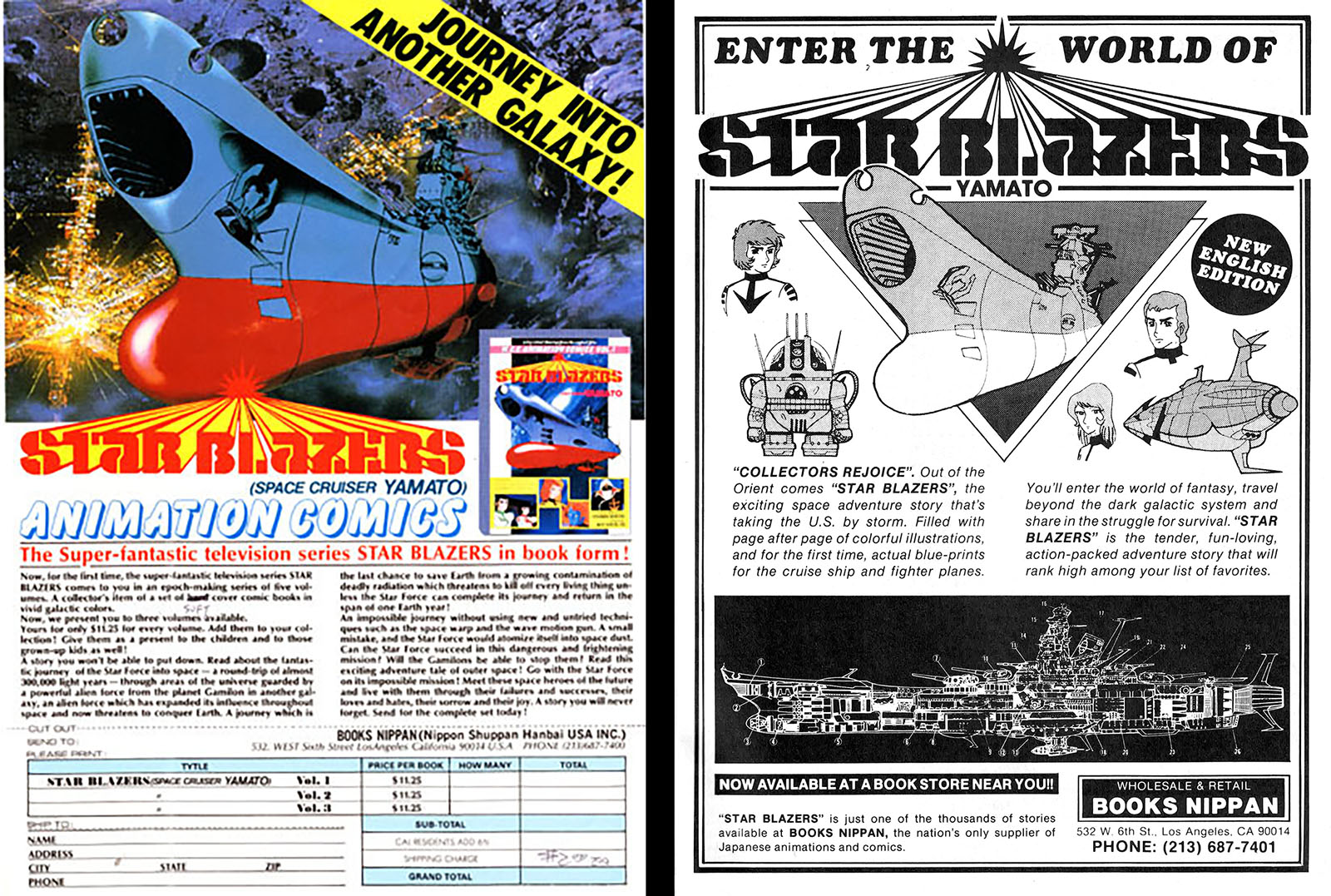
March/April: Star Blazers W.C.C. Animation Comics begin
In the days before home video was commonplace, this was a perfect chance to relive the first TV series on a scene-by-scene basis. Moreover, it was proof that Star Blazers hadn’t been a mere dream. Someone with publishing power knew there was a void to be filled and had taken steps to do just that. Naturally, it could only have been Yoshinobu Nishizaki. It was right there in the title banner: W.C.C. stood for West Cape Corporation.
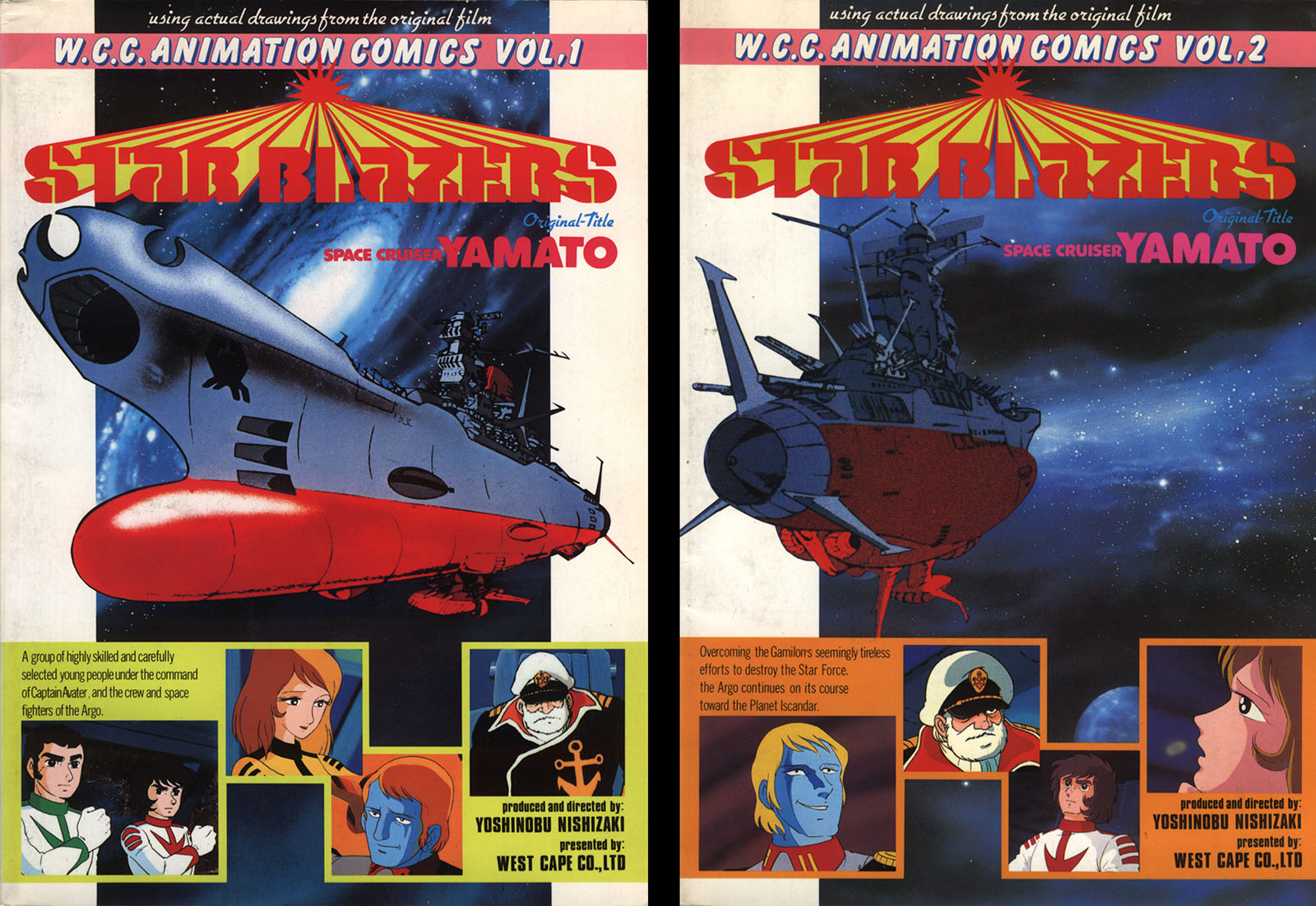
There was no shortage of books on the Series 1 in Japan, but this was unique to the English-speaking world rather than a translation of something that came before. It read left-to-right and even offered bonus material. Five volumes were published, and to this day, we’ve seen nothing else like it.
Read much more about these books here
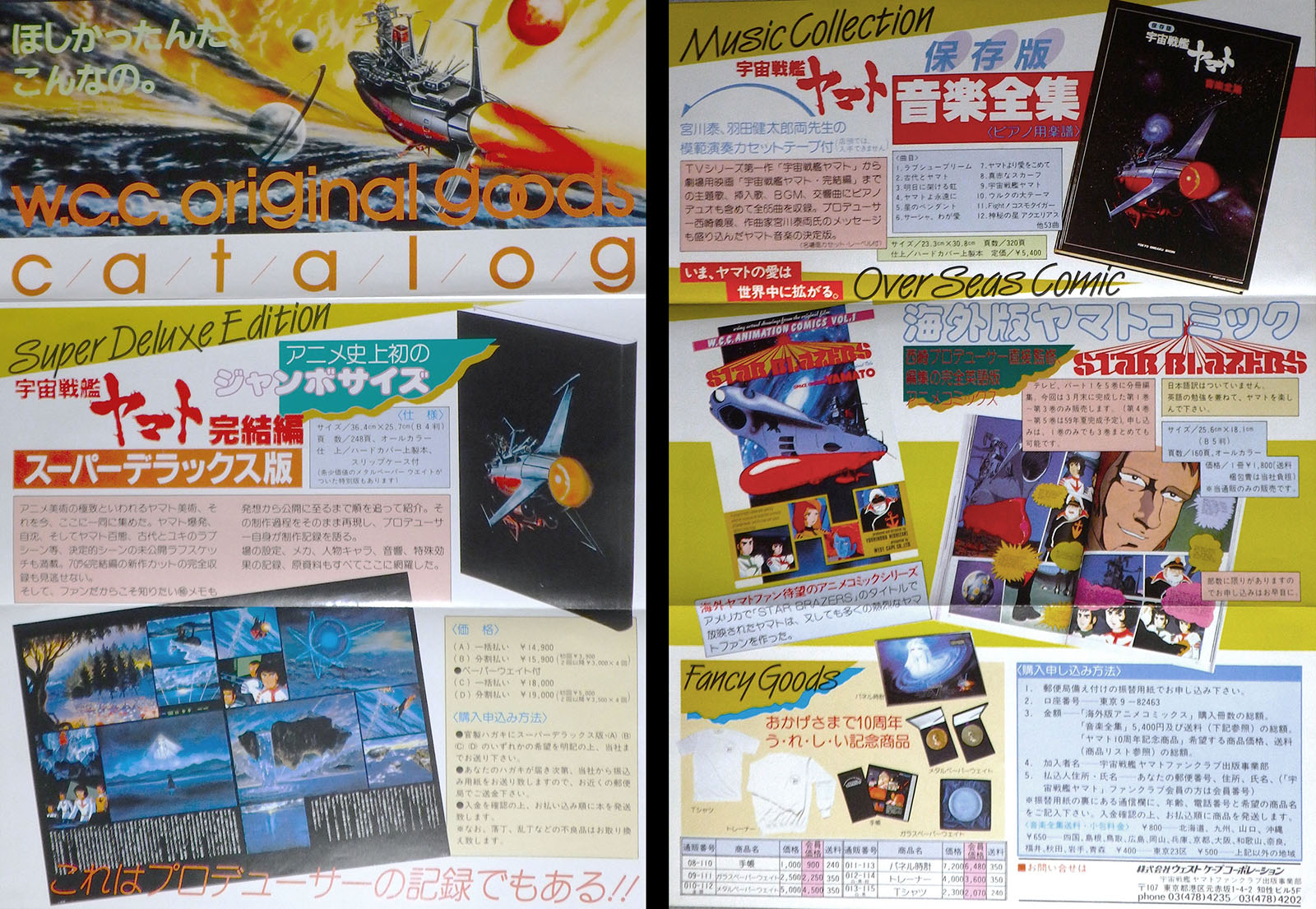
The Yamato fan club did not miss out on this action; the Animation Comics were offered right along with other high-end merch in this flyer, which was sent out to the entire membership.
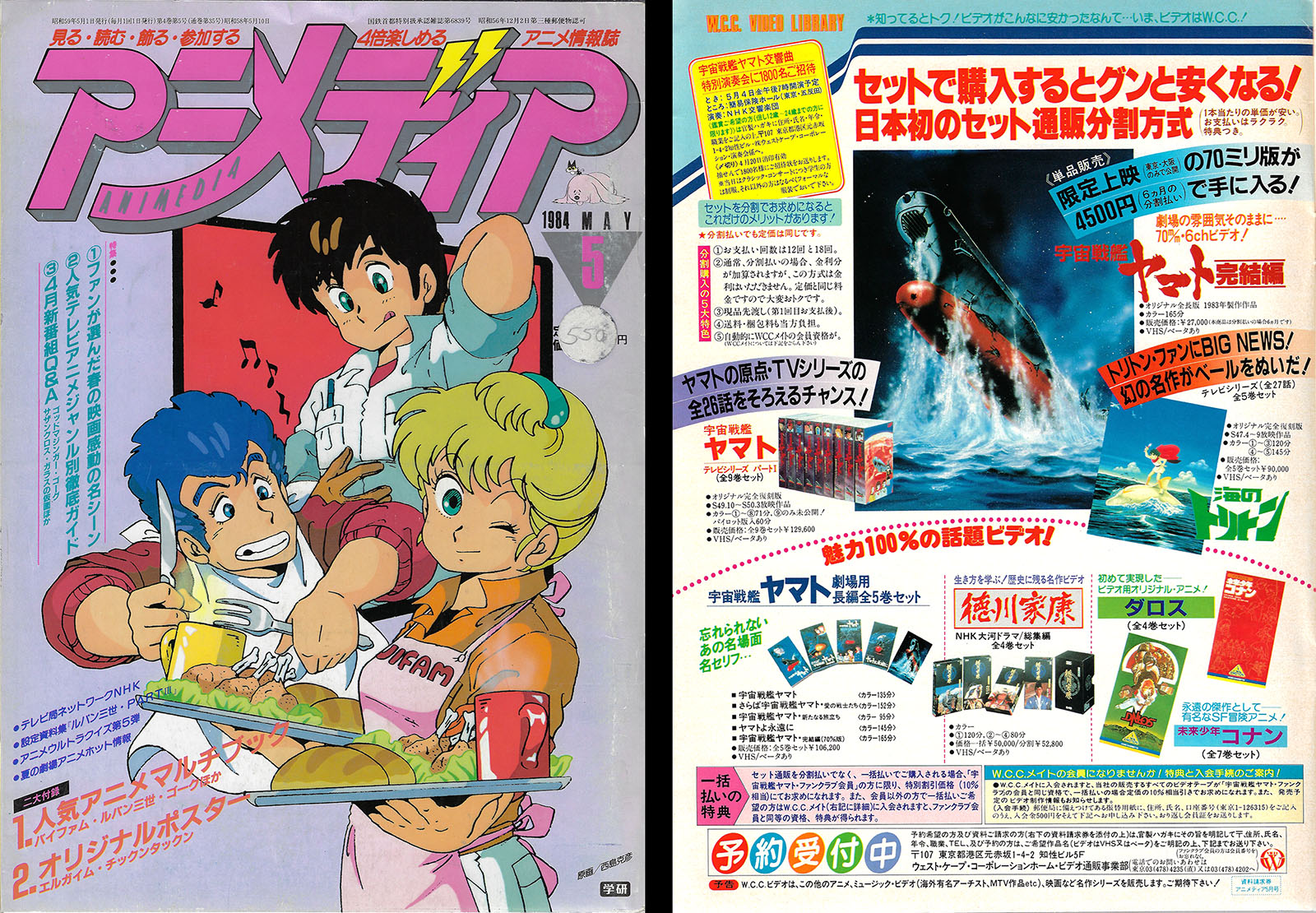
April 10: Animedia, May issue
There were two points of interest in this issue. First, a full-page ad for the W.C.C. Video Library (above right), which offered the first Yamato series on VHS and Beta, all five of the movies, and “BIG NEWS” for Triton of the Sea fans: all 27 episodes in a 5-volume set. Also on offer: Ieyasu Tokugawa (a live-action NHK “taiga drama”), Dallos (the first anime OAV), and a complete set of Future Boy Conan. All at exhorbitant prices, of course.
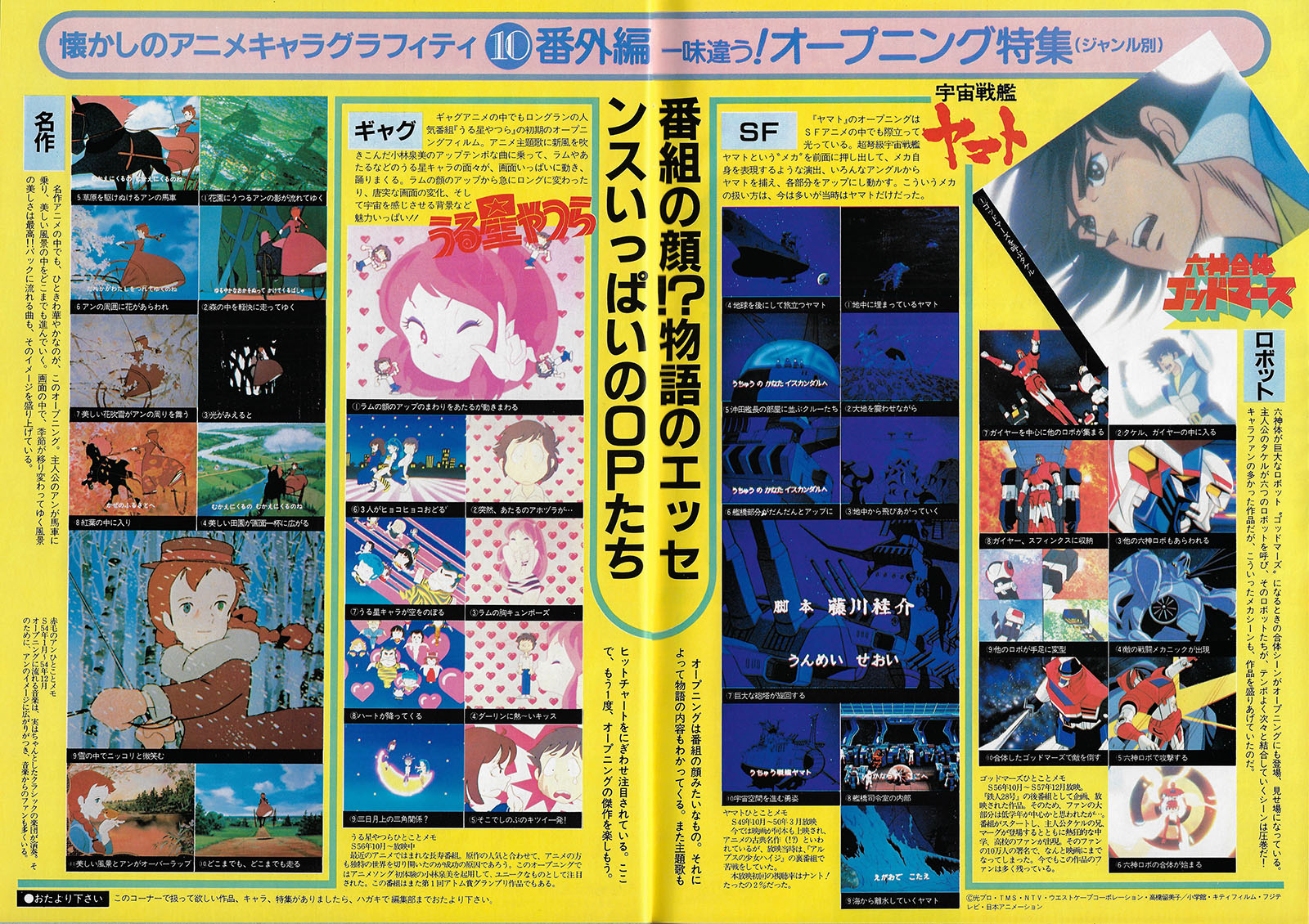
Second, the center of the magazine included this spread highlighting the artistry of favorite opening titles with the following analysis of Yamato:
Nostalgic anime character graffiti special edition, a different kind of opening theme by genre
The opening theme song is like the face of the show. Therefore, the content of the story becomes clear. Also, the songs make waves on the hit charts and attract attention. So let’s enjoy the masterpiece of the opening once again.
Science-fiction
The opening of Yamato stands out among science-fiction anime. The film prominently features the Space battleship Yamato as a mecha. It uses direction that expresses the mecha itself, capturing Yamato from various angles and showing close-ups of each part in motion. This kind of treatment of mecha is common now, but at the time only Yamato did it.
Overview
Yamato aired from October 1974 to March 1975, and now several movies have been based on it. It’s considered a classic anime masterpiece, but when it was broadcast, it struggled against Heidi girl of the Alps. The viewership rating for the first episode was a shocking 2%!
May 10: The Anime, June issue
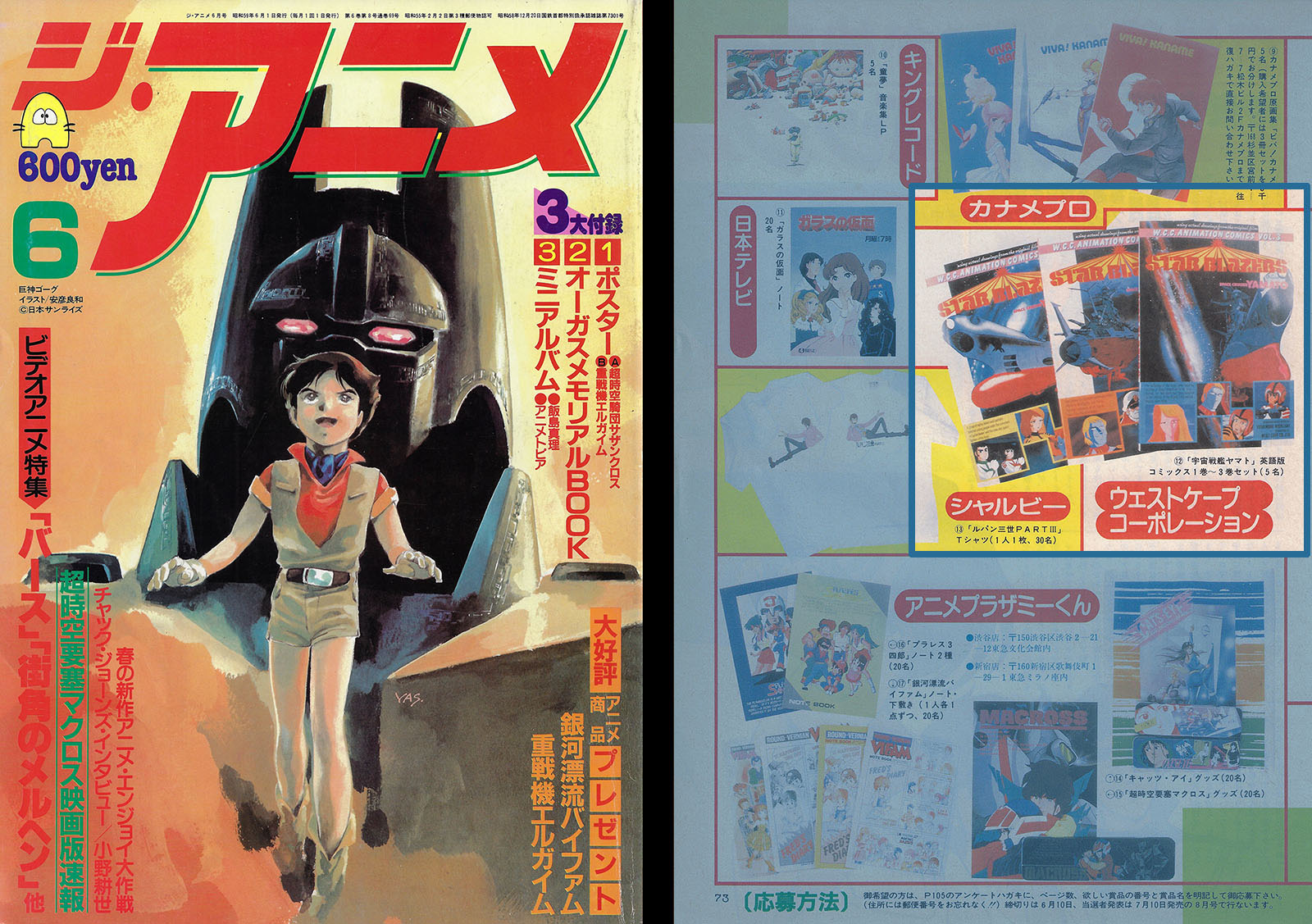
The arrival of Star Blazers Animation Comics in America did not escape notice in Japan. In fact, West Cape Corporation itself made them available through the Yamato Fan Club. The Anime obtained five sets of the first three volumes and offered them in this month’s giveaway contest. In case it was the first time you ever heard of such a thing…
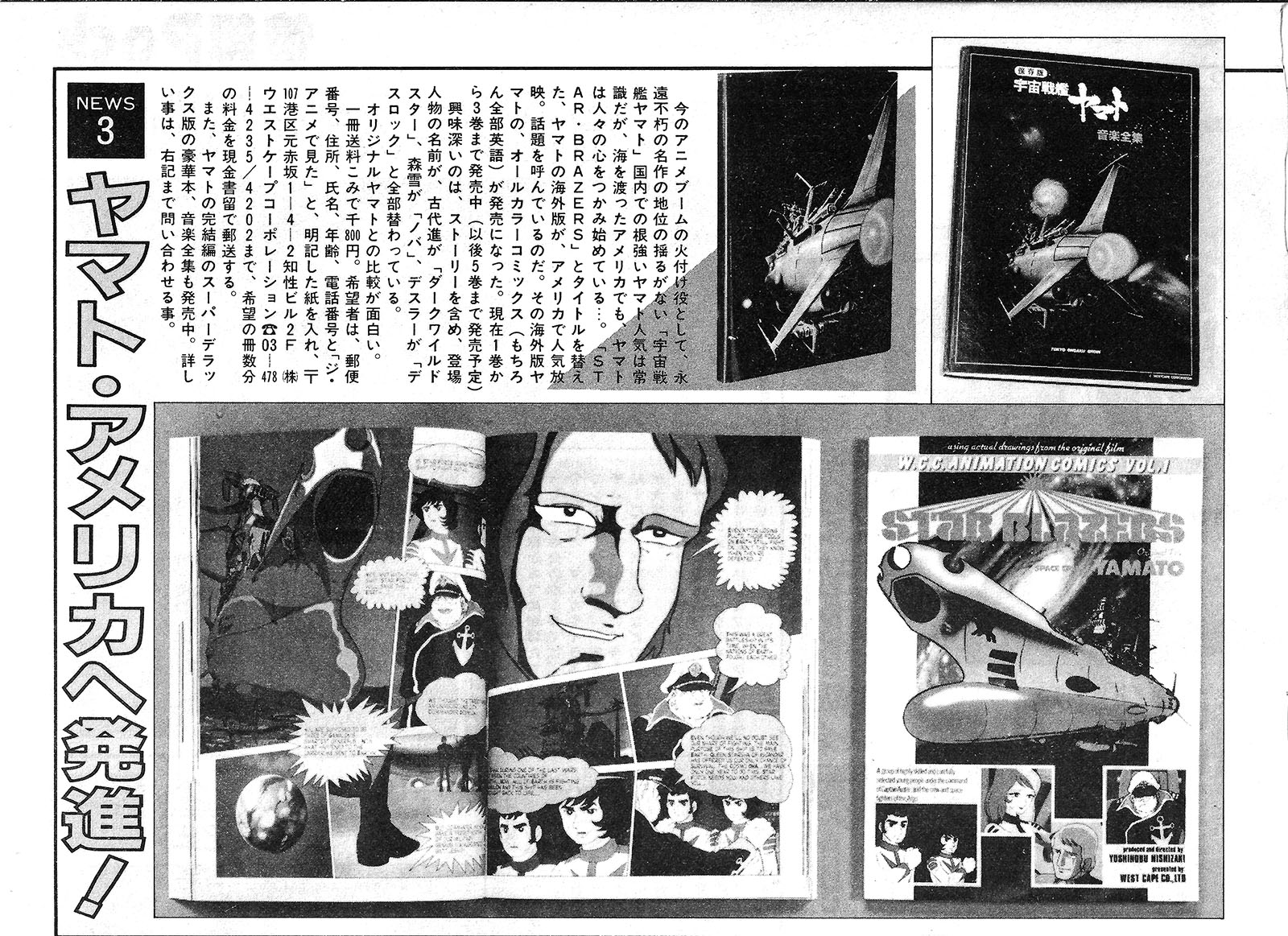
…this article was found deeper in the magazine to do some ‘splainin.
Yamato launch to America!
As the catalyst for the current anime boom, Space Battleship Yamato remains an unshakable, timeless masterpiece. Its enduring popularity in Japan as well known, but across the ocean, Yamato is also beginning to capture people’s hearts in America. The overseas version of Yamato, titled Star Blazers, is airing to great acclaim in the US, generating considerable buzz. Now, a full color comic book – all in English, of course – of this overseas version of Yamato has been released. Volumes 1 through 3 are currently available with plans to release up to volume 5.
What’s interesting is that, along with the storyline, all the characters names have been changed. Susumu Kodai is now Derek Wildstar, Yuki Mori is Nova, and Dessler is Desslok. It’s interesting to compare it to the original Yamato.
The price is ¥1300 per book, including shipping. Those interested should send a piece of paper with their postal code, address, name, age, telephone number, and the words “I saw it in The Anime” clearly written on it, along with payment for the desired number of books. Additionally, deluxe editions of Final Yamato, including a lavish book and a complete music collection, are also on sale. For more details, please inquire at the address listed here.
June: Comics Collector No. 4
The party continued with the first in-print review of Star Blazers Animation Comics Vol. 1 and 2 by the editors of the magazine, and Ardith Carlton returned to provide a much wider view on the exciting world of anime and manga.
Read these articles here
June 10: Animedia, July issue
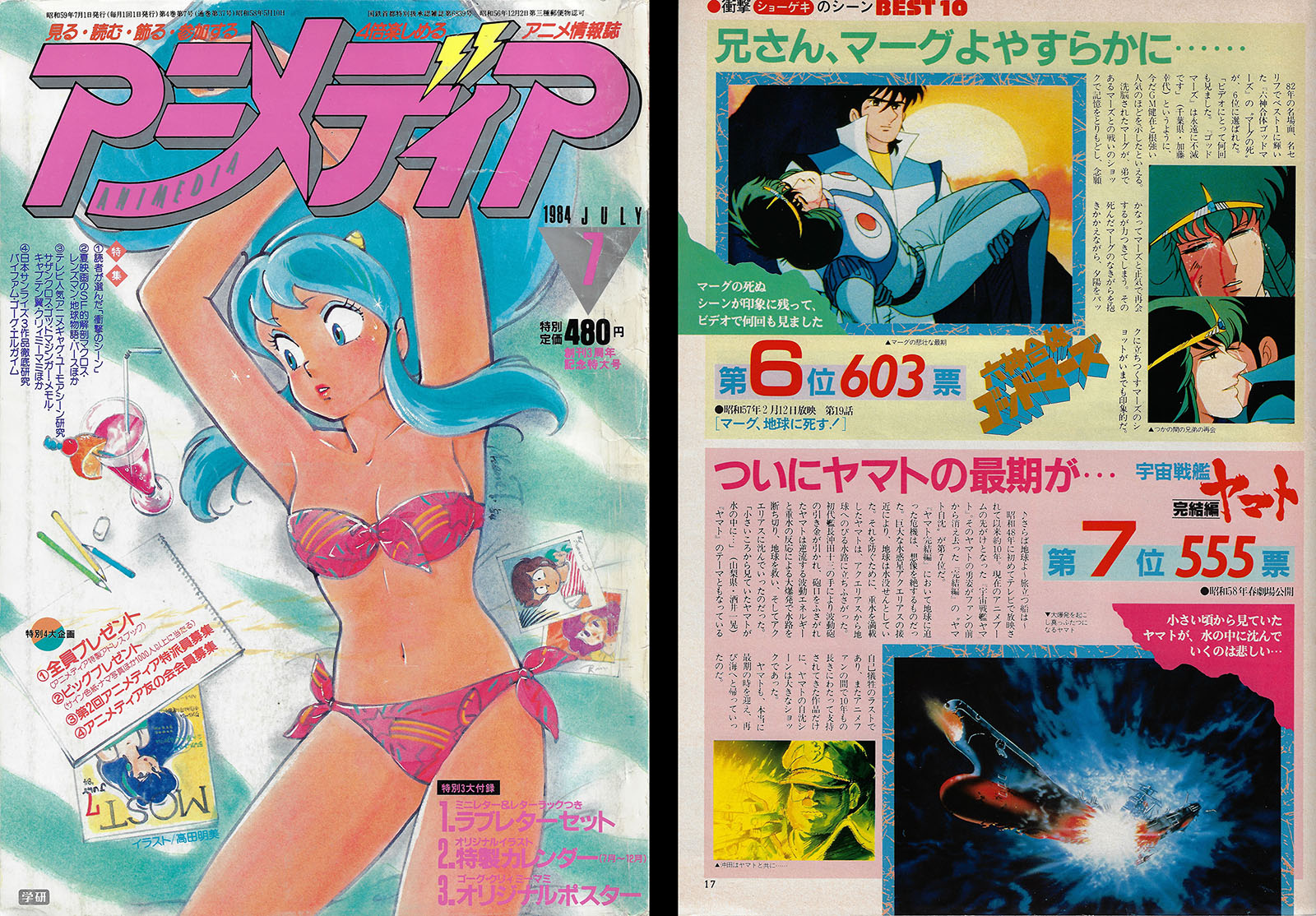
More than a year after the premiere of Final Yamato, its impact was still felt in a reader survey titled “Shocking Scene Best 10.” The magazine was observing its 3-year anniversary, and anything released during those years was fair game. Here’s how Yamato fared:
Finally, the end of Yamato is here…
Seventh place, 555 votes
We’ve been watching it since we were little. Yamato, sinking into the water, it’s sad to see it go…
“Farewell Earth…”
It’s been about ten years since it was first broadcast on TV in 1974. Space battleship Yamato, which spearheaded the current anime boom, is now ranked seventh for its “self-sinking” scene in The Final Chapter, where the heroic image of Yamato vanishes from the sight of fans.
In Final Yamato, the crisis that threatened Earth was beyond imagination. The approach of the giant water planet Aquarius threatened to submerge Earth. To prevent this, Yamato stood in the way of the flood leading from Aquarius to Earth, loaded with heavy water. The first captain, Juzo Okita, pulled the trigger of the Wave-Motion Gun, and with its muzzle blocked, Yamato caused a massive explosion due to the reaction of the reverse-flowing Wave Energy and heavy water. It severed the flood, saving Earth, and then sank into Aquarius.
“Yamato, which I watched since I was little, has now sunk underwater…”
– Kazuaki Sakai, Yamanashi prefecture
Given that self-sacrifice was a theme of Yamato, and it was a work that had been supported by anime fans for a long 10 years, the scene of Yamato sinking was itself a huge shock. Yamato had truly reached its final moment and returned to the sea once more.
June 10: My Anime, July issue
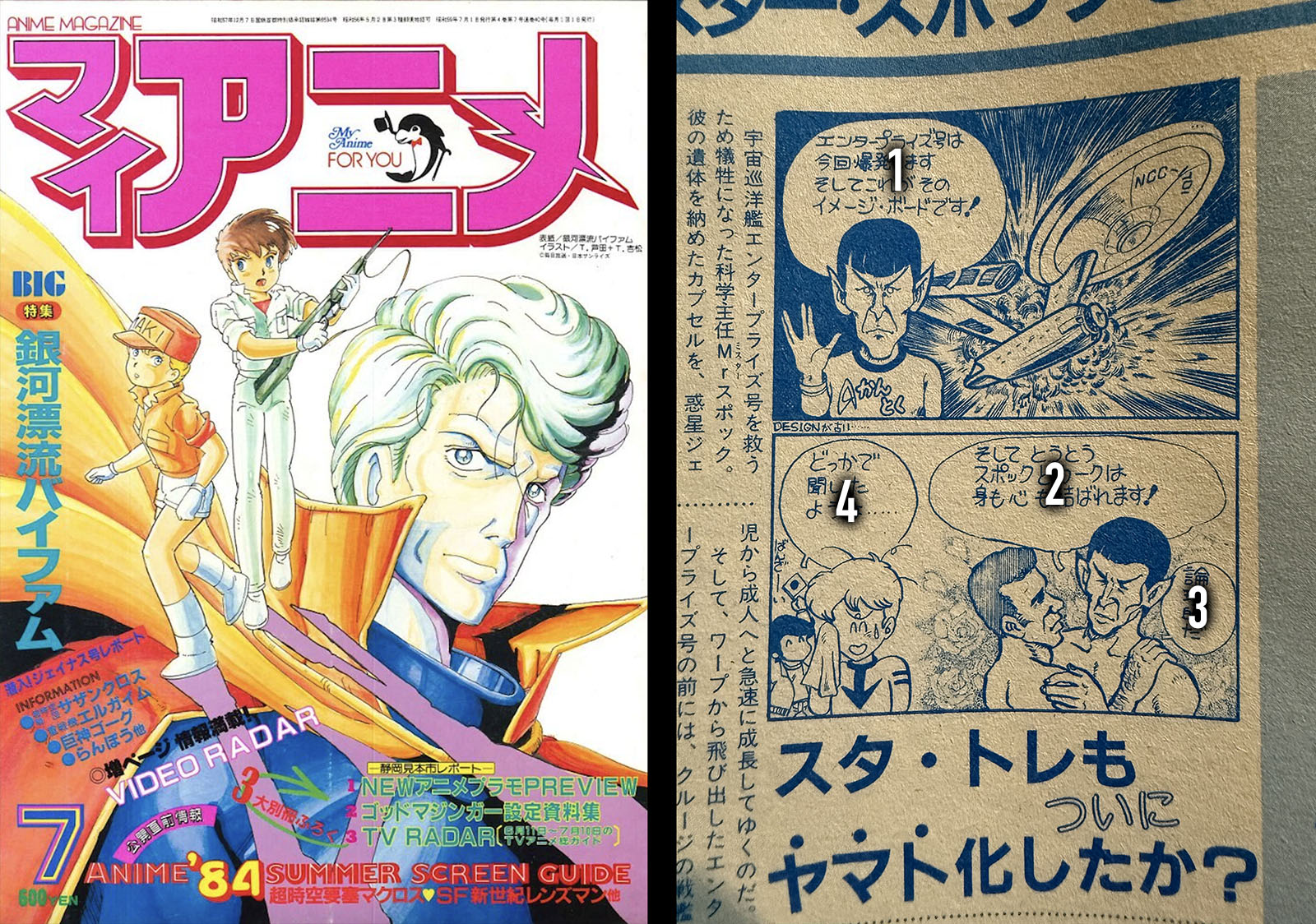
Over in the pages of this magazine, someone was having fun at Star Trek‘s expense. A page in the “Cine Patrol” section took at look at The Search for Spock and a cartoonist added their own comment next to the headline, “Has Star Trek finally become like Yamato?” The word balloons read as follows:
1. This is an image board showing the Enterprise exploding!
2. And finally, Spock and Kirk are united in body and soul.
3. It’s logical.
4. I feel like I’ve heard this somewhere before…
August: Epic Illustrated No. 25
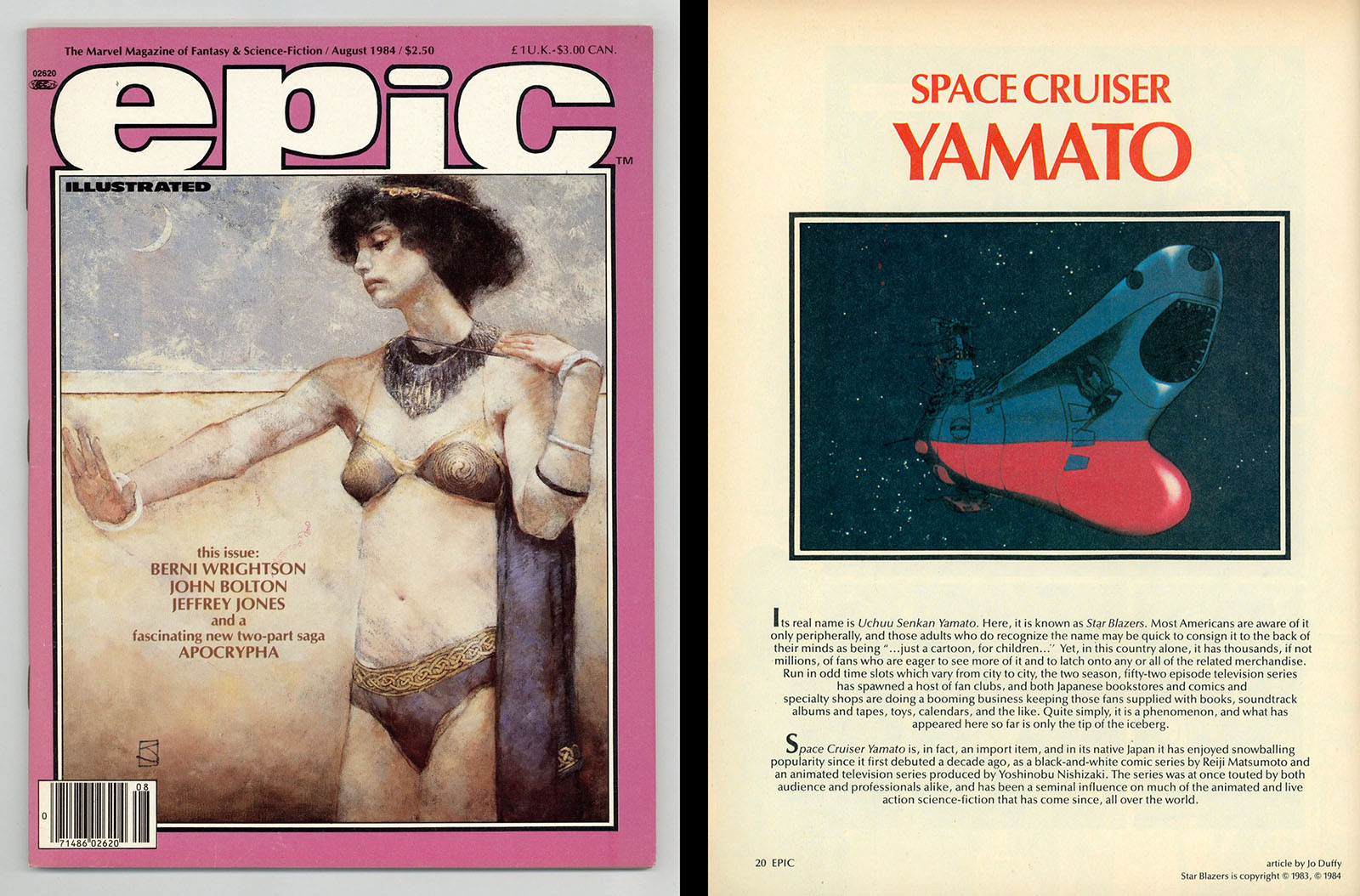
Believe it or not, Marvel Comics was the next American publisher to offer Yamato some sunlight. Their high-end SF/fantasy magazine Epic Illustrated published a 4-page overview by writer/editor Jo Duffy that did a respectable job of explaining the Yamato series from start to finish.
Read the article here
September: The Micronauts, The New Voyages Issue 4
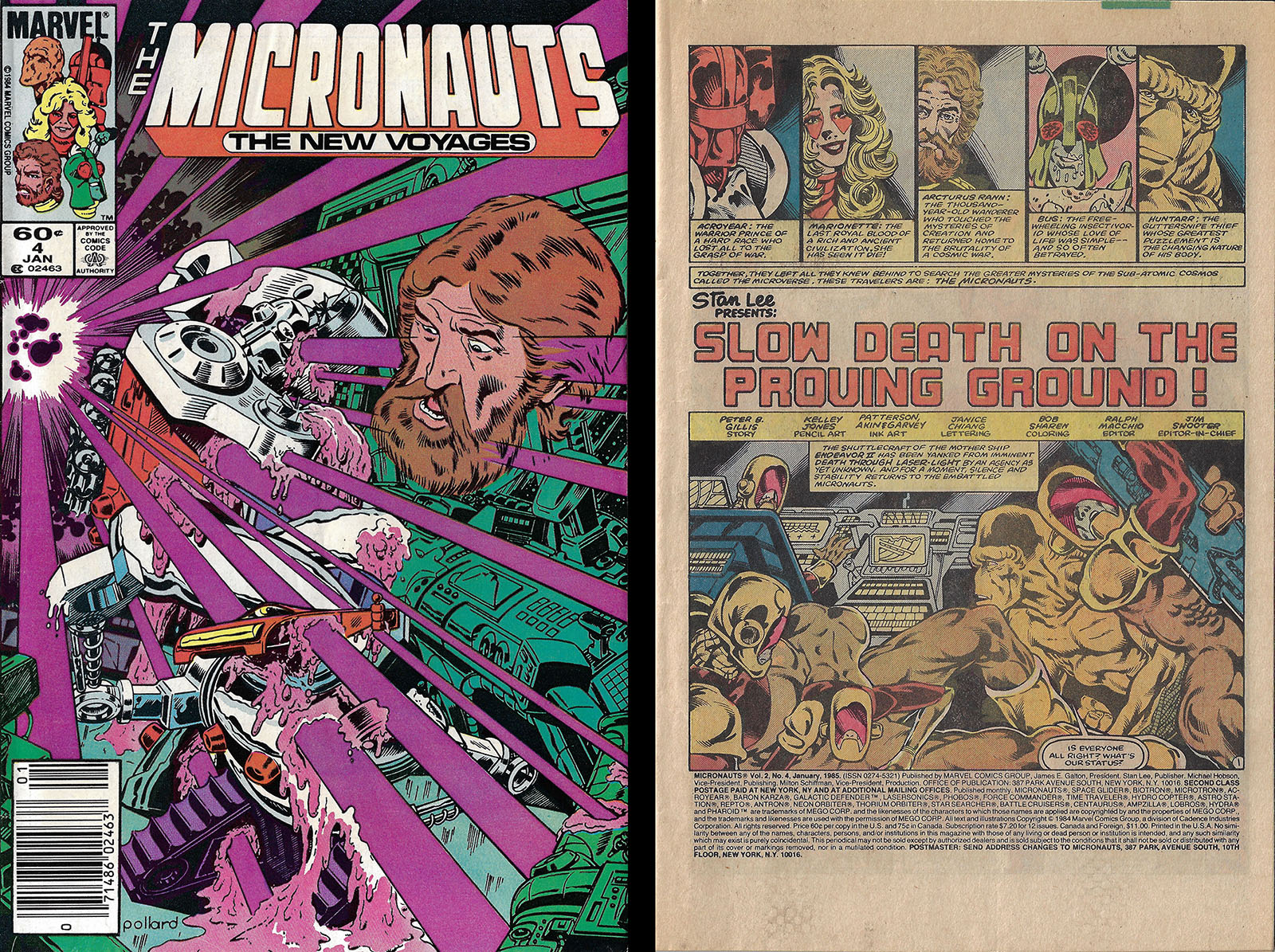
And now it gets a little crazy. The Micronauts was a monthly Marvel series that launched in fall 1978, based on a line of Mego Toys. In fact, this was the American version of a Japanese toy line created by Takara called Microman. So there’s one Japan connection already.
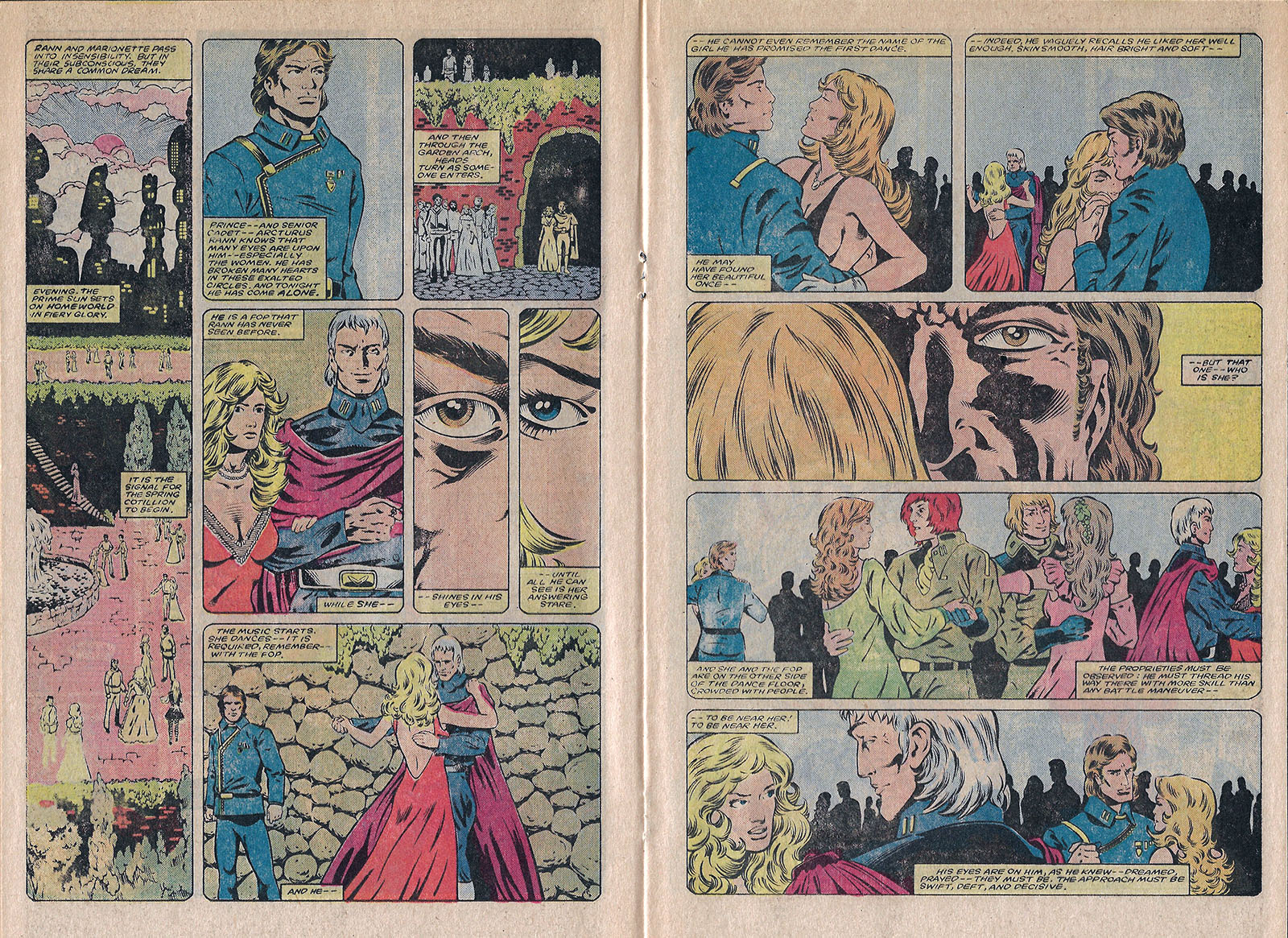
The first Micronauts series ended in early ’84 and the numbering started over with The New Voyages. It’s tempting to think this title was inspired by Yamato, but probably untrue. On the other hand, a VERY obvious Yamato influence could be found inside Issue 4.
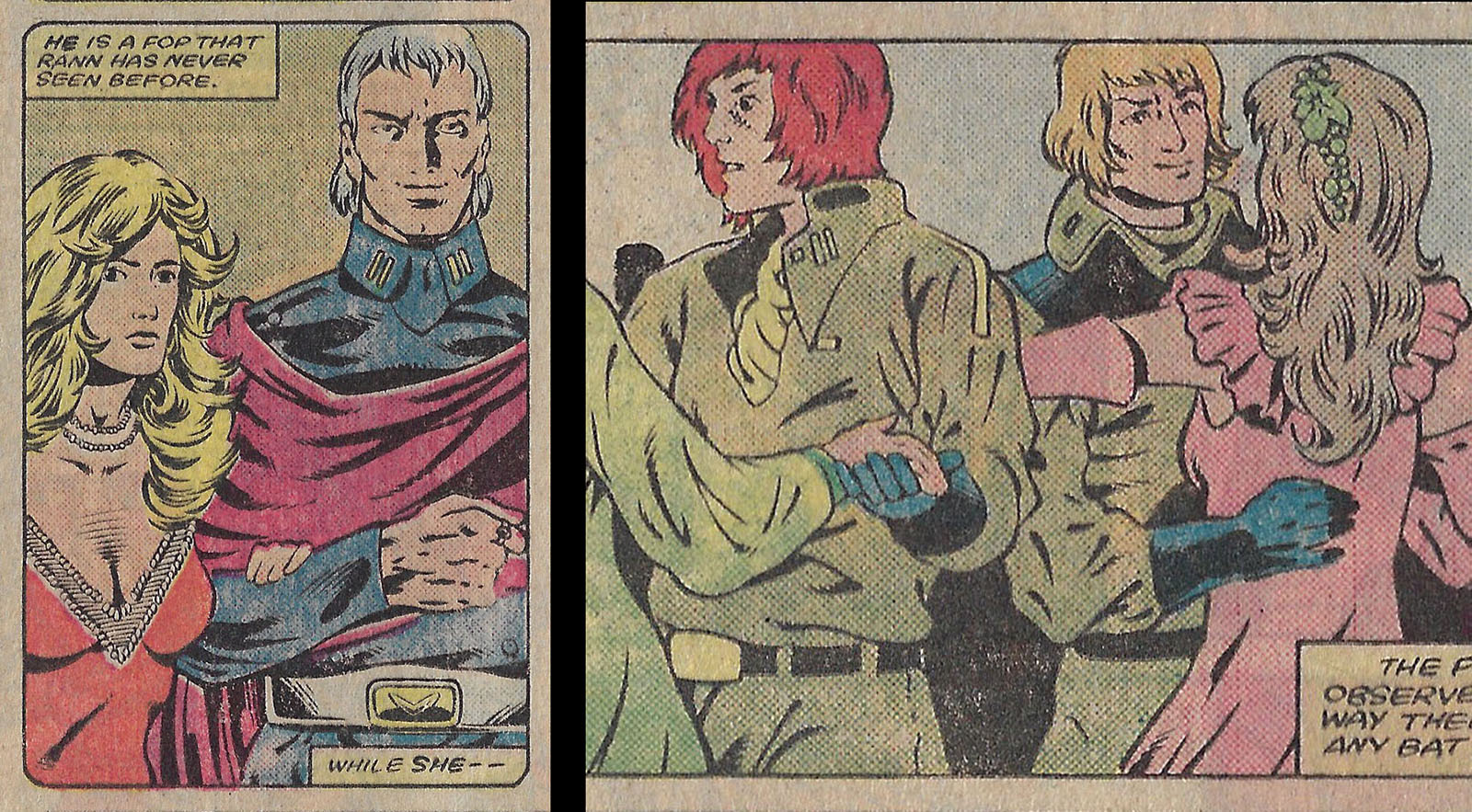
That “fop” sure looks like a Gamilon we all know and love, and that space pirate on the dance floor seems familiar. Could our heroes have fallen into the Leijiverse instead of the Microverse?
See a video flip-through of this issue here
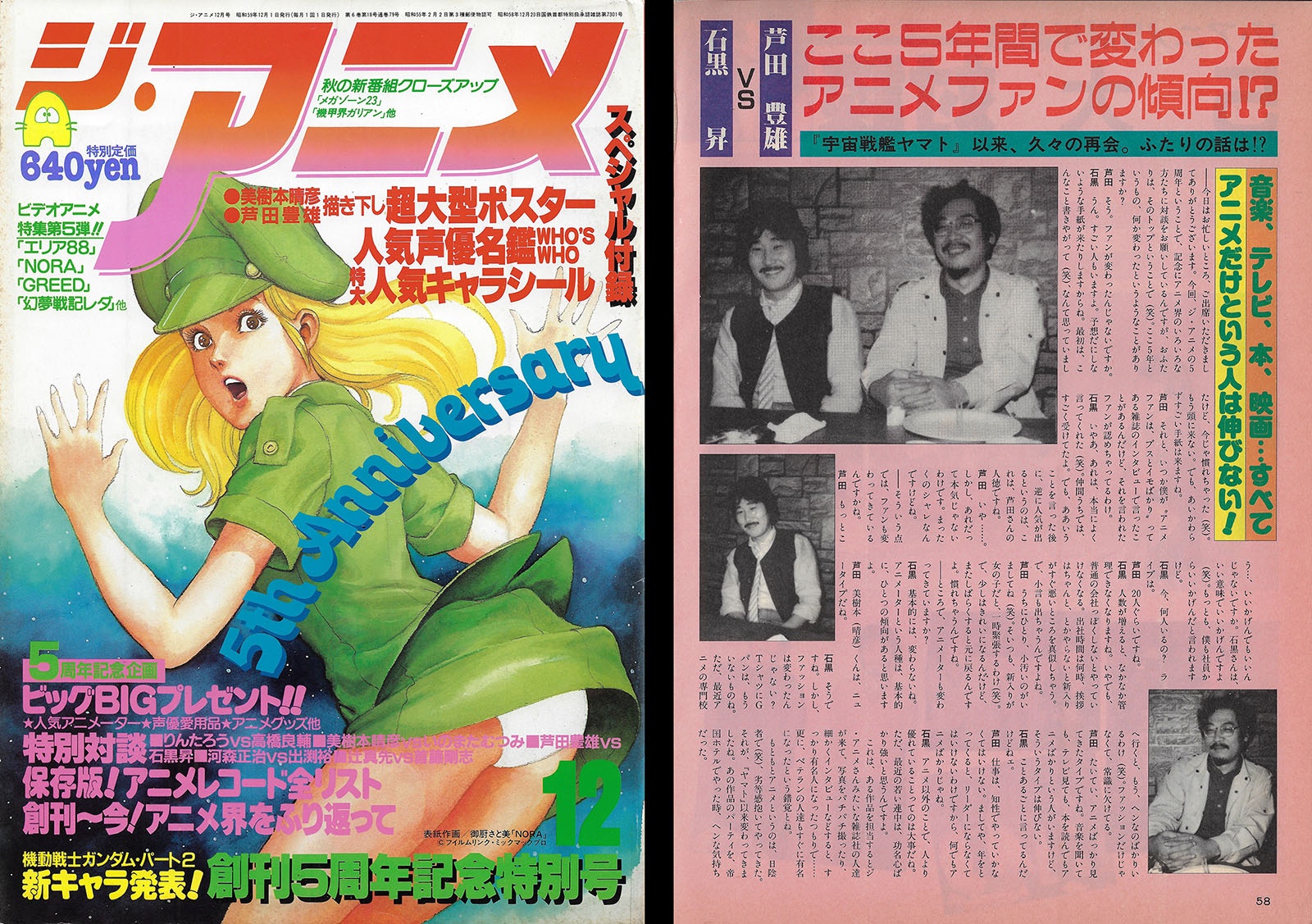
November 10: The Anime, December issue
The December issue of The Anime brought us some more Yamato-related content. In observance of its 5th anniversary, the magazine published five conversations with various anime creators discussing the state of the industry. The discussion relevant to Yamato was between Noboru Ishiguro and Toyoo Ashida, both Series 1 veterans who had since founded their own studios.
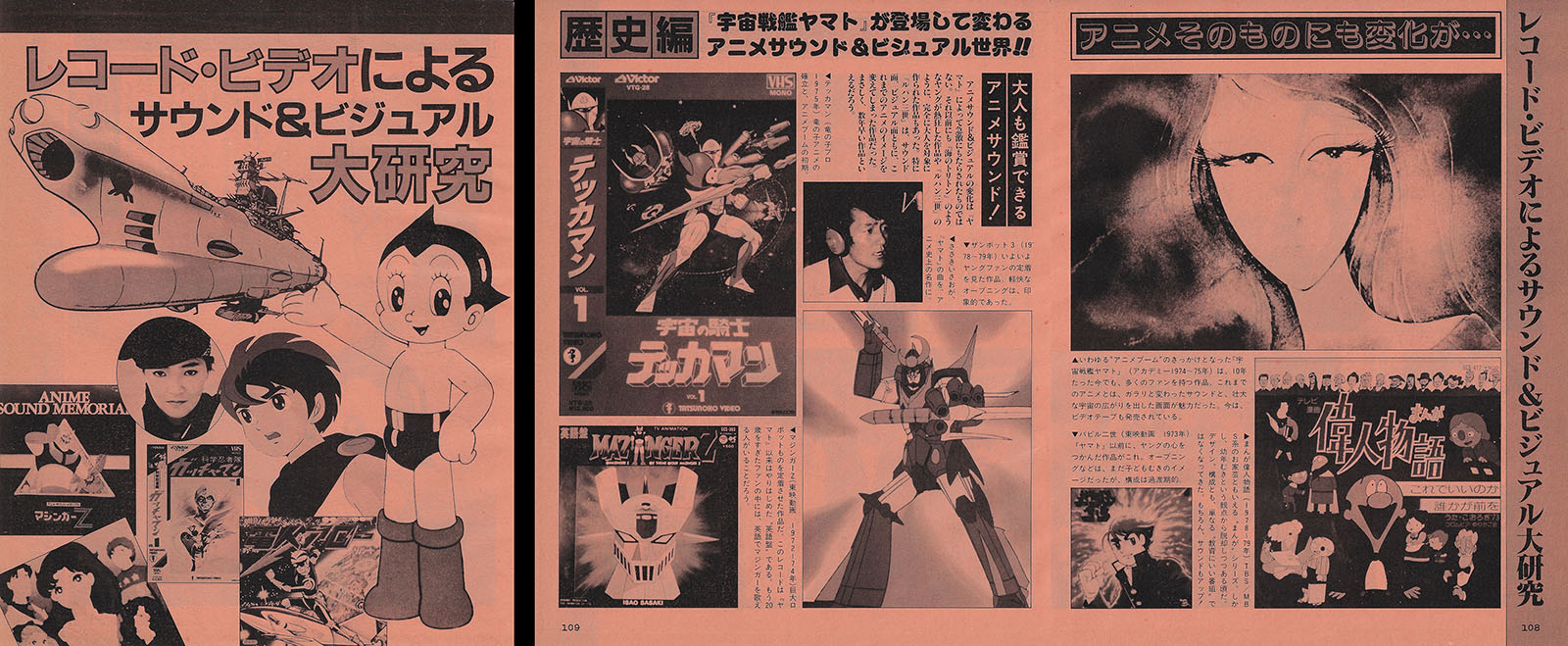
Then, in the center of the magazine could be found a 16-page booklet titled “Record/Video Sound & Visual Big Research” that examined the evolution of anime music, a space in which Yamato played a major role.
Read both of these articles here
FAN ACTIVITY
Fans in the US were as active in 1984 as they’d ever been with an increasing awareness and energy around the world of anime and ever-expanding access thanks to home video. Japanese fans were still at the front lines, and launched their own Yamato event for the first time. Here’s how it looked on both sides of the ocean:
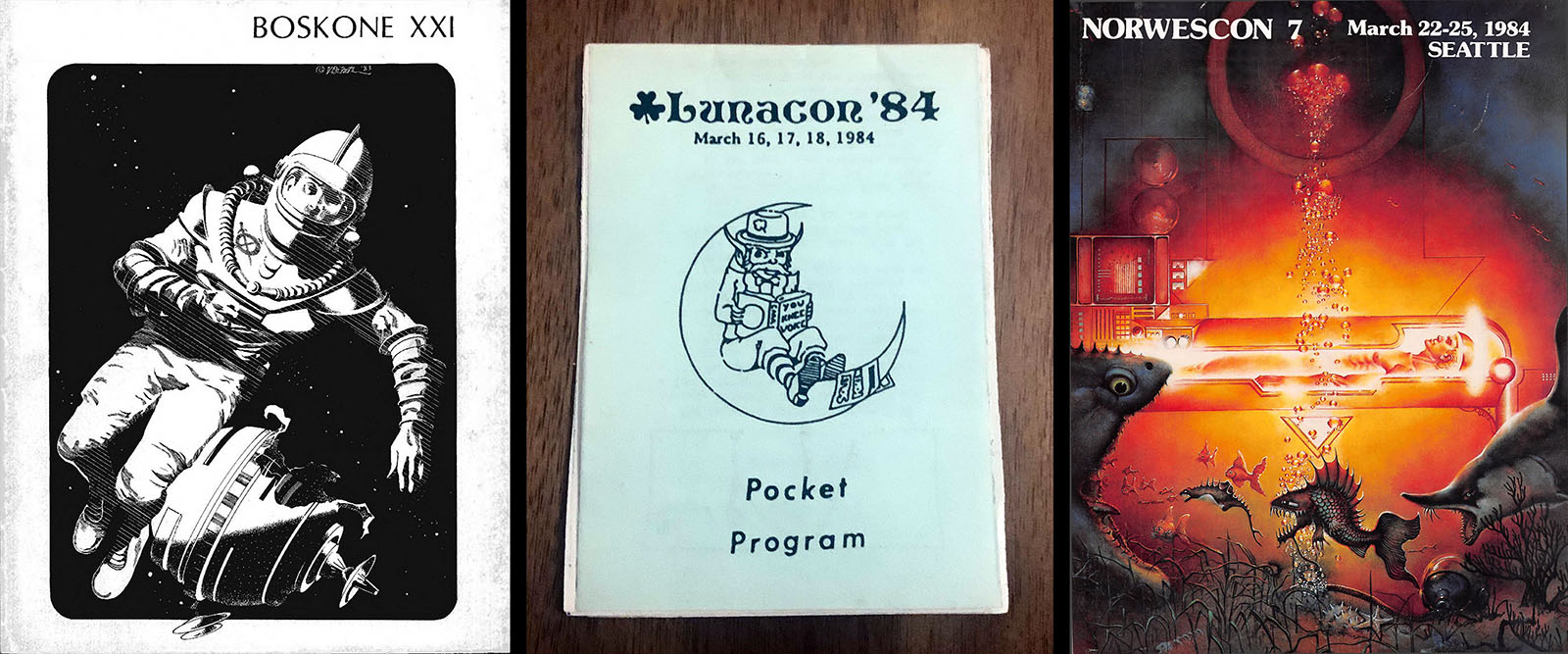
February 17-19: Boskone 21 (Boston, Massachusetts)
Anime screening rooms were becoming a reliable feature at American SF conventions by this time, and the first one of the year had a banger lineup including Be Forever Yamato, Final Yamato, Harmagedon, and more. Greater access was, of course, a direct result of the new home video flood. It should be noted that only the 35mm version of Final Yamato was available at the time, since the 70mm reissue wouldn’t be released on video for another two months.
See the Boskone 21 program book here
March 16-18: Luna Con ’84 (Hasbrouck Heights, New Jersey)
The second Star Blazers video room was a feature at this convention, organized by fan club president Michael Pinto (who ran the first one at Luna Con ’83). The main feature was essentially a replay of the “great movie battle” of spring 1983 that pitted Final Yamato against Crusher Joe and Harmagedon. In addition, the opening animation for Daicon III got one of its first US screenings here. Anime fanzines also made a showing in the dealer’s room.
Read more about Lunacon here
March 22-25: Norwescon 7 (Seattle, Washington)
Anime was screened here for the first time, and the starting lineup couldn’t have been stronger: Be Forever Yamato, My Youth in Arcadia, Mobile Suit Gundam, and Final Yamato. It was also reported that anime merchandise was plentiful in the dealer’s room, perhaps due to geographical proximity to San Francisco import hubs. Yamato and Captain Harlock merch was the top seller, and local interest in Harlock seemed particularly high.
See the Norwescon VII program book here
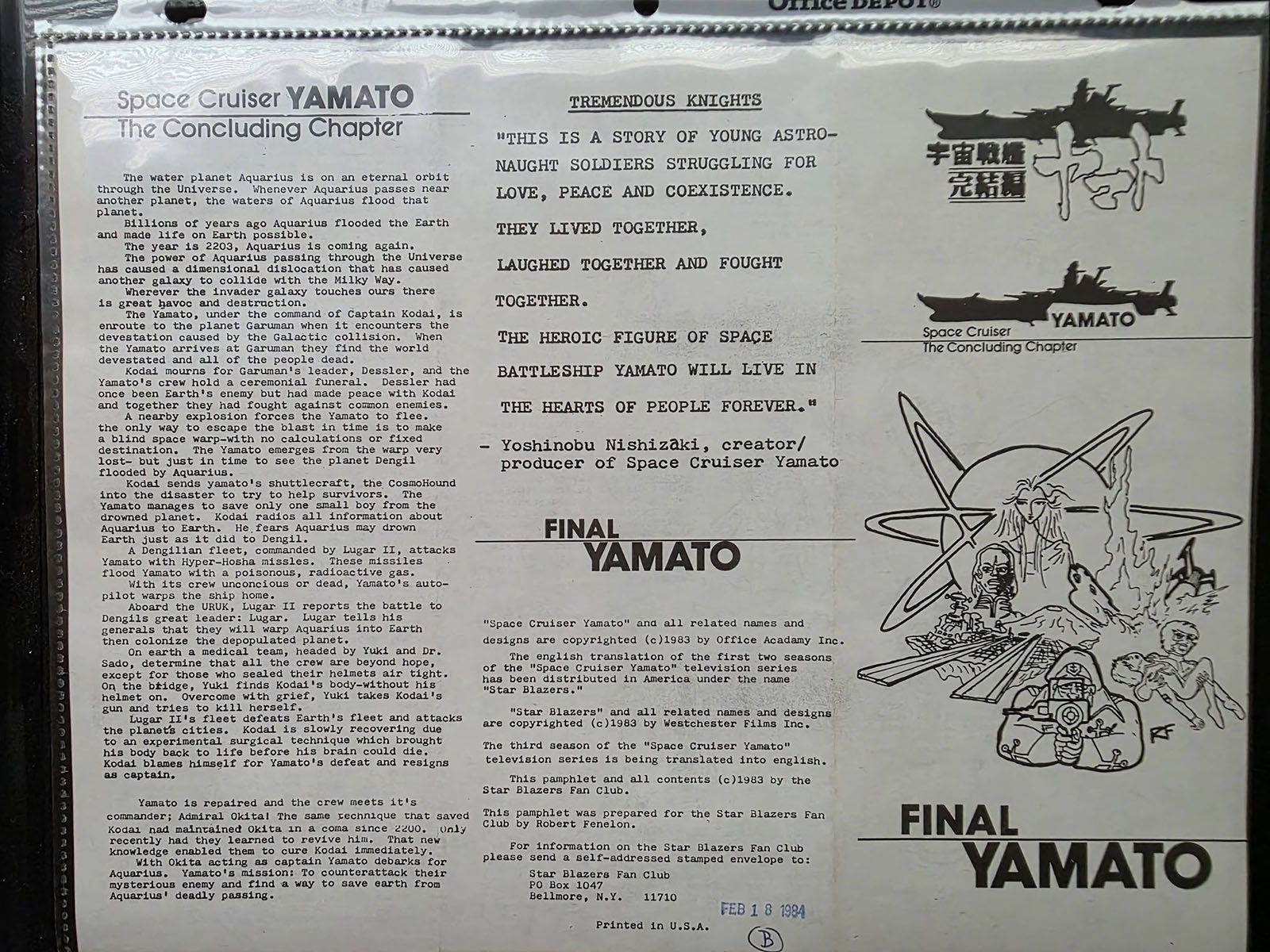
If you attended the Final Yamato screening at Boskone, the Star Blazers fan club had a bonus item for you: a 2-sided, trifold flyer that explained the world of Yamato and gave you enough info on the film to get you started. This flyer has its own backstory, as told by its maker, Robert Fenelon:
I created that trifold pamphlet in 1983 for the World Science-Fiction convention in Baltimore when we were going to show Final Yamato. the lab sent us the wrong movie. We got Farewell to Yamato instead, so we never got to deploy those flyers the way they’re meant to, and I dumped them on freebie tables at conventions for the next few years.
Read both sides of the flyer in a PDF here (Special thanks to Roger Proctor for this find.)
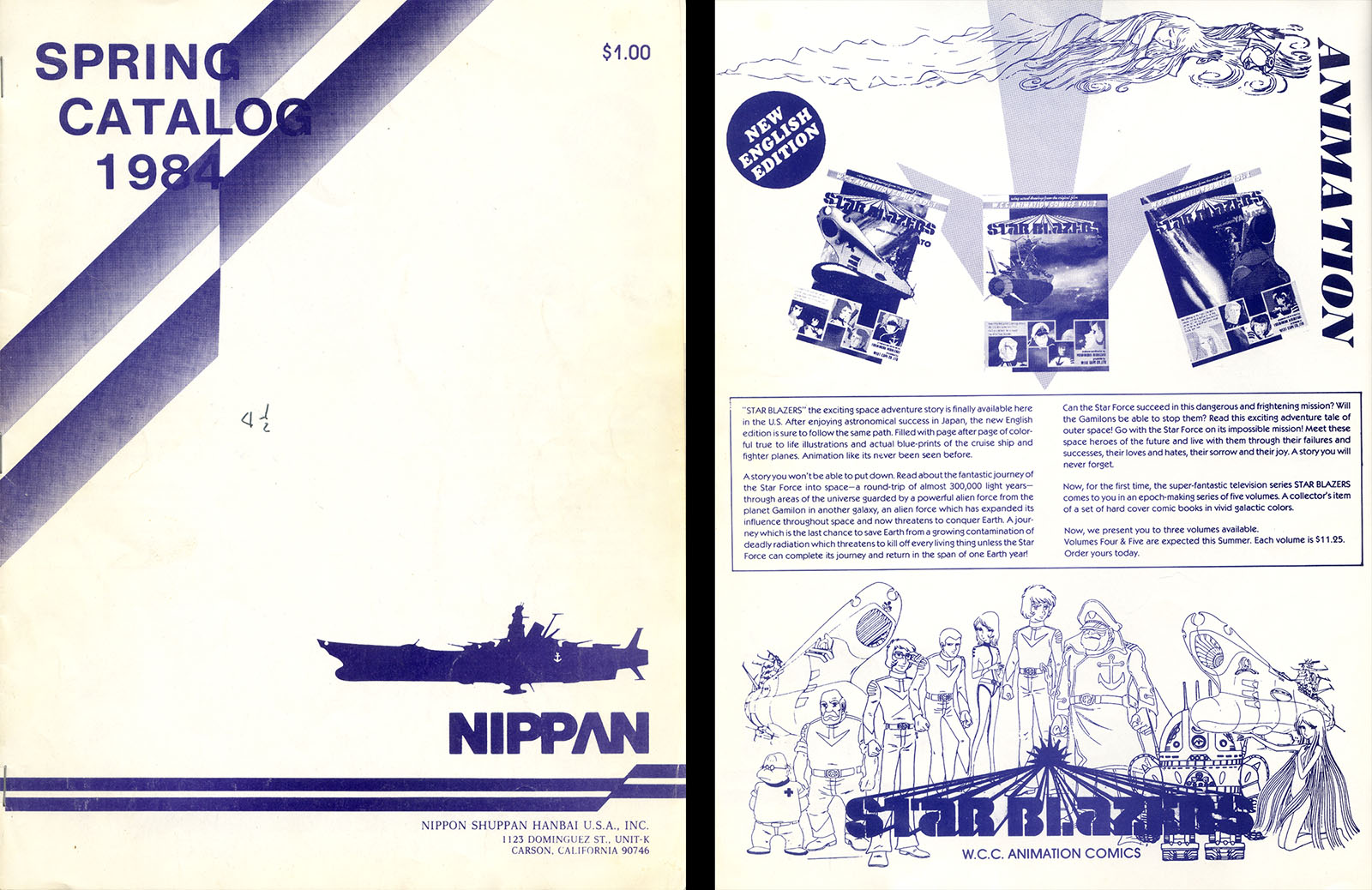
March: Books Nippan spring catalog
Los Angeles-based Books Nippan was already providing a lifeline for anime products into America, but business got even busier when they became the exclusive conduit for the Star Blazers Animation Comics.
See a high-rez copy of their spring 1984 catalog here
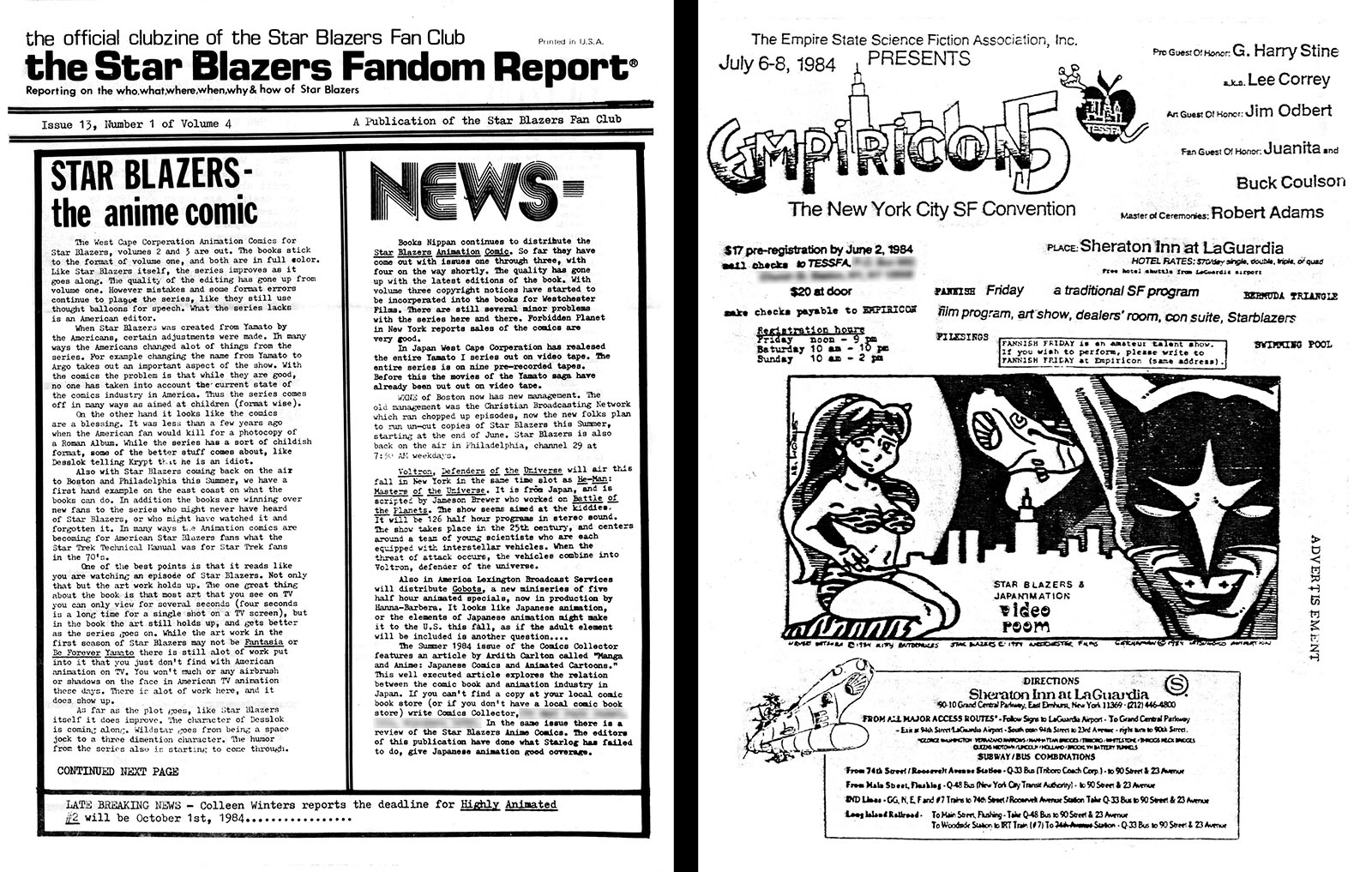
April: Star Blazers Fandom Report issue 13
The new Star Blazers Animation Comics were the top story this time, earning strong reviews. There was info about The Anime scene on American TV, an index of fanzines, the second part of Ardith Carlton’s Final Yamato overview, the first announcement of Brian Cirulnick’s fan film Desslok’s Revenge, convention reports, and fan mail.
Above right is a promo included in the issue for the New York-based Empiricon 5, which also featured its own anime screening room.
See a complete PDF here
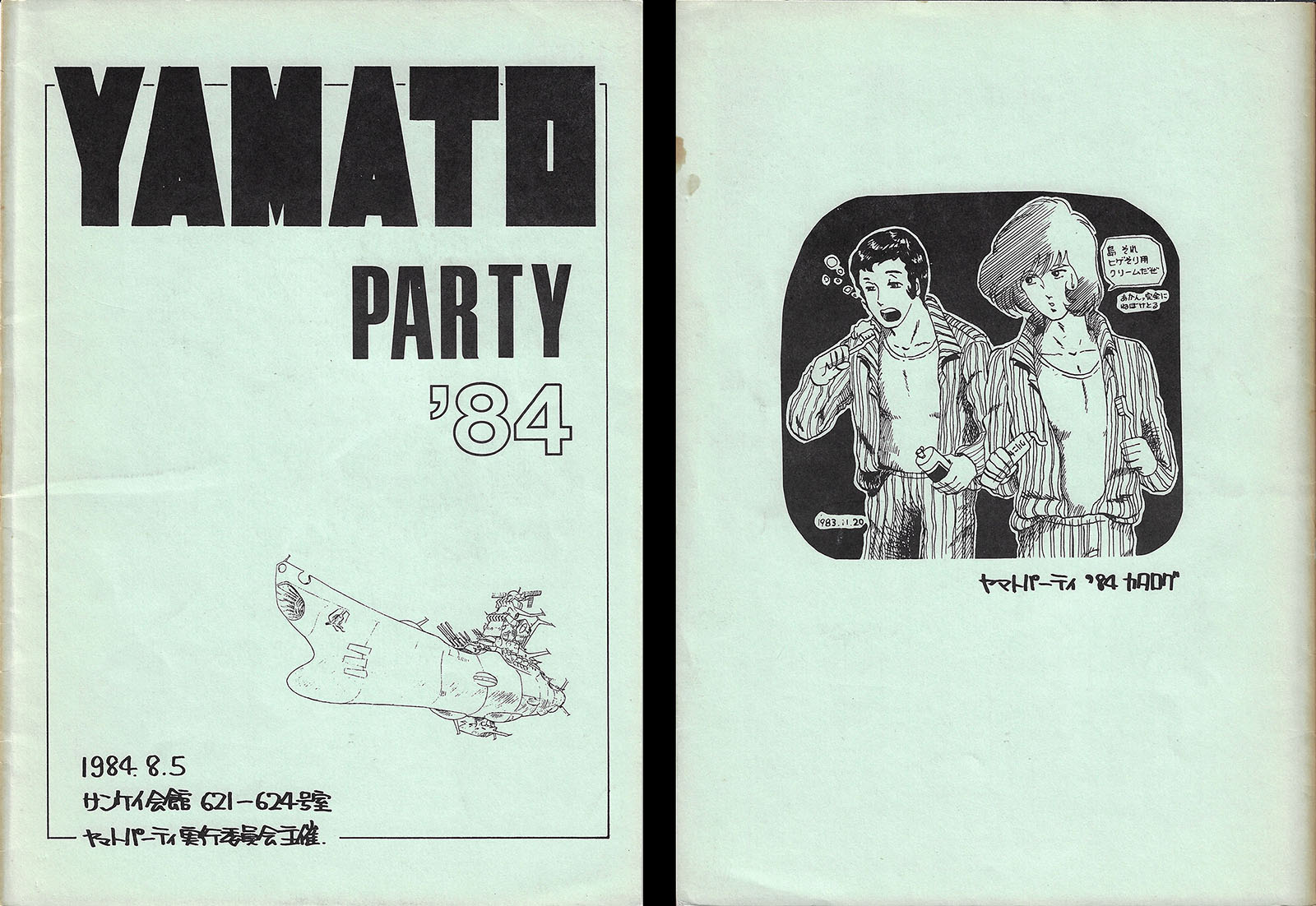
August 5: Yamato Party ’84
From the very beginning, the spirit and energy of Yamato was what motivated its fans the most. In hindsight, it seems inevitable that when they needed a rallying point in the wake of The Final Chapter, they would simply create one themselves.
The first Yamato Party was held in 1984 so that fan circles who made doujinishi [fanzines] could gather to sell them in a meeting specifically for Yamato. Doujinshi makers were active at Comiket back then, and many people went to meet those who wrote and drew the material. However, there were a lot of different works there, and it was not an effective place for a Yamato fan. That’s why Yamato Party was born. We added attractions such as a quiz and video screenings and gave fans a chance to network. The environment surrounding Yamato has had sudden, busy changes, but the situation of the fans has never changed; it has always been enjoyable, as represented by Yamato Party.
-Masaru Enomoto
Yamato Party Executive Committee Chairman
(an excerpt from the introduction to Yamato Party Memorial, 2002)
Read about the history of Yamato Party here
Click here to see and read the Yamato Party ’84 program book
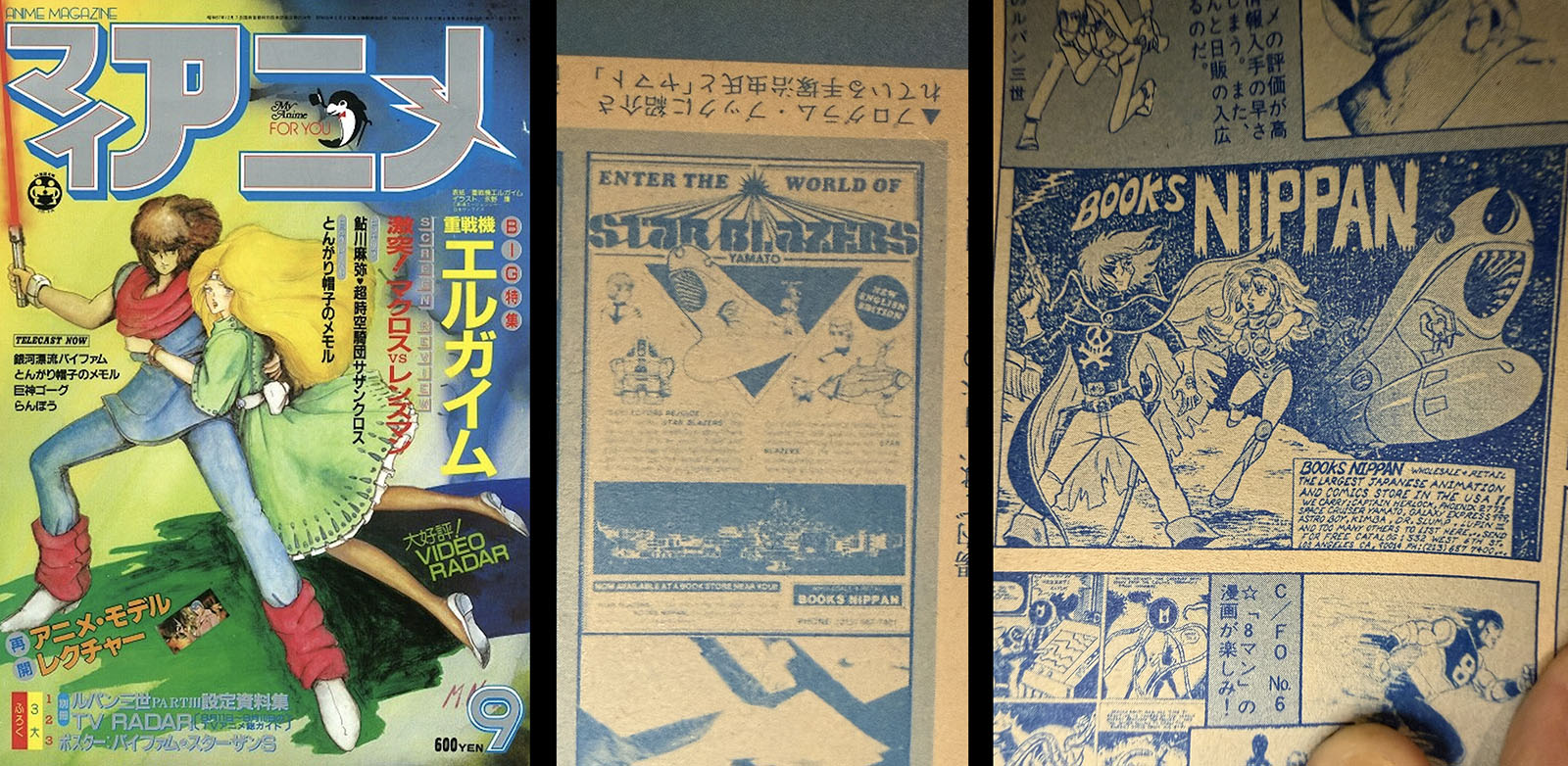
August 10: My Anime, September issue
Apparently the noise level of US fandom was getting loud enough to make ripples, because this issue of My Anime ran tidbits on the Star Blazers Animation Comics and the presence of Books Nippan.
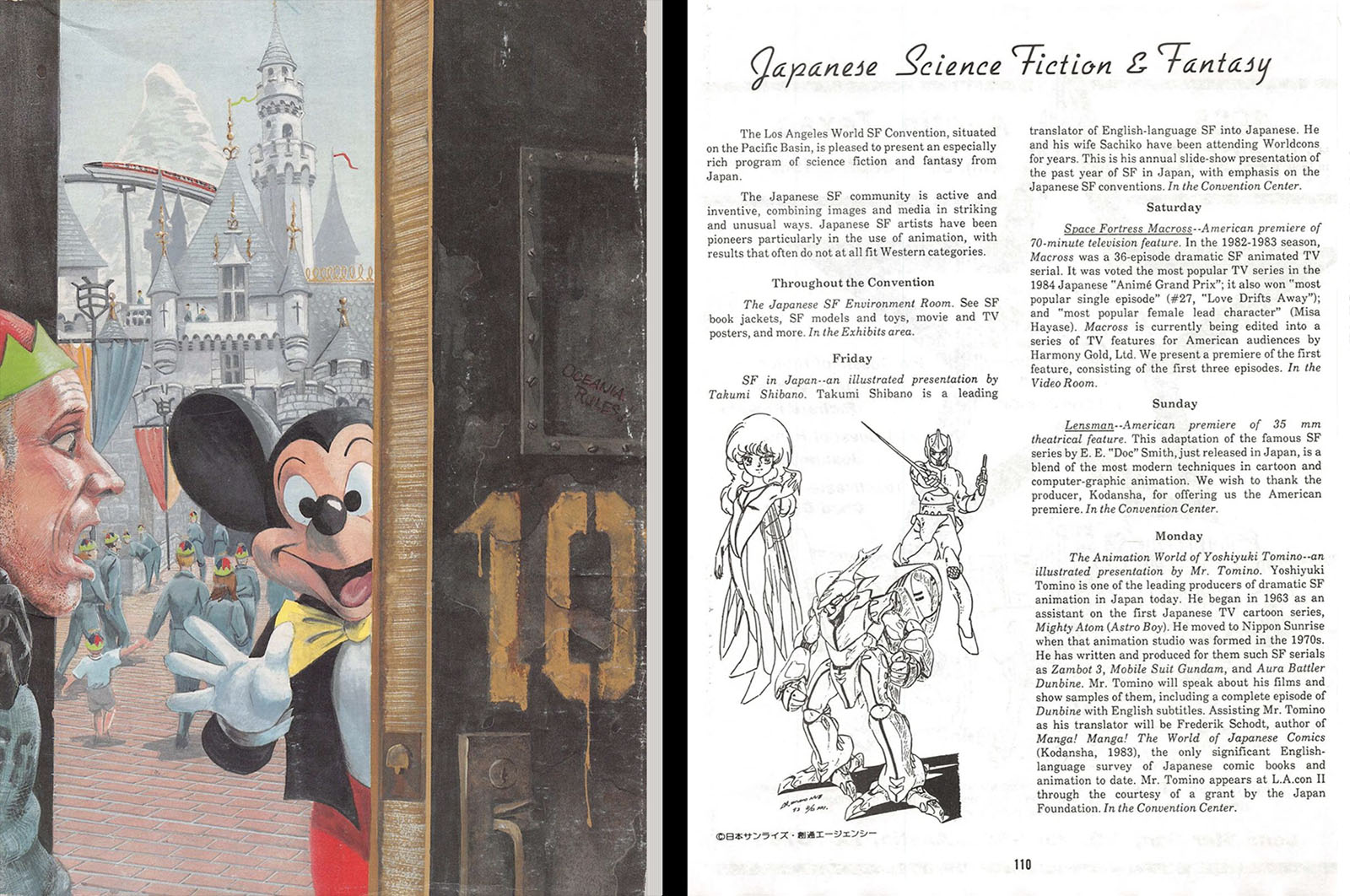
August 30-September 3: LA Con II (42nd World SF Convention, Anaheim, CA)
The 42nd Worldcon had a significant anime presence, including guest Yoshiyuki Tomino (Mobile Suit Gundam), the world premieres of Lensman, Tekkaman, and the English-dubbed Macross pilot, and extensive video screenings that elevated anime within literary sci-fi circles. There was even an open meeting of the local Star Blazers fan club, almost certainly a first for the west coast.
See the LA Con II program book here
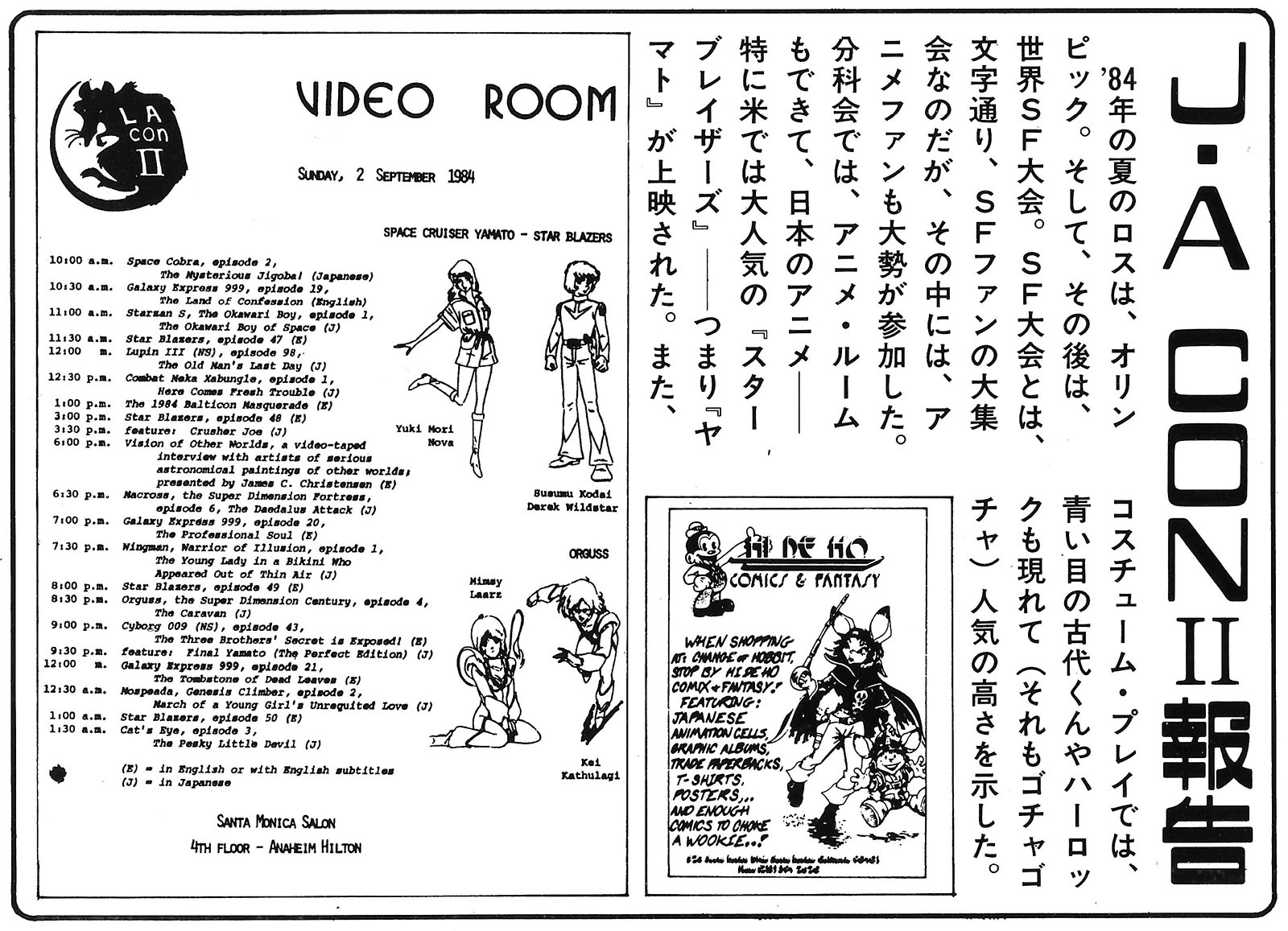
In January 1985, news of LA Con II came back to Yamato fandom via the official fan club magazine. The blurb above showed the video screening schedule for September 2, which included four episodes of Star Blazers and the revised edition of Final Yamato. The explanatory text reads as follows:
In the summer of 1984, Los Angeles had the summer Olympics. And after that, the World Science-Fiction Convention. What is a science-fiction convention? Literally, it was a gathering of science-fiction fans, and among them many anime fans also participated. An anime room was set up, and Japanese anime was screened, especially the hugely popular Star Blazers (i.e. Yamato). Also, a blue-eyed Kodai and Harlock also made appearances in costume play (a chaotic mix), demonstrating their immense popularity.
(Translator’s note: the term “costume play” was in the original Japanese text, not yet shortened to “cosplay.”)
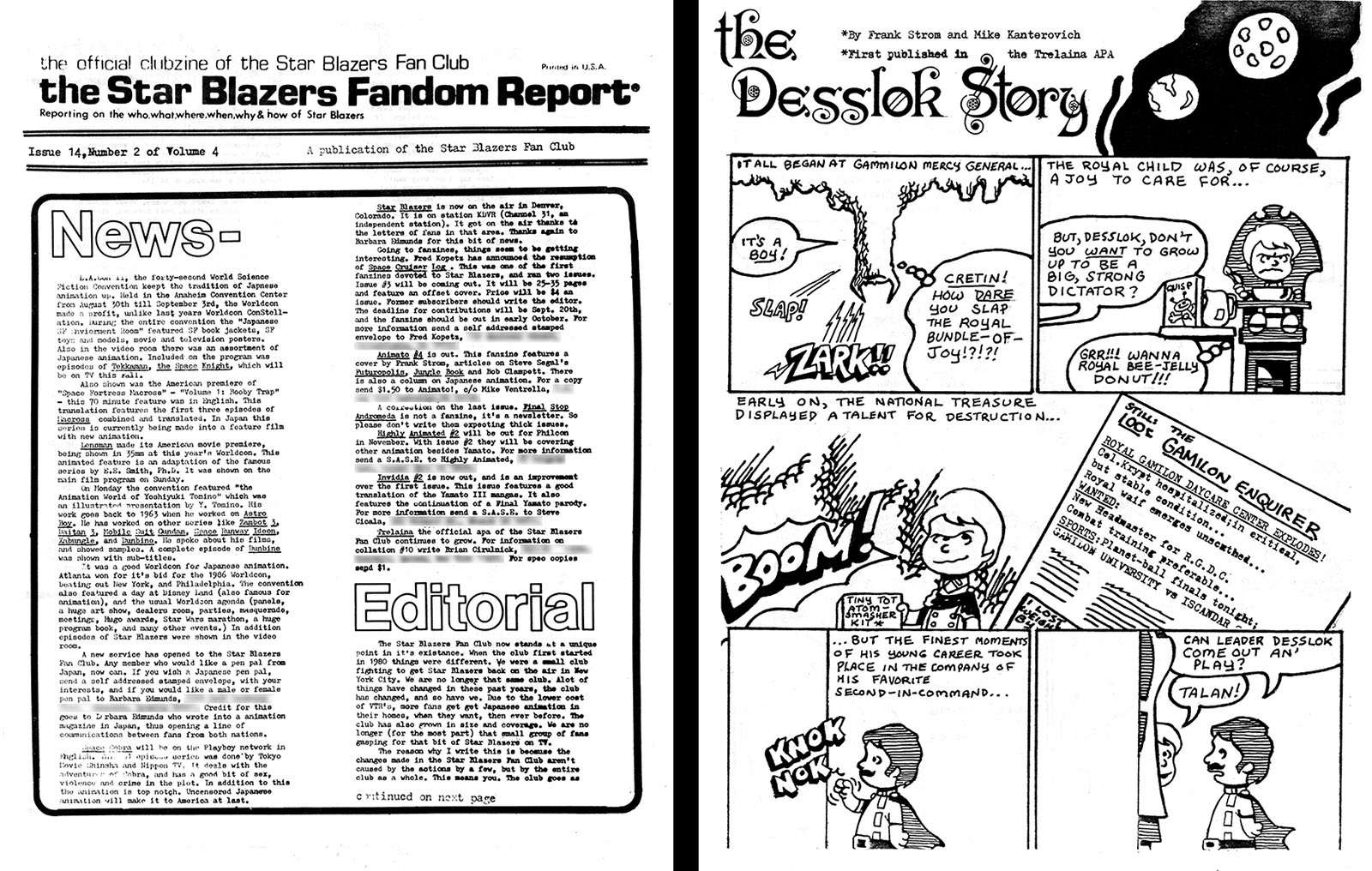
September: Star Blazers Fandom Report, issue 14
On tap this time were a Worldcon report, fanzine updates, tips for anime product collecting, fan comics, and member letters. New club organizer Robert Fenelon penned an editorial that (much like Nishizaki did in Japan) observed the rising fortunes of anime and examined how the Star Blazers fan club was evolving in tandem.
See a complete PDF here
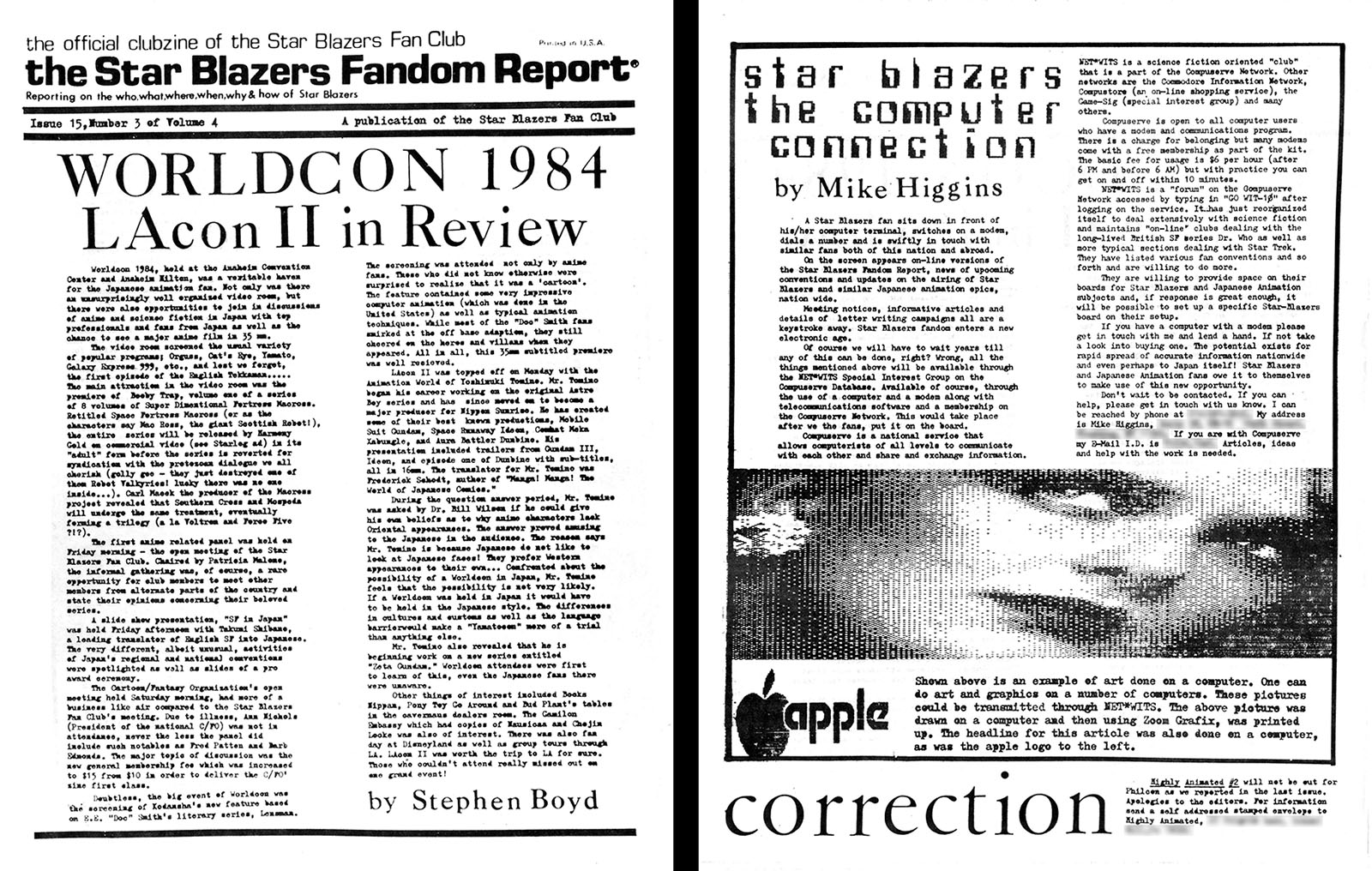
December: Star Blazers Fandom Report, issue 15
The last 1984 issue brought a more detailed Worldcon report, a look at the dawn of online anime fandom (just imagine!), a followup on the “club evolution” editorial, Brian Cirulnick’s tips on creating your own animation, a profile of Urusei Yatsura, and fan mail.
See a complete PDF here
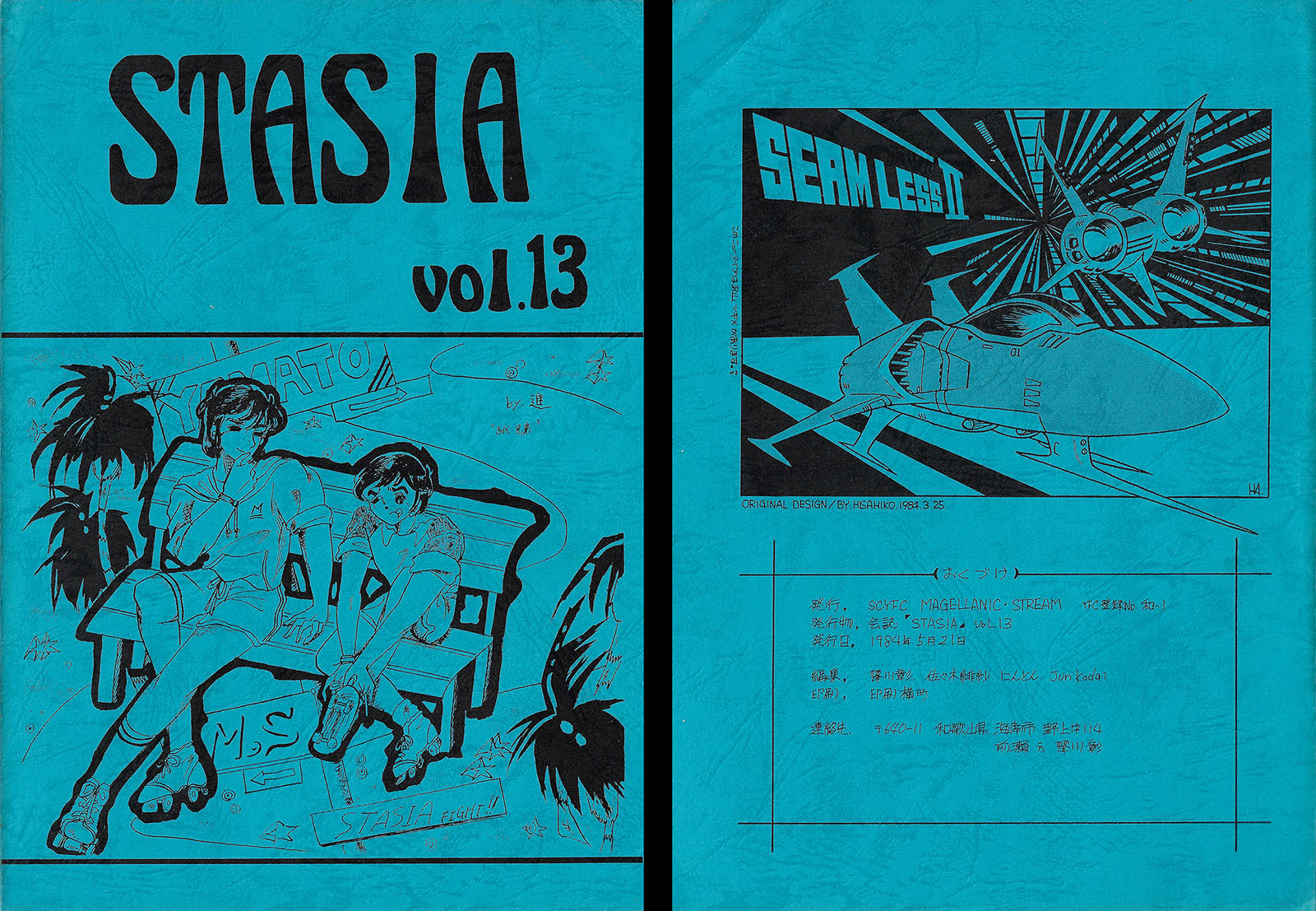
Japanese Doujinshis
The constantly expanding world of fanzines is not well represented by these two entries from 1984, but they should serve as proof enough that Yamato doujinshi culture was alive and well. Stasia Vol. 13, published on May 21 by a fan club called SCYFC Magellanic Stream, was 48 pages of high-density communication with fan art, definitely a paper precursor to social media.
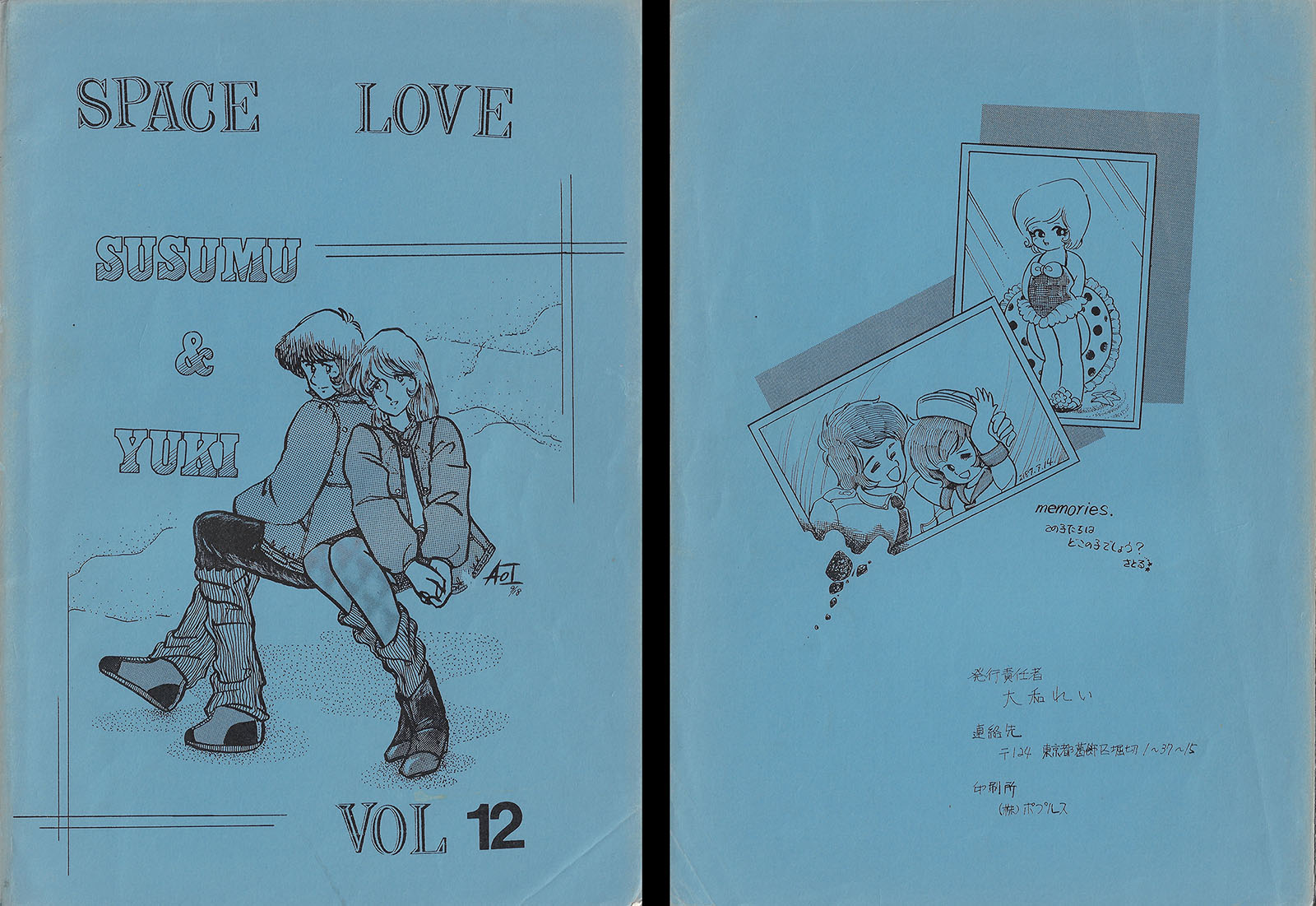
Space Love Vol. 12 (date and club unknown) took a similar approach over 112 pages, but with extra room for fan comics and short stories. There would be a lot more of this to come in the legacy years.
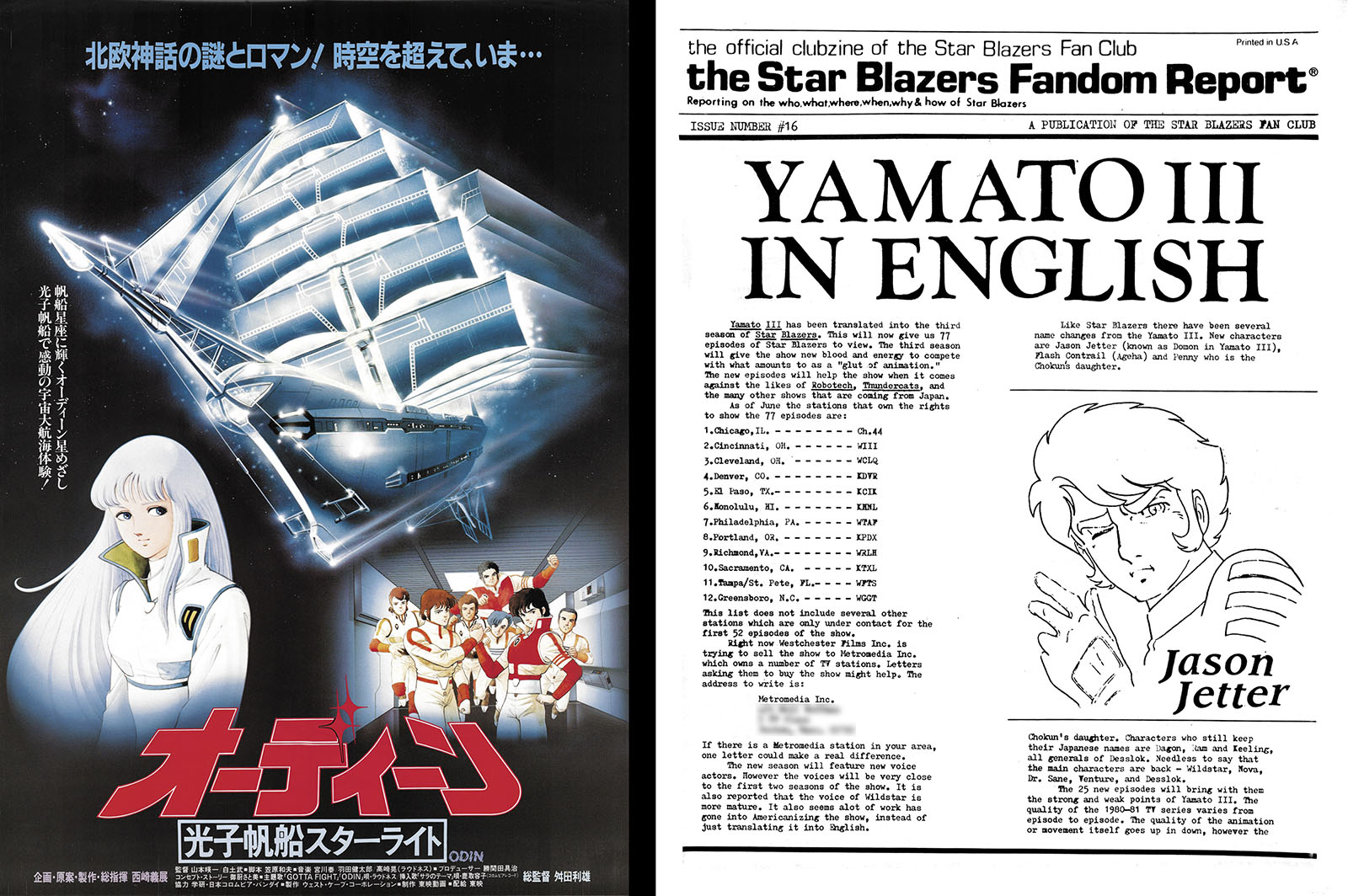
What’s next
Searching for Odin and The Bolar Wars in 1985!
I have fond memories of those WCC graphic novels…I remember seeing the first one on sale at the local Comics & Comix shop and eagerly devouring it (and mocking the typos)…